
Tokyo is less a single city than a chain of dense centres strung along a train network. Shinjuku alone moves more people through its station each day than some countries have citizens. The useful mental model for any Tokyo travel guide is not “the city centre and everything else” – it is a series of distinct hubs, each with its own character, connected by trains that are almost aggressively reliable.
That structure is good news for visitors. It means you can plan by district rather than by distance, and it means that a day spent in one area is rarely a wasted one. What follows covers when to come, where to stay, how the trains actually work, and how to divide your time.
How to use this Tokyo travel guide
What follows is arranged in planning order: season, base, transport, then districts. Tokyo punishes bad geography more than bad scheduling, so the two sections worth reading closely are the one on where to stay and the one on the train network.
When to go
Spring and autumn are the obvious answers and they are obvious for good reason. Late March into early April brings cherry blossom, though the exact window shifts each year and the city fills accordingly. October and November deliver clear skies, mild temperatures and autumn colour that peaks later than most people expect — often well into late November in central Tokyo.
Summer is hot and humid, with a rainy stretch in June and a genuinely heavy August. Winter is cold but dry and remarkably clear, with the lowest crowds of the year and frequent views of Mount Fuji from the western side of the city.
For a detailed month-by-month view, see best time to visit Tokyo. If cherry blossom is the reason you are coming, our guide to Japan cherry blossom season covers timing and where to go if Tokyo peaks early.
Where to base yourself
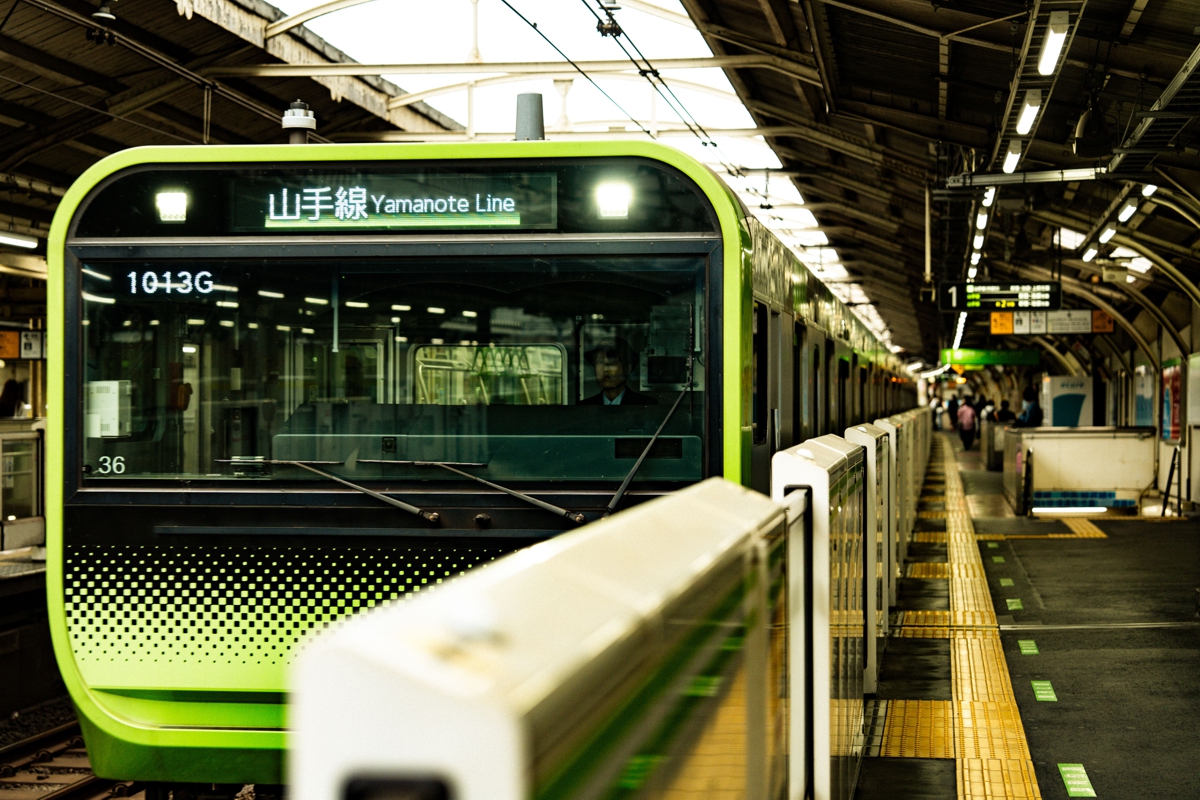
Almost anywhere on the Yamanote loop line works. The line circles central Tokyo and connects most of the districts you will want to visit, so proximity to a Yamanote station is a better filter than any neighbourhood ranking.
Shinjuku
Maximum connectivity and maximum intensity. Every train line seems to pass through, the Narita and Haneda airport buses stop here, and the area covers everything from the lantern-lit alleys of Omoide Yokocho to the calm of Shinjuku Gyoen. Best if you value transport above quiet.
Shibuya
Younger, more design-driven, and heavily redeveloped in recent years. Good for shopping, nightlife and easy access to Harajuku and Daikanyama on foot. Hotel prices reflect the location.
Marunouchi and Tokyo Station
The most convenient base if you plan to take shinkansen day trips. Business-district calm in the evenings, immaculate hotels, and a direct connection to almost everywhere. Less atmospheric after dark.
Asakusa and Yanaka
The older east side, with low-rise streets, Senso-ji temple and a slower pace. Cheaper accommodation, more character, slightly longer journeys to the western hubs. A good choice on a second visit or for travellers who prefer neighbourhoods to skylines.
Specific areas and properties are covered in where to stay in Tokyo.
Getting around
Get an IC card before anything else. Suica and PASMO are rechargeable cards that work on virtually every train, subway and bus in the region, and in convenience stores and vending machines besides. They are sold in fixed denominations starting at 1,000 yen, and mobile versions can be added to a phone wallet, which avoids queues entirely.
The network has two overlapping layers: JR lines, including the Yamanote loop, and the Tokyo Metro and Toei subway lines. They are operated by different companies, so transferring between them means passing through a fare gate and paying two base fares. Route apps handle this automatically – just be aware that the cheapest route and the fastest route are often not the same.
From the airports, Narita is served by the Narita Express and the cheaper Keisei Skyliner, both taking under an hour to central Tokyo. Note that the Narita Express requires a limited express ticket in addition to the base fare, so an IC card alone will not cover it. Haneda is much closer to the centre and connects via the Tokyo Monorail or Keikyu line.
Trains stop running roughly around midnight and restart around five. Taxis after that are expensive, so either plan your last train or plan to stay out until dawn – both are common local strategies.
Full detail on lines, passes and airport transfers is in getting around Tokyo.
The districts worth your time
Shibuya and Harajuku
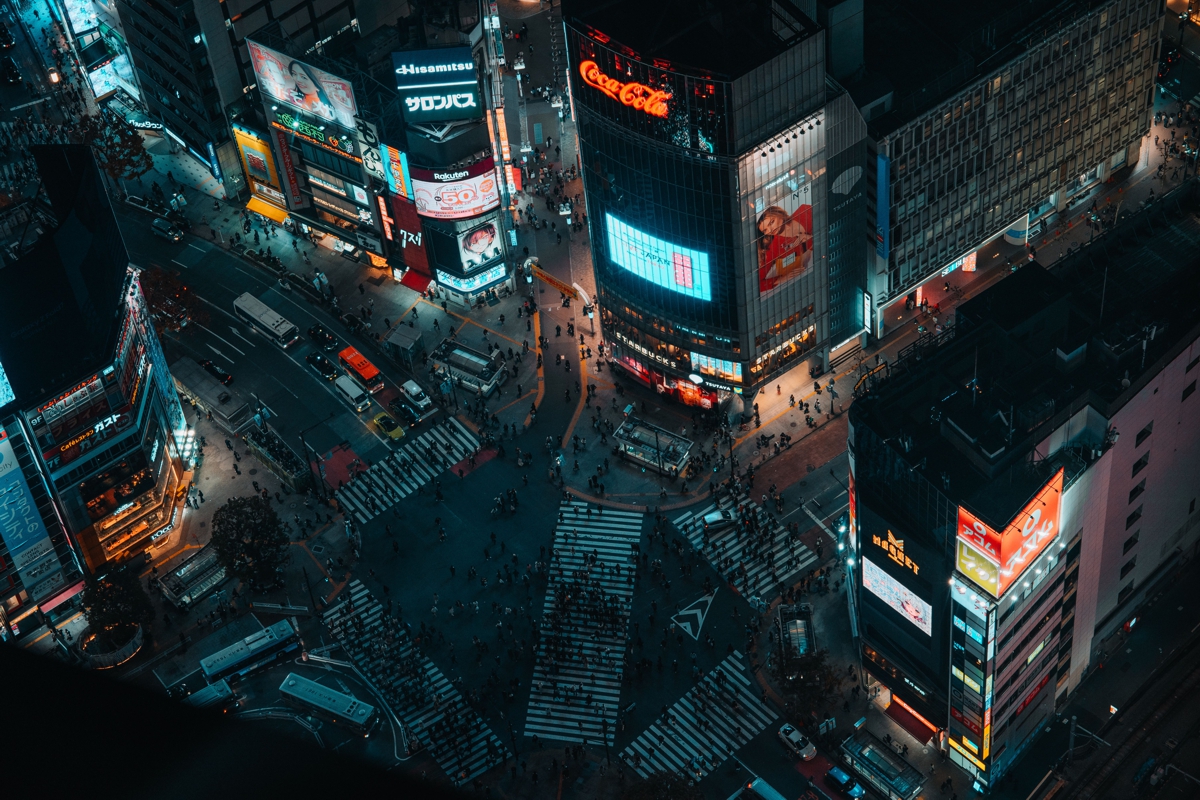
The scramble crossing is the postcard, but the more interesting hours are spent in the backstreets. Takeshita-dori in Harajuku is chaotic and youth-driven; a few minutes away, Omotesando is a wide boulevard of flagship architecture. Between them sits Meiji Jingu, a Shinto shrine approached through a forest of 100,000 donated trees – the fastest transition from noise to silence in the city.
Shinjuku
Golden Gai is a cluster of tiny bars, most seating fewer than a dozen people, many with a cover charge. Omoide Yokocho grills yakitori in a narrow lane of smoke and lanterns. Shinjuku Gyoen, a former imperial garden, is the antidote to both and one of the best places in the city to lose an afternoon.
Asakusa and the east
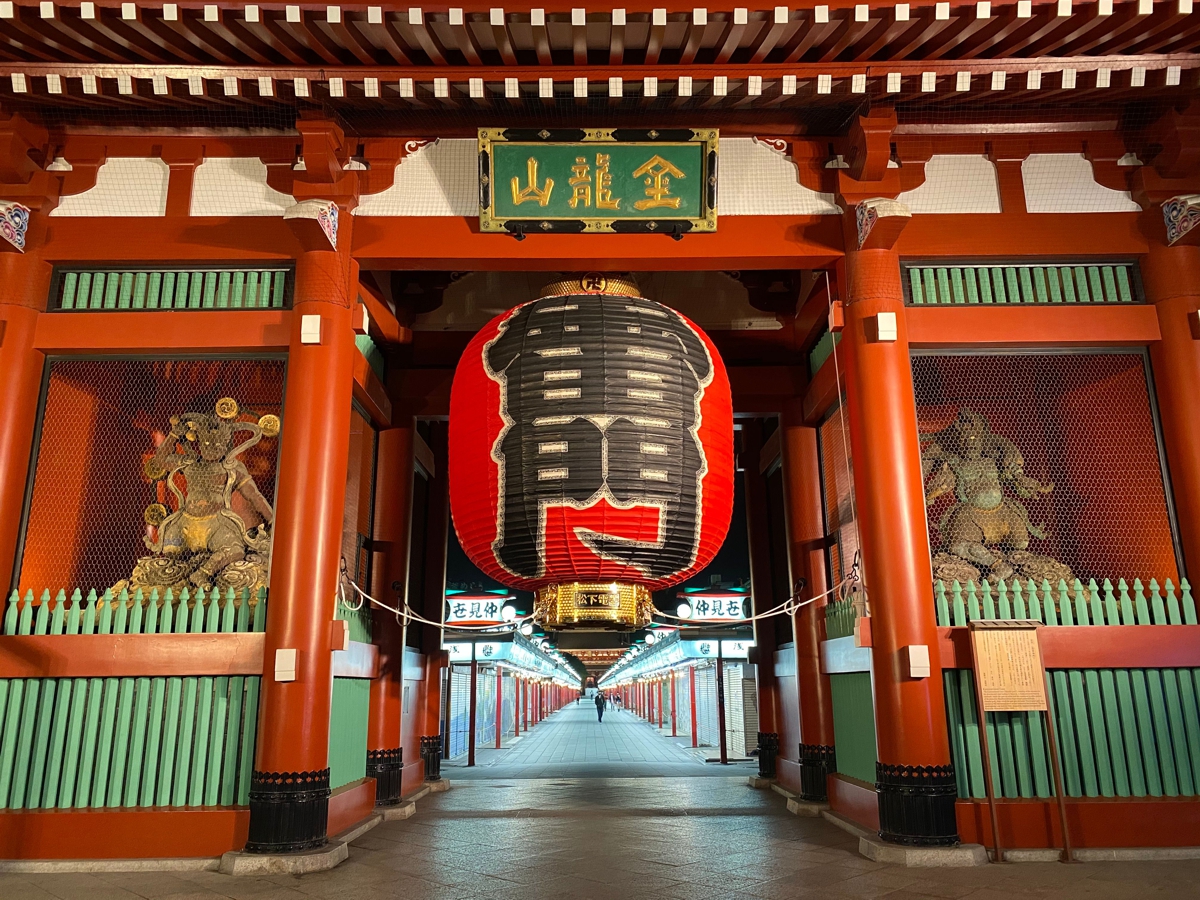
Senso-ji is Tokyo’s oldest temple and busiest by day. Come early or late and the approach along Nakamise-dori becomes something other than a crowd. Nearby, Kappabashi sells restaurant supplies – knives, ceramics, the plastic food replicas you see in windows – and is far more interesting than it sounds.
Ginza, Nihonbashi and Tsukiji
Ginza is department stores and precision retail, with the main avenue closed to cars on weekend afternoons. Tsukiji Outer Market survived the wholesale market’s move to Toyosu and remains an excellent place to eat standing up at nine in the morning.
Digital art and views
teamLab’s immersive installations are among the most-booked attractions in the city and require advance timed tickets. For views, the observation decks at the Tokyo Metropolitan Government Building in Shinjuku are free, which makes them a better first stop than the paid towers.
The full list is in 15 best things to do in Tokyo.
Eating in Tokyo
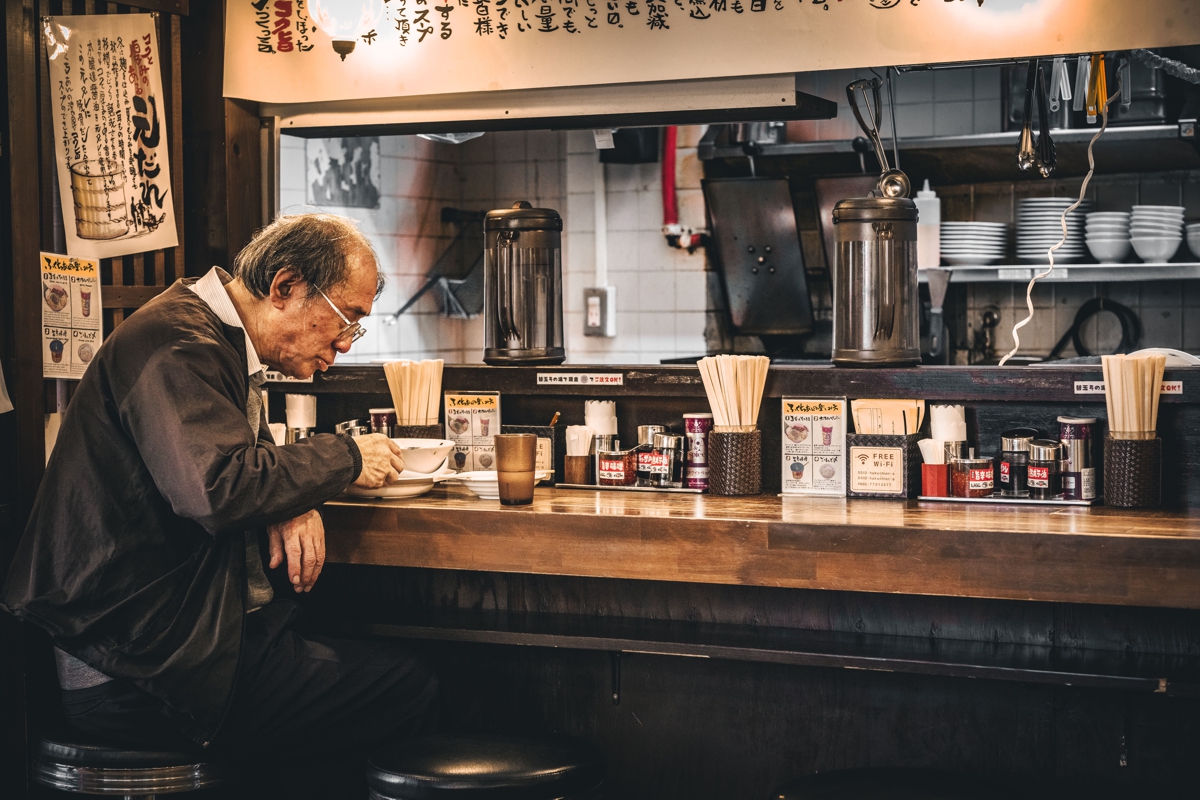
Tokyo has more restaurants than any other city on earth, and the median quality is the real story. A bowl of ramen at a counter with six seats and a ticket machine at the door will be excellent and cost very little. So will the tonkatsu in a department store basement, or the soba at a stand inside a train station.
Specialisation is the norm. Restaurants tend to do one thing – tempura, unagi, yakitori, sushi – rather than a broad menu, and the quality follows from that focus. Lunch sets at high-end restaurants are one of the best values in the city, often a fraction of the dinner price for a shortened version of the same kitchen’s work.
Convenience stores deserve a mention without irony. Onigiri, egg sandwiches and hot food from 7-Eleven, Lawson and FamilyMart are a legitimate meal, and they are open when nothing else is.
Reservations at well-known sushi counters can be difficult for foreign visitors without a hotel concierge or a booking platform. Plan those in advance and treat the rest of your eating as walk-in.
See what to eat in Tokyo for the dish-level detail.
Shopping and what to bring home
Tokyo’s retail is worth engaging with even if you are not a shopper, because the specialist stores are attractions in themselves. Kappabashi in Asakusa sells kitchen equipment to professionals, and a Japanese knife bought there – with the blade sharpened and your name engraved while you wait – is the most useful souvenir available in the city.
Stationery is a serious category here. Itoya in Ginza occupies multiple floors of paper, pens and notebooks. Loft and Tokyu Hands cover the broader household and design range. For secondhand and vintage clothing, Shimokitazawa and Koenji hold dozens of small shops within a few streets of each other, and prices are far below what the same items fetch abroad.
Department store food halls, or depachika, occupy the basements of stores like Isetan and Mitsukoshi and sell some of the best prepared food in the city. They are also the right place to buy gifts – regional sweets, tea, and beautifully packaged small things – and most reduce prices on fresh items in the last hour before closing.
Where to see the city change pace
Tokyo’s rhythm is easier to read once you know where to look for it. Early morning at a neighbourhood shrine, before seven, is quiet in a way that the same place at noon never is. The commuter surge between eight and nine is genuinely worth witnessing once, from a safe corner of a station concourse rather than from inside a carriage.
Evening brings the izakaya hour, when small restaurants under railway arches fill with office workers and the atmosphere loosens considerably. Yurakucho, beneath the tracks near Ginza, is the classic setting for this. Later still, the last-train scramble around midnight has a particular energy – a whole station’s worth of people moving with sudden purpose.
Weekends shift the city again. Yoyogi Park fills with musicians and dance groups, Ginza’s main avenue closes to traffic on Saturday and Sunday afternoons, and the residential districts that empty during the week come back to life.
Day trips
Nikko, with its heavily decorated shrine complex and mountain scenery, is around two hours away. Kamakura offers coastline, hiking trails and a large bronze Buddha in a little over an hour. Hakone combines hot springs with Fuji views when the weather cooperates. All three are comfortable as day trips; Hakone is better as an overnight.
Money and what things cost
Tokyo’s reputation for expense is a decade or two out of date. A bowl of ramen typically runs between 900 and 1,200 yen. A set lunch at a decent restaurant sits around 1,000 to 1,500. A single metro journey in the central area is a few hundred yen. Museum entry is usually under 1,500 yen, and many shrines and temples charge nothing at all.
Where the budget goes is accommodation, particularly during cherry blossom season, Golden Week in late April and early May, and the autumn colour weeks in November. Rates in those windows can double, and the good properties fill months ahead. Outside them, business hotels offer small but immaculate rooms at reasonable prices, and capsule hotels have moved considerably upmarket from their original form.
How long to stay
Four days gives you the main districts without a forced march. Five to six lets you add a day trip and an unplanned afternoon, which is when Tokyo tends to become interesting. Our 5 days in Tokyo itinerary groups the districts geographically so you are not crossing the city twice in a day.
Practical notes
- Cash: Japan is far more card-friendly than it was, but small restaurants, shrines and older shops still run on cash. Carry some. Convenience store ATMs accept foreign cards reliably.
- Luggage: station coin lockers fill early. Takkyubin courier services move suitcases between hotels overnight for a modest fee and are widely used by locals.
- Etiquette: no eating while walking, keep phone conversations off trains, and queue where the platform markings tell you to.
- Tipping: not practised, and attempting it causes confusion rather than pleasure.
- Connectivity: pocket wifi rental and eSIM data plans are both widely available and cheap; free public wifi is patchy.
- Tax-free shopping: available to visitors at many stores above a spending threshold, with your passport required at the till.
FAQ
How many days do you need in Tokyo?
Four full days covers the major districts. Five or six is better if you want a day trip or a slower pace.
Is Tokyo expensive?
Less than its reputation suggests. Transport, casual dining and museums are reasonable; hotels in peak season are the main cost. Eating well on a modest budget is straightforward.
Do you need to speak Japanese?
No. Station signage and major transport announcements are bilingual, and translation apps handle menus. A few polite phrases are appreciated but not required.
Is a Japan Rail Pass worth it for Tokyo?
Not if you are only staying in Tokyo – the pass is designed for long-distance shinkansen travel. An IC card covers city transport far more cheaply.
Tokyo is easiest when you stop treating it as one destination. Pick two or three districts a day, keep them geographically close, and leave a gap in the schedule for whatever you find between them.
Recent Comments