The Amalfi Coast is 50 kilometres of cliff with towns wedged into it. That single fact explains almost everything about visiting: why the bus takes two hours to cover a distance you could drive in 40 minutes anywhere else, why hotels charge what they charge, and why the ferry is usually the smarter choice. This Amalfi Coast travel guide covers the towns, the transport and the timing decisions that make the difference between a relaxed week and a week spent waiting at bus stops.
The coast runs from Vietri sul Mare in the east to Positano in the west, with Sorrento sitting just around the peninsula on the Bay of Naples. Thirteen towns share one road, the SS163, built in the 1850s and never widened.
The towns, and which one suits you
Positano
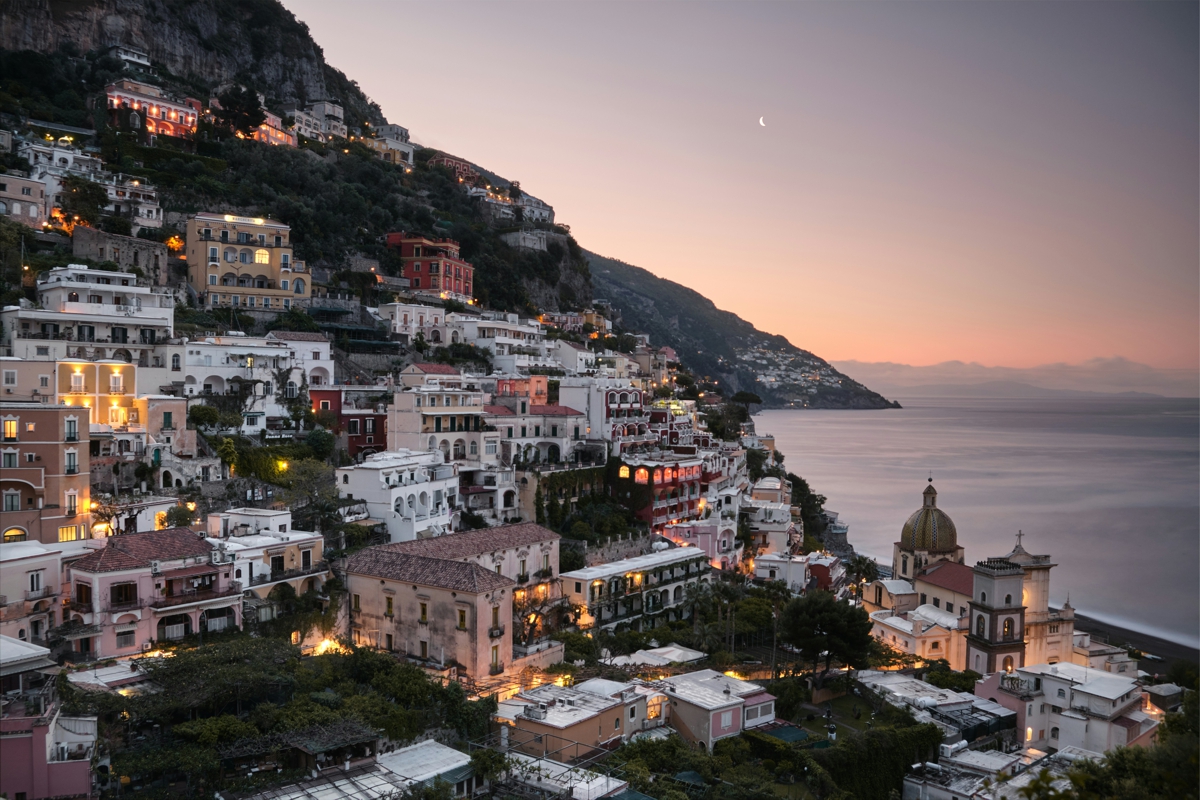
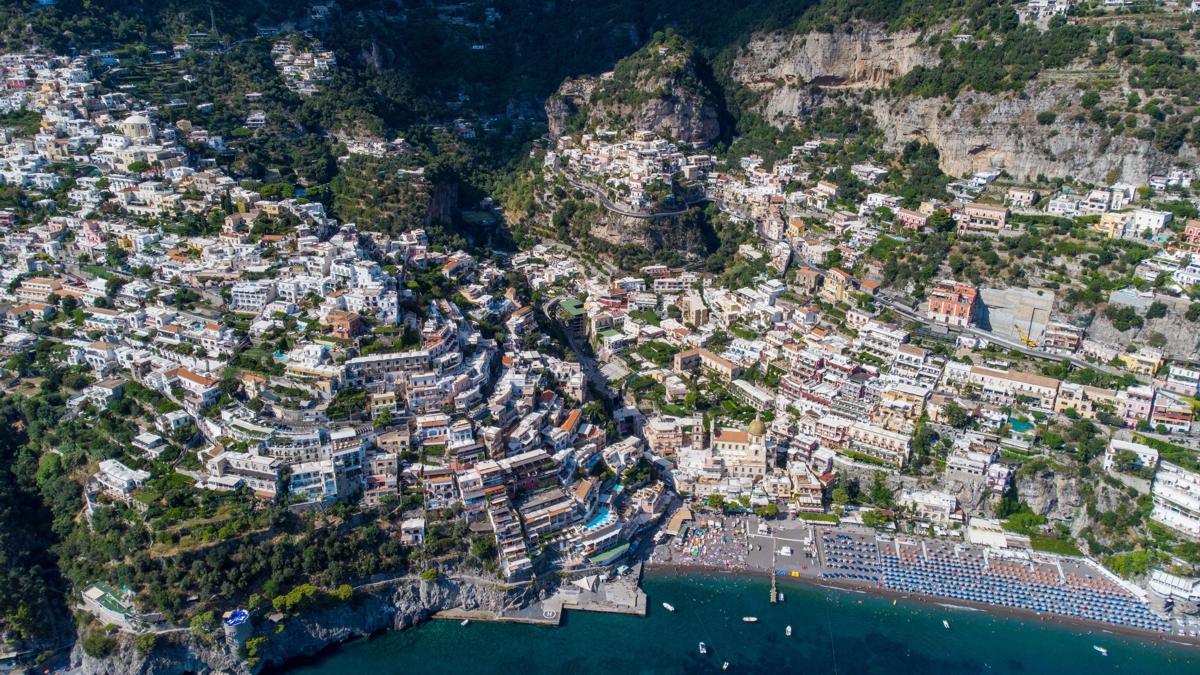
The most photographed and the most vertical. Pastel houses drop from the main road to Spiaggia Grande in a series of stepped lanes — there is no flat route anywhere. Expect to climb several hundred steps a day. It has the strongest boutique shopping, the highest prices and the most day-trippers. Cars cannot reach most of the town.
Amalfi
Flatter, larger and more of a working town, built around a 9th-century cathedral with a striking striped facade and a steep flight of steps up to it. It functions as the coast’s transport hub: SITA buses radiate from the seafront and ferries dock here. Good base if you plan to move around daily.
Ravello
350 metres above Amalfi, reached by a switchback road or a stiff hike. Cooler, quieter, and built around two villa gardens — Rufolo and Cimbrone — with the terrace views that appear on most Amalfi Coast marketing. No beach. It hosts a summer classical music festival that fills its hotels.
Praiano and Minori
The practical alternatives. Praiano sits between Positano and Amalfi with the same views and roughly two-thirds the price. Minori, east of Amalfi, is a small beach town where Italian families holiday and where dinner does not require a reservation two weeks out.
Sorrento
Not technically on the Amalfi Coast, but many visitors base here. It has the train connection to Naples and Pompeii, more hotel rooms than anywhere on the coast proper, and ferries to Capri. The trade-off is that everything on the Amalfi side is a bus or boat ride away.
Getting around
SITA buses
The blue SITA SUD buses are the backbone of the coast. Single fares generally sit in the €1.50–€3.40 range depending on distance, and a 24-hour COSTIERASITA pass runs around €10–€12 for unlimited travel. Tickets must be bought before boarding — from tabaccherie, newsstands or bars — and validated in the machine on the bus.
Be realistic about capacity. In July and August buses leave Amalfi full and pass waiting crowds at intermediate stops. Travel early, sit on the sea side going west from Amalfi, and build slack into the schedule.
Ferries
From roughly April to October, ferries link Salerno, Amalfi, Positano, Sorrento and Capri. The Amalfi–Positano crossing takes 15–25 minutes and typically costs around €9–€10, which compares well against an hour on a crowded bus. Boats are cancelled in rough seas, so keep the bus as a fallback. Ferry travel along this stretch is one of the more pleasant examples of Mediterranean island and coastal ferry routes, and it removes the motion sickness that the coast road reliably produces.
Driving
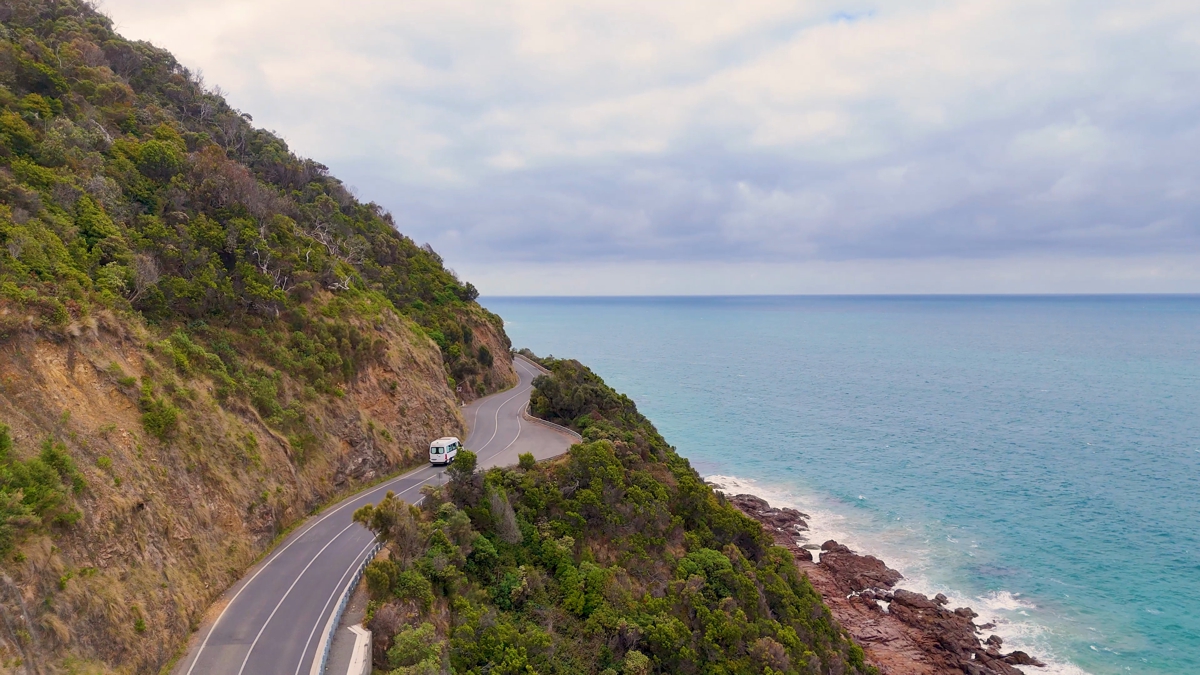
Possible, rarely enjoyable. The road is narrow, buses take the full width on hairpins, and parking costs €5–€8 per hour where it exists at all. Many hotels have no parking. If you rent, do it for a day trip inland rather than as your main transport.
Things worth doing
The Path of the Gods
The Sentiero degli Dei runs roughly 7 kilometres from Bomerano (above Agerola) to Nocelle, above Positano, with the sea several hundred metres below the whole way. Walking east to west means starting high and descending. Allow three hours plus the 1,500-odd steps down into Positano, or take the local bus from Nocelle instead. Start early in summer; there is little shade.
Amalfi Cathedral and the Cloister of Paradise
The Duomo di Sant’Andrea dominates the main square. The attached Chiostro del Paradiso, a 13th-century cloister with interlaced Moorish arches, is quieter than the church itself and worth the modest entry fee.
Villa Cimbrone, Ravello
The Terrace of Infinity is a stone balustrade lined with busts, looking straight down the coast. Gardens are open daily and the entry fee is separate from the hotel that occupies the villa.
Boat trips
Small operators in Amalfi and Positano run half-day trips along the coast and to the Li Galli islets, usually with swimming stops in coves you cannot reach on foot. Prices vary widely; shared trips are far cheaper than private charter.
Lemons
The Sfusato Amalfitano lemon grows on terraces held up by dry stone walls across the whole coast. Limoncello is the obvious product, but the lemons also turn up in delizia al limone dessert and in salads with local anchovies from Cetara. Cetara, incidentally, is the coast’s fishing village and the source of colatura di alici, a fermented anchovy sauce descended from Roman garum.
When to visit
Late April to early June and September to mid-October are the strong windows: sea warm enough to swim from June and through October, restaurants open, buses survivable. July and August bring heat, full ferries and peak room rates. Many hotels and restaurants close entirely from November to March — the coast is genuinely seasonal, and a winter visit means a quiet, half-shuttered version of it.
The coast pairs naturally with Naples and Pompeii, and slots into most two-week first-timer routes through Europe as the southern Italian leg. It also works as a slower counterweight after several days in Rome, which is about an hour away by high-speed train to Naples plus a local connection.

Practical notes
- Luggage: stairs are everywhere and lifts are rare. A large hard case in Positano is a genuine problem. Pack lighter than feels comfortable.
- Beaches: mostly pebble, mostly private clubs charging for loungers. Free public sections exist but are small. Water shoes help.
- Reservations: dinner in Positano and Ravello in high season needs booking days ahead.
- Timing your travel: move between towns before 9am or after 5pm to avoid the worst of the bus and ferry crush.
- Cash: useful for bus tickets, small tabaccherie and beach clubs.
FAQ
How many days do you need on the Amalfi Coast?
Four nights is a reasonable minimum: one for Positano, one for Amalfi and Ravello, one for a boat trip or the Path of the Gods, and one unscheduled. A week lets you add Capri, Pompeii or Cetara without moving hotels twice.
Where should first-timers stay?
Amalfi for transport convenience, Praiano for value with views, Positano if the setting matters more than the budget. Sorrento only if you plan several day trips inland.
Is the Amalfi Coast walkable between towns?
Some sections are, via old mule paths and stair networks, but they are steep and the distances are longer than they look. Most visitors combine short walks with buses and ferries.
Do you need a car?
No. Buses and ferries reach every town on the coast, and driving adds parking costs and stress without saving much time in high season.
The coast rewards patience more than planning. Pick one base, accept that transport runs on its own logic, and spend the saved energy on a long lunch above the water.