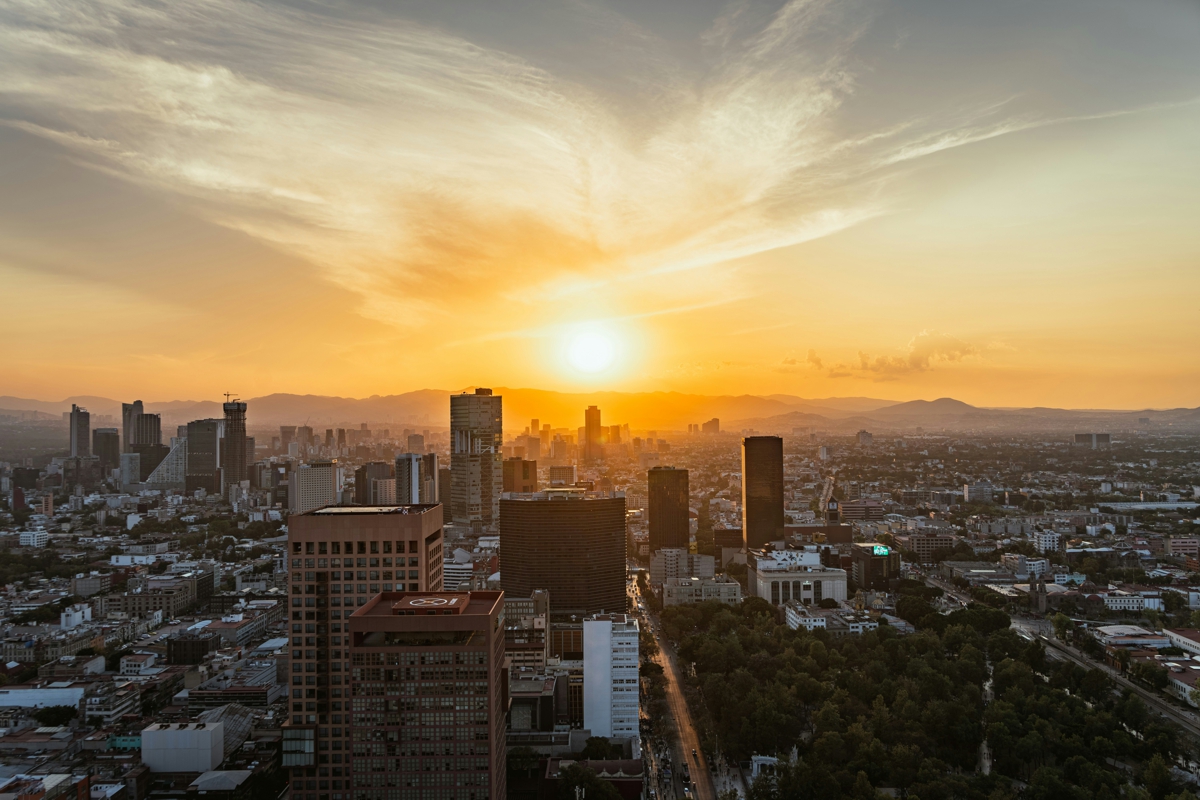
Mexico City sits at 2,240 metres in a basin ringed by mountains, built on the drained bed of a lake that the Aztecs turned into an island capital. Very little about it is intuitive on arrival. It is enormous, it is layered — Aztec, colonial, Porfirian, modernist, all within a few blocks — and it is far more walkable in practice than its size on a map suggests. This Mexico City travel guide is organised around the things that actually determine whether a trip works: which neighbourhoods to base in, how to handle the altitude, and how to use the metro.
Around nine million people live in the city proper and more than 21 million in the metropolitan area, making it the largest city in North America. You are not going to see it. You are going to see four or five neighbourhoods well, which is the correct approach.
Altitude, weather and the first 24 hours
The altitude is the thing most visitors underestimate. At 2,240 metres, mild shortness of breath on stairs is normal, alcohol hits harder, and dehydration happens faster. Take the first day gently, drink more water than feels necessary, and go easy on mezcal the first evening.
The climate is spring-like year-round rather than tropical, despite the latitude. Days are warm, evenings cool sharply, and a jacket is needed most of the year. The rainy season runs roughly May to October and mostly delivers intense late-afternoon downpours that clear within a couple of hours — it rarely ruins a day if you plan indoor activities for the afternoon.
Air quality is better than the city’s 1990s reputation suggests but can still be poor in the dry, still months of winter. Our month-by-month guide to visiting Mexico City covers the seasonal detail.
The neighbourhoods that matter
Centro Histórico
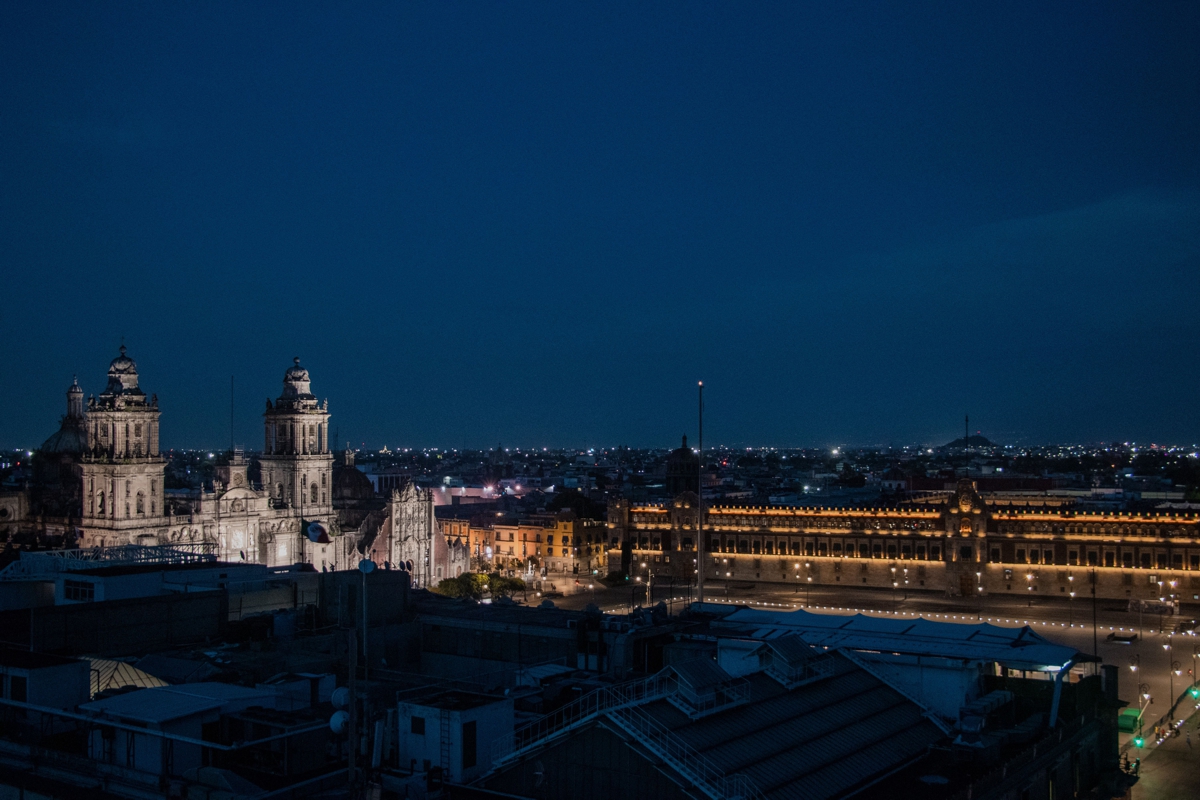
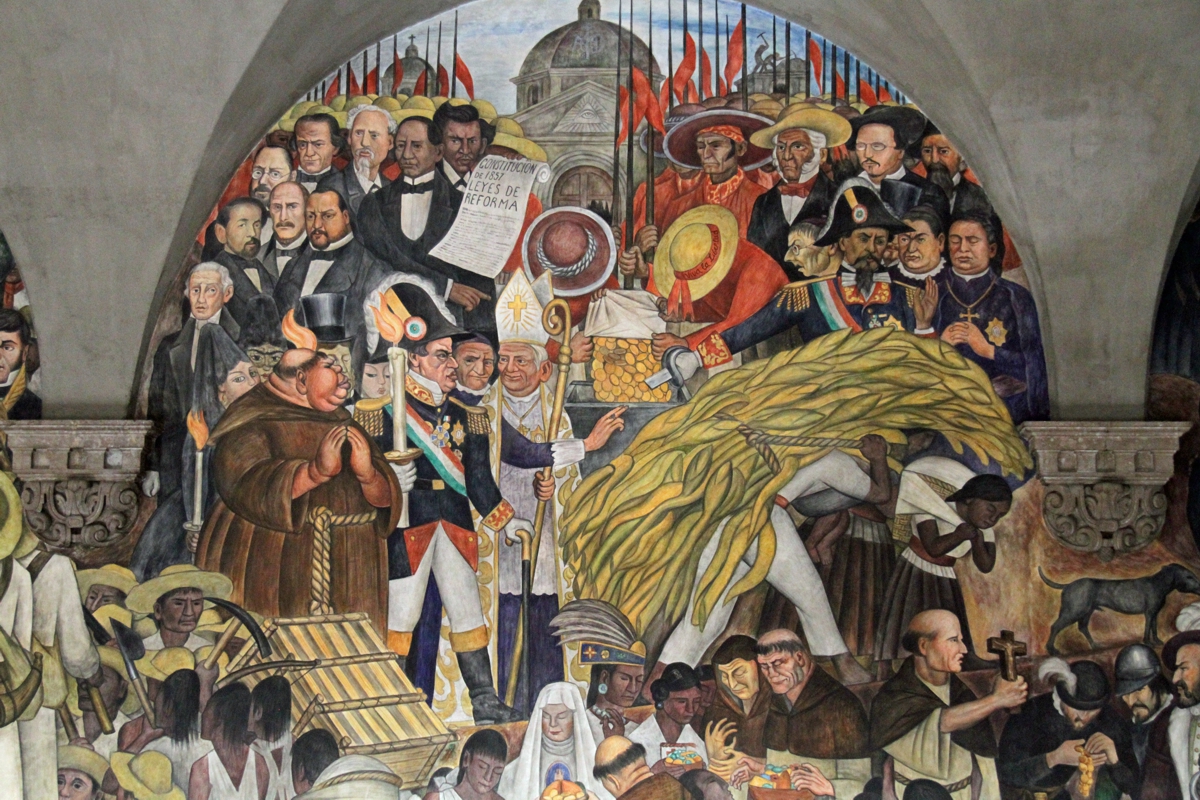
The colonial core, built directly over the Aztec ceremonial precinct. The Zócalo is one of the largest public squares in the world, flanked by the Metropolitan Cathedral and the National Palace, which holds Diego Rivera’s murals of Mexican history. The Templo Mayor ruins and museum sit immediately northeast — the excavated remains of the main Aztec temple, uncovered by accident in 1978 by electricity workers. The Palacio de Bellas Artes, with its Art Nouveau exterior and Art Deco interior, is a few blocks west.
Centro is dense, loud and fascinating during the day. It empties considerably at night.
Roma and Condesa
Two adjacent neighbourhoods of early-20th-century architecture, tree-lined avenues and the highest concentration of good restaurants and cafés in the city. Condesa is greener, built around Parque México and Parque España. Roma is a little grittier and has the stronger gallery and bookshop scene. Both are safe, walkable and where most independent visitors end up staying.
Coyoacán and San Ángel
Colonial villages absorbed by the city, in the south. Coyoacán has cobbled streets, a lively market and the Casa Azul, Frida Kahlo’s home and museum — the most oversubscribed ticket in the city, requiring advance online booking, often weeks ahead. San Ángel, nearby, hosts a Saturday art market and holds the Rivera–Kahlo studio houses designed by Juan O’Gorman.
Polanco and Chapultepec
Polanco is the upscale district, home to the highest-profile restaurants and the Museo Soumaya’s silver-clad exterior. It borders Chapultepec Park, which is roughly twice the size of New York’s Central Park and contains the castle, the zoo, and the National Museum of Anthropology.
Our breakdown of the best neighbourhoods to stay in Mexico City compares them properly.
What this Mexico City travel guide would not skip
The National Museum of Anthropology
If you visit one museum, this is it. The collection covers Mesoamerican civilisations from the Olmecs onward, including the Aztec Sun Stone and the Maya rooms. Allow at least three hours; the building alone, with its enormous cantilevered fountain over the central courtyard, justifies the visit.
Teotihuacan
About 50 kilometres northeast, this pre-Aztec city was among the largest in the world around 500 CE, and its builders remain unidentified. The Pyramid of the Sun and the Pyramid of the Moon flank the Avenue of the Dead. Buses run from Terminal Autobuses del Norte, or you can take a tour. Go early — shade is nonexistent and the altitude plus sun is punishing by midday. Climbing restrictions apply to some structures and change periodically.
Xochimilco
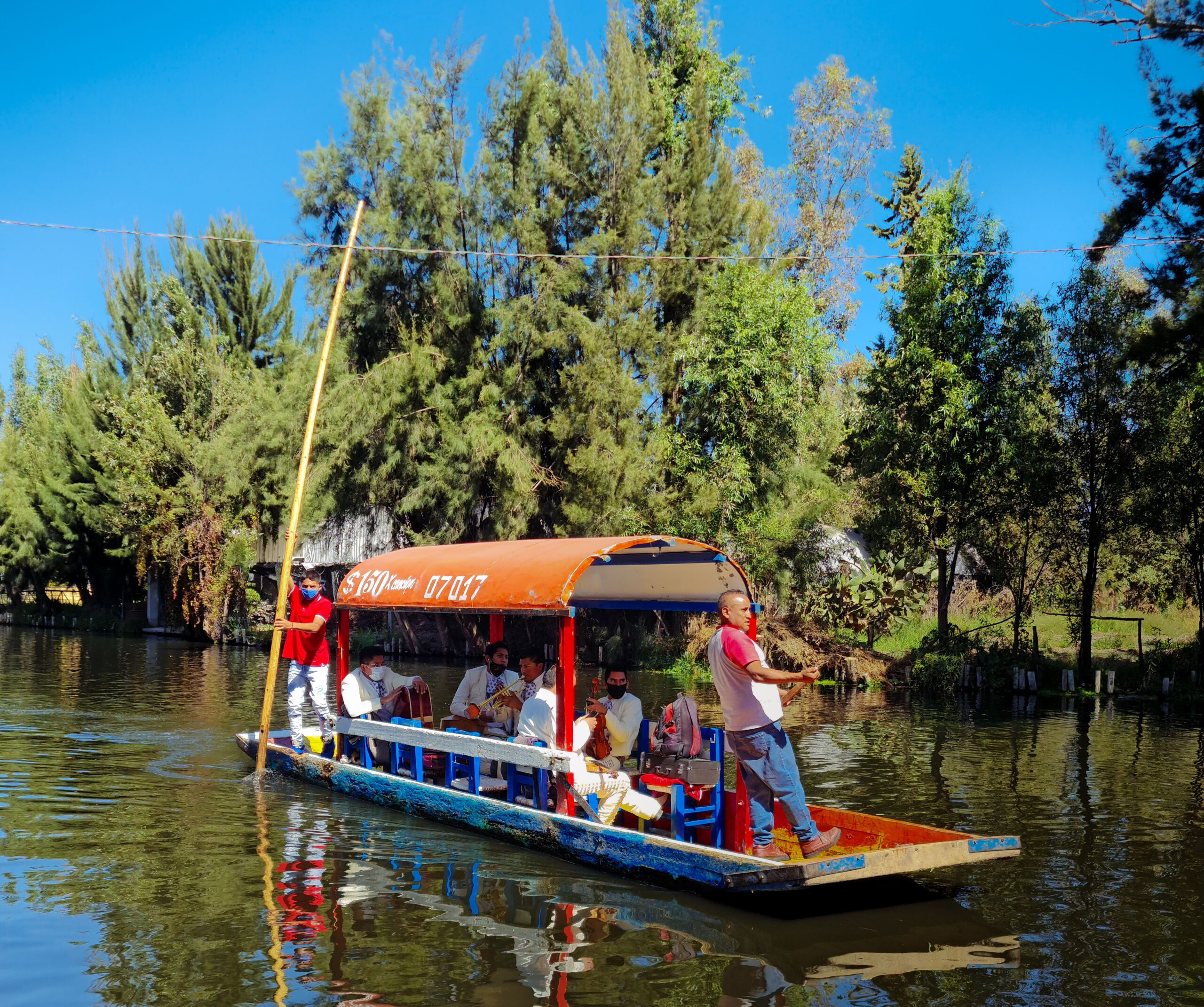
The surviving canals of the lake system, in the far south, navigated by brightly painted flat-bottomed trajineras. Weekends are loud and festive with mariachi boats pulling alongside; weekdays are quiet and the surrounding chinampas — the Aztec floating agricultural plots — are still farmed. Agree the hourly rate before boarding.
Lucha libre
Masked wrestling at Arena México is theatre rather than sport and one of the more entertaining evenings available. Tickets are inexpensive and available at the box office.
For the wider shortlist, see our list of 15 things to do in Mexico City.
Art, architecture and the murals
Mexico City has more museums than almost any city on earth, and the muralist movement of the 1920s and 1930s left public art in places you would not think to look for it.
Where the murals are
Diego Rivera’s largest historical cycle covers the stairwell and upper corridors of the National Palace on the Zócalo, tracing Mexican history from the pre-Hispanic period through the Revolution. The Palacio de Bellas Artes holds work by Rivera, Orozco and Siqueiros in the same building, including Rivera’s recreation of the mural destroyed at New York’s Rockefeller Center. The old Colegio de San Ildefonso, where the movement effectively began, is a short walk away.
The Ciudad Universitaria campus in the south, a UNESCO World Heritage site, is worth a half day on its own — Juan O’Gorman’s mosaic-covered library is the most photographed building, but the whole campus is a coherent piece of mid-century modernist planning.
Museums beyond the anthropology collection
The Museo Frida Kahlo in Coyoacán is the one everyone wants and requires advance booking. The Museo Tamayo and Museo de Arte Moderno sit inside Chapultepec Park. The Museo Jumex in Polanco handles contemporary work, and the Museo Nacional de Arte covers Mexican painting from the colonial era to the mid-20th century. Luis Barragán’s own house, a small modernist masterpiece of colour and light, can be visited by advance appointment only and in small groups.
Getting around
The metro is the cheapest urban rail system you are likely to use anywhere, at around 5 pesos per journey regardless of distance or transfers. The Metrobús, a bus rapid transit network running in dedicated lanes, costs around 6 pesos. Both use the same rechargeable Movilidad Integrada card, sold at station windows for roughly 15 pesos and worth buying immediately.
Metrobús Line 4 connects the airport to the Centro for a modest flat fare and takes around an hour. It is the cheapest airport link, though awkward with large luggage.
The metro is fast and extensive but genuinely crowded at rush hour, and the front carriages of many lines are reserved for women and children during peak periods. Ride-hailing apps are cheap by international standards and are the standard choice at night. Street taxis are best avoided in favour of app-based or hotel-arranged cars.
Full detail is in our guide to the metro, Metrobús and ride apps in Mexico City.
Eating
This is one of the world’s great food cities, and the range from street stall to tasting menu is unusually wide with quality at both ends.
Street and market food
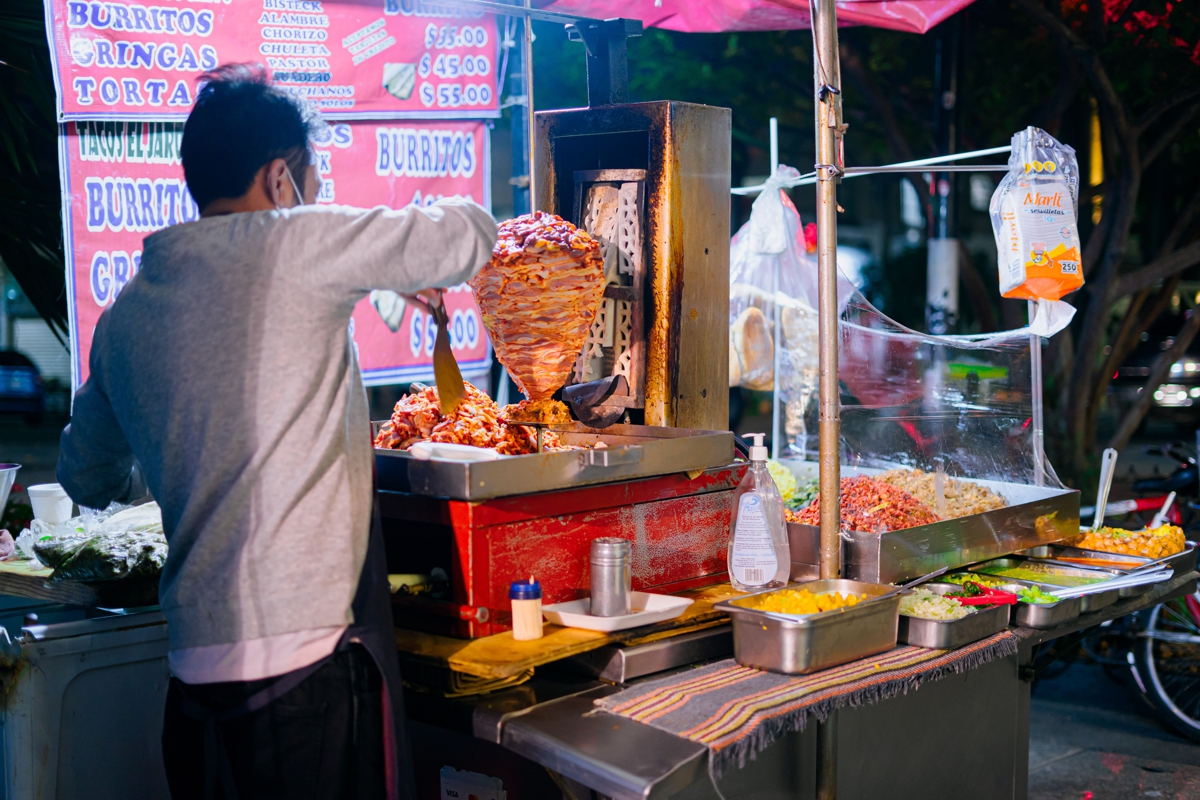
Tacos al pastor — pork marinated in chillies, stacked on a vertical spit with a pineapple on top, a technique brought by Lebanese immigrants — are the city’s signature. Tacos de canasta, tlacoyos, quesadillas from a comal, and huaraches all appear on street corners. Note that in Mexico City a quesadilla does not automatically contain cheese; you have to ask.
Markets are the other pillar. Mercado de San Juan deals in specialist ingredients, Mercado de Coyoacán in tostadas, and Mercado Medellín in South American and Caribbean produce. Eating at a market counter is generally safe and always cheaper than the equivalent restaurant.
Restaurants
Mexico City’s fine-dining scene has become internationally prominent over the past decade, with several restaurants appearing on global lists. Reservations at the best-known places open weeks or months ahead. Between the extremes sits an enormous middle: cantinas serving comida corrida set lunches, Oaxacan and Yucatecan regional restaurants, and the fondas that feed office workers.
Drinking
Mezcal bars have proliferated in Roma and Condesa. Pulque, the fermented agave drink that predates distillation, is served in pulquerías and is an acquired taste worth acquiring. Mexican wine from Valle de Guadalupe appears on most lists now.
Our guide to 20 foods to eat in Mexico City is the deeper dive.
Safety, practicalities and etiquette
Mexico City’s reputation lags well behind its reality, but the ordinary precautions of any large city apply. Stick to app-based transport at night, do not display expensive phones on the metro at rush hour, and keep bags in front of you in crowds. The tourist neighbourhoods — Roma, Condesa, Polanco, Coyoacán, Centro by day — are routinely walked by visitors without incident. Check your government’s current advice, which is issued state by state and treats Mexico City separately from the border regions.
Tap water is not drinkable; restaurants and hotels use purified water for ice and cooking. Tipping is expected at around 10 to 15 percent in restaurants. Earthquakes are a genuine consideration — the city sits on soft lake sediment that amplifies seismic waves, and a loud public alarm sounds when a quake is detected. Learn where your building’s safe exit is; the alarm gives you seconds to a minute of warning.
Spanish goes further here than in the resort destinations. English is common in Polanco, Roma and Condesa and much less so elsewhere.
How long to stay
Four days is the practical minimum: one for Centro, one for Chapultepec and the anthropology museum, one for Coyoacán and the south, and one for Teotihuacan. Five or six days lets you slow down and add Xochimilco, a lucha libre night, and time in Roma and Condesa without rushing.
Our four-day Mexico City itinerary sets that out day by day.
Dates worth knowing
Día de Muertos, at the start of November, has become the city’s biggest visitor event, with a large parade and elaborate ofrendas across public buildings. Accommodation books out months in advance. Independence Day on 16 September brings the Grito ceremony in the Zócalo the night before. Semana Santa, the week before Easter, empties the city of residents and fills the coasts instead — which can make it a surprisingly pleasant time to visit.
FAQ
Is Mexico City safe for tourists?
The central and southern neighbourhoods where visitors spend their time are generally safe with standard urban precautions. Use app-based transport at night rather than street taxis, stay alert in crowds, and check your own government’s current advisory, which assesses Mexico City separately from other states.
How many days do you need?
Four covers the essentials including a Teotihuacan day trip. Five or six is more comfortable and leaves room for markets, neighbourhoods and a slower pace.
Do I need to worry about the altitude?
Most people adjust within a day or two. Expect to be slightly breathless on stairs, drink more water than usual, and moderate alcohol on the first evening. It affects fitness more than health for the vast majority of visitors.
Is the metro worth using?
Yes. It is extremely cheap, extensive, and often faster than a car in traffic. Avoid the busiest rush-hour windows if you can, buy a Movilidad Integrada card on day one, and use ride-hailing after dark.
A closing thought
Mexico City is not a place that rewards a tight schedule. The best hours tend to be unplanned ones — a market lunch that runs long, an afternoon in a park in Condesa, a cantina where nobody is in a hurry. Book the museums that need booking, then leave the rest of the day open.