The hardest part of planning around Japan cherry blossom season is that you have to book flights and hotels months before anyone knows when the flowers will open. Full bloom lasts five to seven days in any given city, the forecast does not firm up until February, and a warm fortnight can pull the whole thing forward by a week. Everyone who has done this has a story about arriving to bare branches or brown petals.
There are ways to load the odds in your favour, and most of them come down to understanding how the bloom moves rather than betting on a single date.
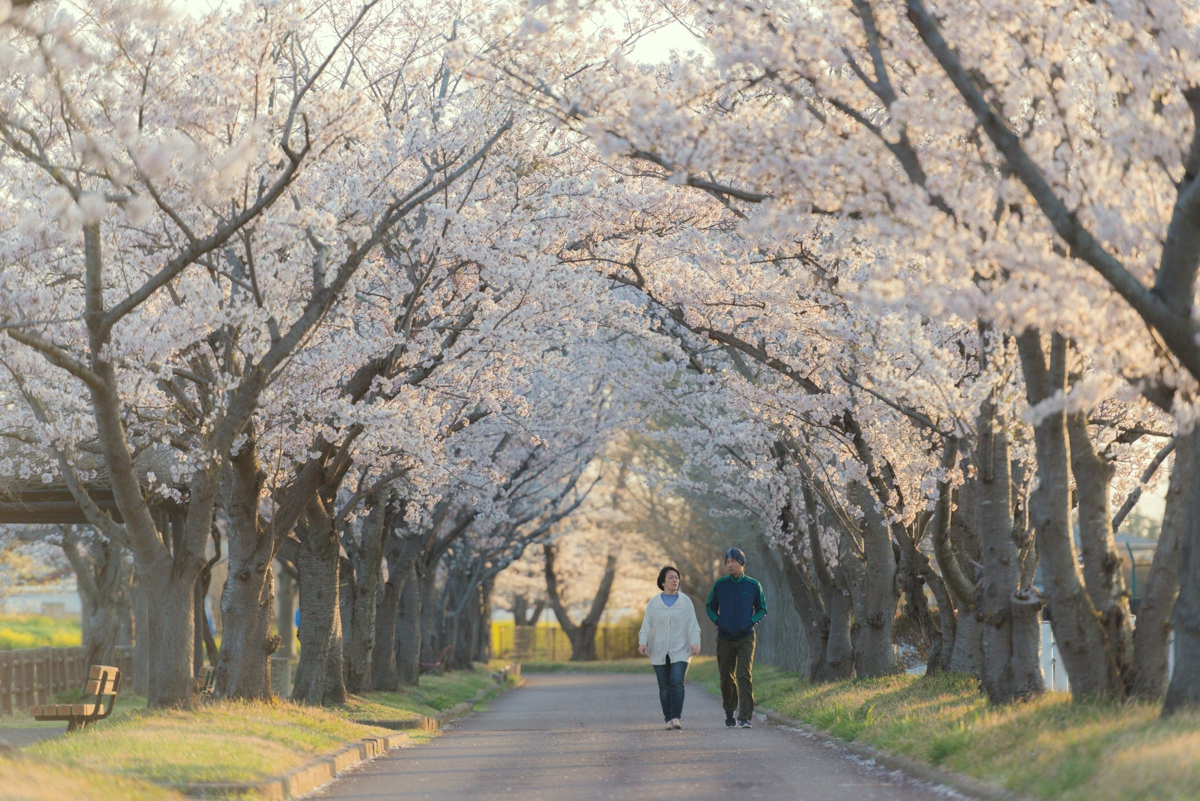
How the Bloom Moves Across Japan
Sakura opens from southwest to northeast, following warmth up the archipelago. The sequence is remarkably consistent even when the timing shifts:
- Okinawa: late January to February, and a different species — the deep pink kanhizakura rather than the pale somei yoshino most people picture.
- Kyushu and Shikoku: from around late March.
- Tokyo, Kyoto, Osaka: late March into early April. For 2027, forecasts point to roughly 28 March–5 April, with Tokyo opening around 29 March and peaking approximately 30 March–2 April.
- Japanese Alps and Tohoku: mid to late April — Takayama, Kanazawa, Sendai, Hirosaki.
- Hokkaido: late April into early May, ending the season in Sapporo and Hakodate.
Two terms matter when reading forecasts. Kaika is first bloom, when a few flowers open on a benchmark tree. Mankai is full bloom, usually about a week later, and that is what you want to target. Peak viewing lasts roughly five to seven days from mankai before wind and rain start stripping the petals.
Reading the forecasts
The Japan Meteorological Corporation publishes its first predictions in December for the following spring, then revises them every week or two through February and March. Those revisions are meaningful — a mild February routinely moves dates several days earlier. Book your trip on the December estimate, then check the January and February updates before locking in which cities you visit on which days.
Strategies That Beat Guessing
Travel north as the season moves
The most reliable approach is to build an itinerary that follows the bloom. Start in Kyoto or Tokyo in late March, then move to Kanazawa, Takayama or Tohoku in mid-April. If the season runs early you catch it in the south; if it runs late you catch it up north. Either way something is blooming.
Use elevation as a backup
Within any region, higher ground blooms later. If Kyoto’s city-centre trees have already dropped, Yoshino in Nara prefecture stages its bloom across four elevation bands over roughly two weeks, and the mountain temples above Kyoto run several days behind the riverbank.
Pick varieties with different timings
Somei yoshino gets the attention, but shidarezakura (weeping cherry) opens a few days earlier and yaezakura (double-flowered) around two weeks later. Tokyo’s Shinjuku Gyoen has over a thousand trees across many varieties specifically so the display lasts about a month rather than a week.
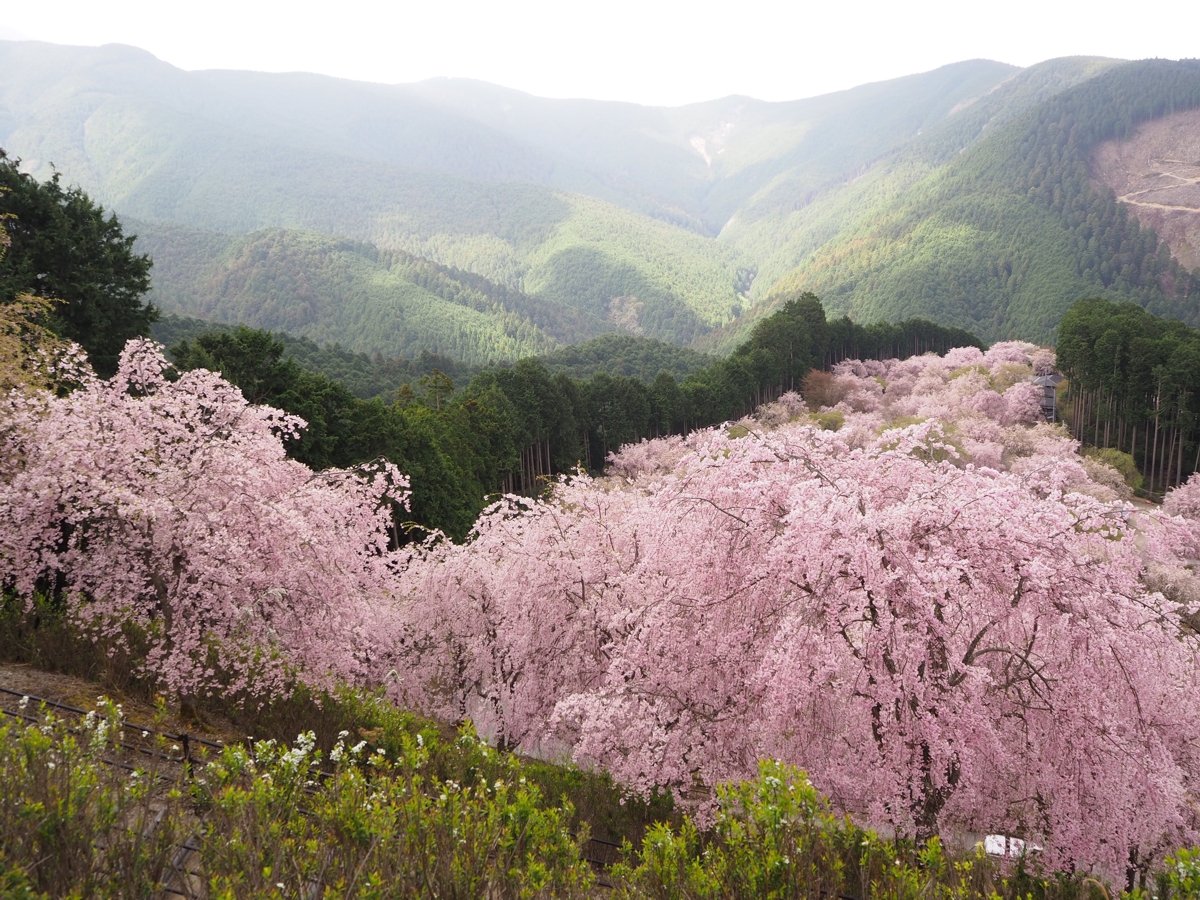
Where to Go for Japan Cherry Blossom Season
Kyoto
The Philosopher’s Path, Maruyama Park’s floodlit weeping cherry, the Okazaki canal by boat, and Arashiyama. Kyoto is the most oversubscribed city in Japan during sakura — temple queues in early April are long, and hotel rates roughly double. Going at 7am is not a nice idea, it is the only way to see Kiyomizu-dera without a crowd. Our guide to the best time to visit Kyoto compares sakura against autumn leaves, which is a genuinely close call.
Tokyo
Ueno Park for the full hanami party atmosphere, the Meguro River for evening illuminations along the canal, Chidorigafuchi for rowing boats under overhanging branches near the Imperial Palace, and Shinjuku Gyoen for the longest window. Tokyo is easier than Kyoto during sakura simply because the city is big enough to absorb the crowds — see our best time to visit Tokyo breakdown for how spring compares on price and weather.
Beyond the big two
Hirosaki Castle in Aomori, with its moat carpeted in fallen petals, is the standout in Tohoku and peaks in late April. Kanazawa’s Kenrokuen garden, Himeji Castle framed by white blossom, and Matsumoto Castle’s black walls against pink are all less crowded than anything in Kyoto.
Night viewing
Yozakura — blossom viewing after dark — is a separate tradition worth planning for, and the crowds thin considerably after 8pm. Major sites light the trees for roughly two weeks around peak bloom: the Meguro River in Tokyo, Maruyama Park and the Kiyomizu-dera night opening in Kyoto, and the moat at Hirosaki. Illumination dates are announced only once the bloom forecast firms up, usually a week or two ahead, so check the individual park or temple site rather than assuming last year’s schedule holds.
What blooms after
If your dates land just past peak, Japan’s spring does not stop with sakura. Wisteria at Ashikaga Flower Park peaks in late April and early May, the shibazakura moss phlox fields near Mount Fuji run through the same window, and the nemophila hills at Hitachi Seaside Park turn blue in late April. All three are worth a day in their own right, and none of them depend on the cherry forecast.
Practical Planning
- Book six to twelve months out. Sakura overlaps with Japan’s own domestic travel peak. Well-located hotels in Kyoto sell out first, and prices for what remains climb steeply.
- Avoid Golden Week. The holiday cluster from late April to early May sends domestic prices and crowds higher again. It only overlaps with sakura in Tohoku and Hokkaido.
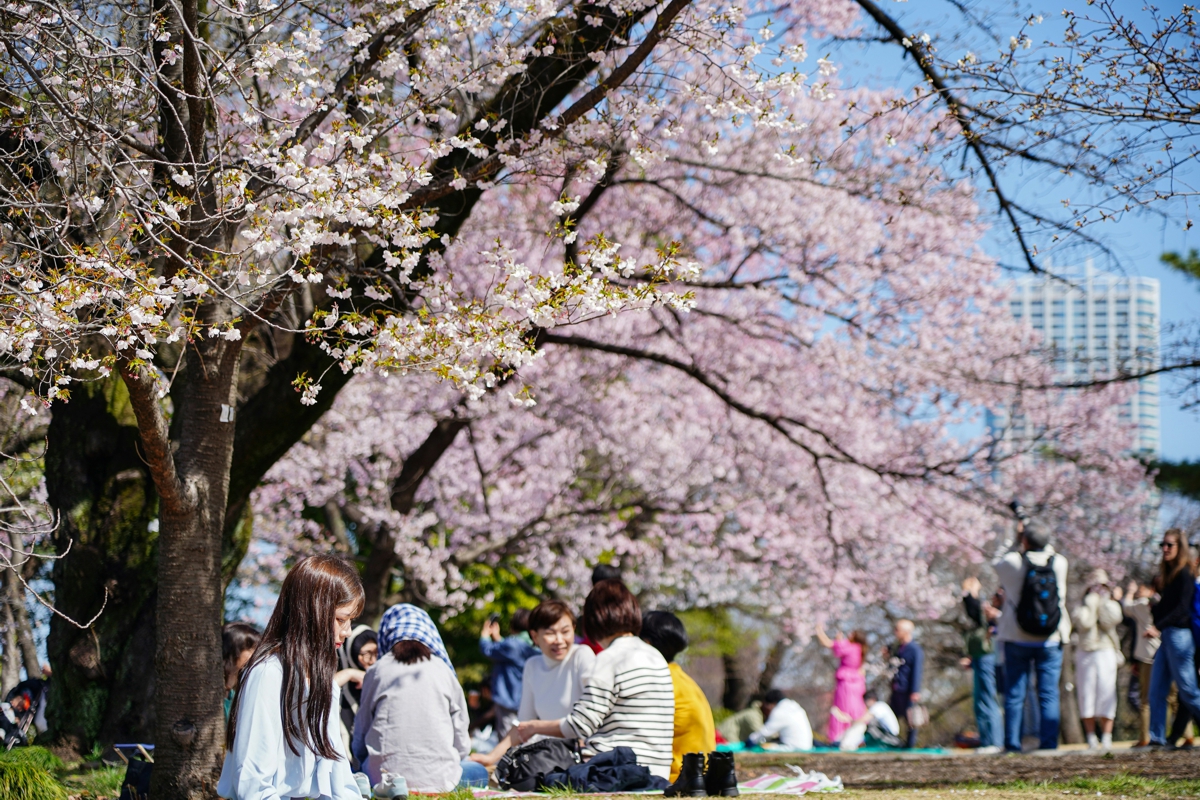
- Hanami etiquette. Picnicking under the trees is the whole point. Tarps go down early, no branches get touched, and you carry your rubbish out — public bins are scarce.
- Weather still decides. A single day of heavy rain or strong wind at peak bloom ends it. Nothing you can book protects against this, which is the strongest argument for a multi-city itinerary.
If this is your first trip to the country, spring adds crowds on top of an already busy learning curve — our first time in Japan guide covers trains, payment, etiquette and the things that catch people out. For structuring the actual route, the 7, 10 and 14 day Japan itineraries can be shifted north or south depending on how the forecast lands.
FAQ
When is the best time to see cherry blossoms in Japan?
For Tokyo and Kyoto, the last few days of March through the first week of April is the highest-probability window. Nationally the season runs from late January in Okinawa to early May in Hokkaido.
How long do cherry blossoms last?
About a week of good viewing per location — roughly five to seven days from full bloom, and less if it rains hard. First bloom to full bloom takes around another week.
What happens if I miss peak bloom?
Move north or uphill. If Tokyo has finished, Tohoku is usually two to three weeks behind, and Hokkaido later still. Late-blooming yaezakura varieties also extend the season in city parks.
Is Japan expensive during cherry blossom season?
It is the most expensive travel window of the year alongside Golden Week and New Year. Expect roughly double the usual hotel rates in Kyoto, and book flights early — this is not a season where last-minute deals appear.
Treat the forecast as a moving target rather than a schedule. Build an itinerary that spans a few hundred kilometres of latitude, keep the internal train legs flexible, and you will see blossom regardless of what the weather does.