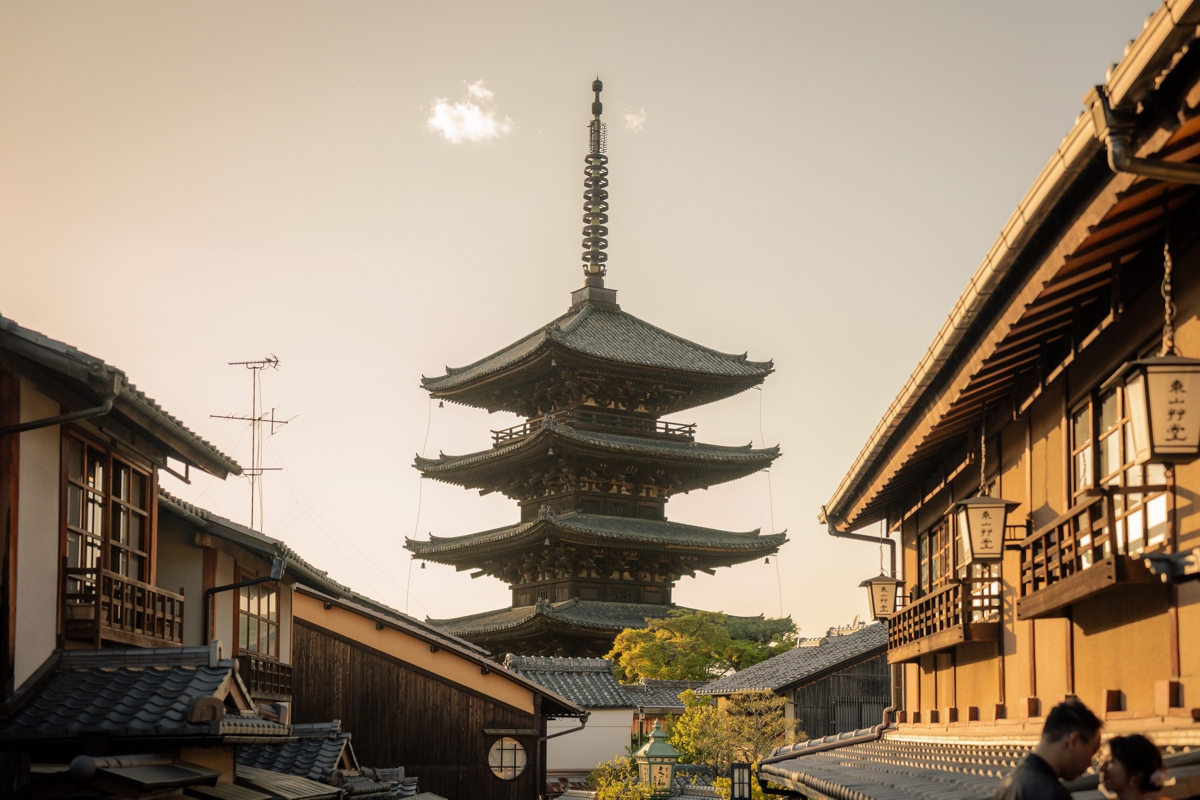
Two days is not enough for Kyoto. It is, however, exactly what most people have – a stop between Tokyo and Osaka, a weekend carved out of a longer trip. The good news is that a well-planned Kyoto itinerary over two days can still cover the eastern temple district, the bamboo groves of Arashiyama, a proper kaiseki-adjacent dinner and at least one moment where the crowds disappear entirely. The trick is geography: Kyoto’s sights cluster in pockets separated by 30–40 minutes of bus traffic, so you group by district rather than by fame.
This plan assumes you arrive the night before or early on Day 1, and that you are staying somewhere central. It leans on early starts, because Kyoto before 8am is a genuinely different city.
Before you start: transport and timing
Kyoto’s public transport is buses first, subway second. The Subway & Bus 1-Day Pass costs ¥1,100 for adults and ¥550 for children aged 6–11, and covers city buses plus both subway lines. If you plan four or more bus rides in a day – likely on Day 1 – it pays for itself. Otherwise an IC card (Suica, ICOCA, PASMO) works on everything and saves you fumbling for coins.
Two practical warnings. Buses in Kyoto get seriously congested between 10am and 4pm, particularly routes 100 and 206 toward Kiyomizu-dera. And most temples close their gates between 16:30 and 17:00, so afternoon dawdling costs you a site. Walking between eastern Higashiyama temples is usually faster than the bus anyway.
Where to base yourself
Downtown around Karasuma or Kawaramachi puts you within walking distance of dinner and one subway stop from Kyoto Station. Areas near the station are convenient for luggage and onward trains but quieter at night. If you want to compare neighbourhoods properly before booking, our breakdown of the best areas and hotels in Kyoto goes district by district with what each one actually feels like after dark.
Day 1: Southern Kyoto and Eastern Higashiyama
6:30 — Fushimi Inari Taisha
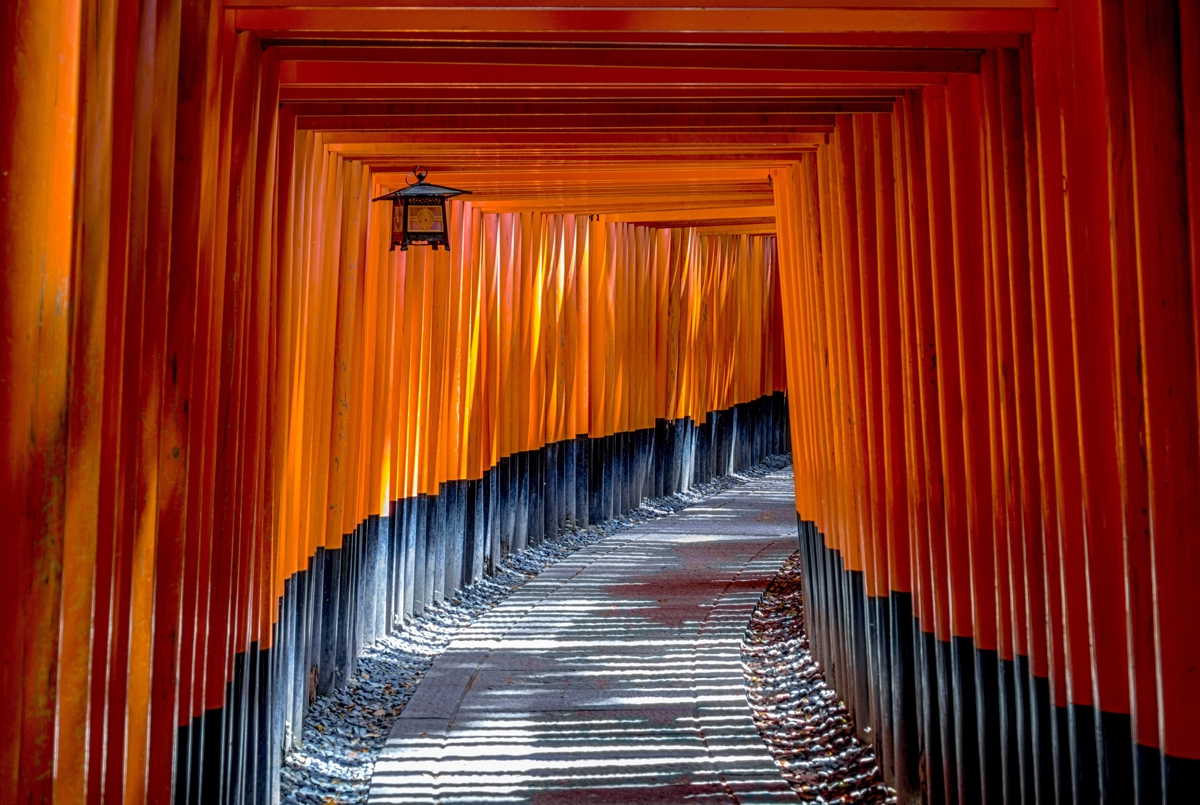
Start here, and start absurdly early. Fushimi Inari is open 24 hours with no admission fee, which means the only way to see the tunnels of vermilion torii gates without a queue of raised phones is to arrive before seven. The full loop to the summit of Mount Inari takes roughly two hours round trip; the crowds thin dramatically after the first 20 minutes of climbing, around the Yotsutsuji intersection where the city view opens up.
If you are short on time, walk 30 minutes uphill and turn back. The atmosphere is the point, not the summit.
9:30 – Tofuku-ji
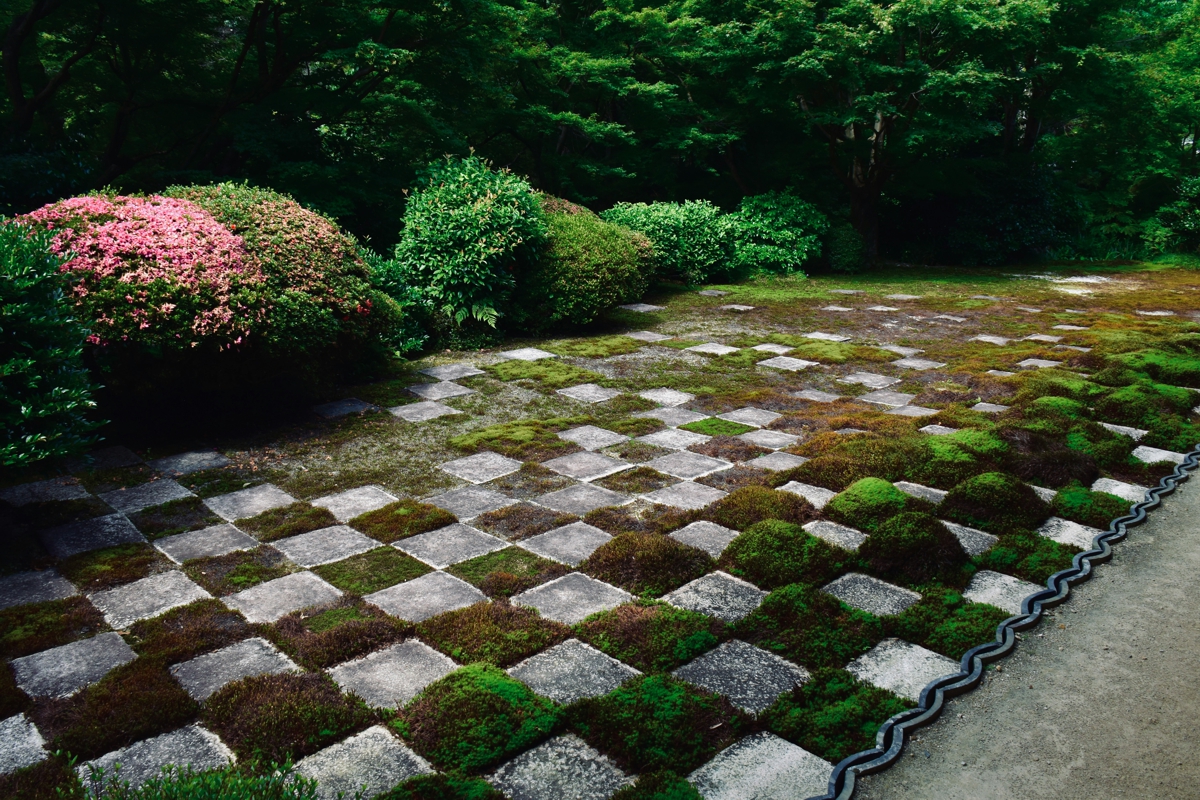
Two stops north on the Nara Line. Tofuku-ji is a large Zen complex best known for the Tsutenkyo bridge over a valley of maples — spectacular in late November, quietly beautiful the rest of the year. The Hojo garden, designed by Mirei Shigemori in 1939, is one of the more interesting modern reinterpretations of dry landscape design in the city. Expect to pay a few hundred yen per garden section; the temple grounds themselves are free.
11:30 – Lunch and Nishiki Market
Head back toward downtown. Nishiki Market runs five blocks and sells everything from pickled vegetables to tamagoyaki on a stick. It is touristy and it is still worth an hour – eat standing, buy nothing you have to carry. Rules about eating while walking have tightened in recent years, so use the small seating areas the vendors provide.
14:00 – Kiyomizu-dera and the Higashiyama slopes
The famous wooden stage at Kiyomizu-dera juts out over a hillside of cherry and maple, held together without nails. Entry is around ¥400–500 and it is typically open until 18:00, later during seasonal illumination periods. The approach streets – Sannenzaka and Ninenzaka – are steep, stone-paved and lined with pottery shops and matcha stands. This is where the crowds are worst, and also where the Kyoto everyone imagines actually exists.
From there, walk north through Kodai-ji and Maruyama Park toward Yasaka Shrine. It is about 25 minutes on foot, downhill, and far more pleasant than any bus.
18:00 – Gion at dusk
Cross into Gion and walk Hanamikoji Street and the Shirakawa canal. Photography restrictions apply on the private lanes of Gion – signs are posted and fines are enforced, so keep to the main streets. Dinner options range from standing sushi counters to izakaya on Pontocho Alley, the narrow lane running parallel to the Kamo River. Reservations help at anything with a queue.
Day 2: Arashiyama and Northern Kyoto
7:30 – Arashiyama bamboo grove
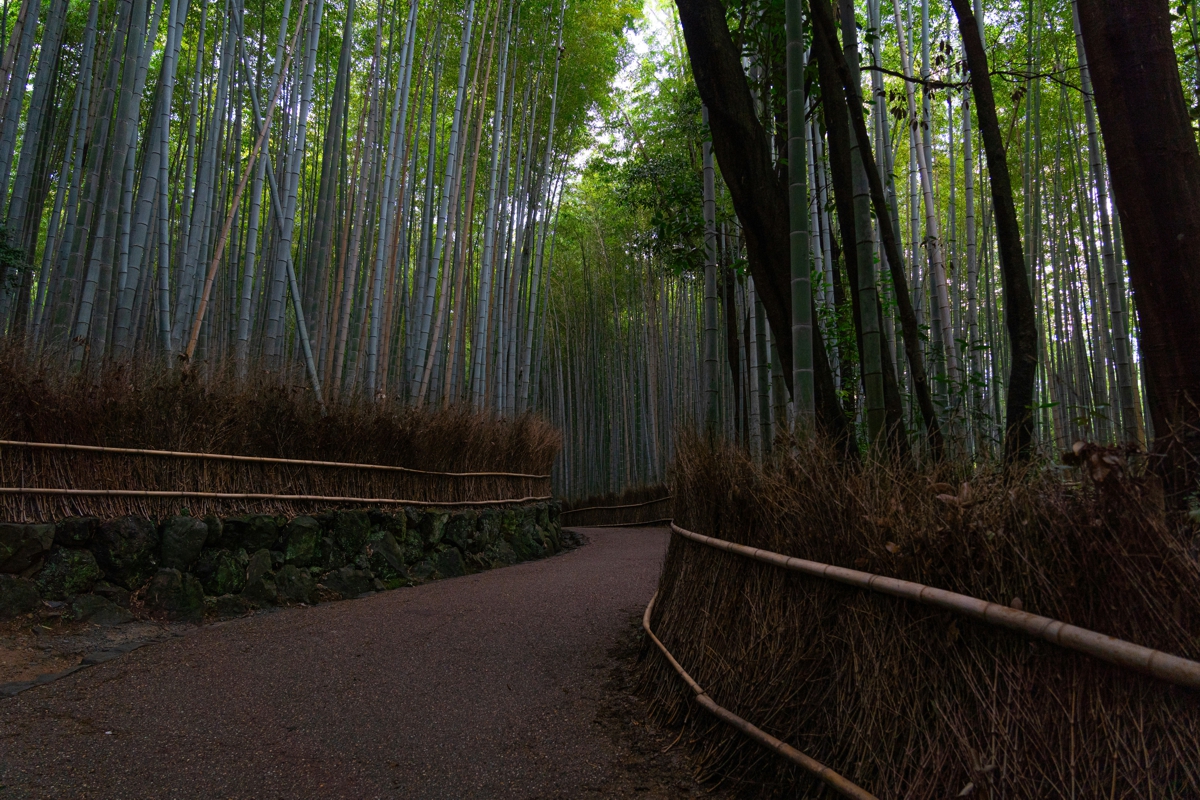
The JR Sagano Line gets you from Kyoto Station to Saga-Arashiyama in about 15 minutes. The bamboo path is short — perhaps 500 metres — and by 9am it is shoulder to shoulder. Go at 7:30 and you will hear the creaking of the stalks, which is the whole reason the grove is designated one of Japan’s soundscapes worth preserving.
Afterwards, Tenryu-ji sits at the southern end of the grove. Its pond garden dates to the 14th century and has never been redesigned, which is rare. Garden entry runs around ¥500, with an extra fee for the temple buildings.
10:30 – Okochi Sanso or the monkey park
Two very different options. Okochi Sanso is the former villa of a silent-film actor, with a hillside garden, a teahouse and views over the Hozu valley; admission includes matcha and a sweet. Iwatayama Monkey Park is a 20-minute uphill hike to a summit where macaques roam freely and the panorama over Kyoto is the best in the city. Families should pick the monkeys.
13:00 – Kinkaku-ji
The Golden Pavilion is unavoidable and, frankly, deserves the reputation. The gold-leaf structure reflecting in the pond is a short visit — 30 to 40 minutes covers the one-way path. Entry is around ¥500. Bus 59 links Arashiyama to Kinkaku-ji directly, though allow 40 minutes with traffic.
15:00 – Ryoan-ji and Ninna-ji
Ryoan-ji’s rock garden — fifteen stones on raked gravel, arranged so you can never see all fifteen at once — is a ten-minute walk from Kinkaku-ji. Sit on the veranda rather than shuffling past. Ninna-ji, another ten minutes on, has a five-storey pagoda and far fewer visitors. If you are running late, skip Ninna-ji without guilt.
17:30 – Kamo River and dinner
End along the Kamogawa, where locals sit on the embankment at evenly spaced intervals — an unspoken convention that never fails to amuse first-time visitors. Dinner downtown, then either an early night or a nightcap in a Kiyamachi bar.
Adapting this Kyoto itinerary
If you only have one full day, cut Day 2 to Arashiyama in the morning and Kinkaku-ji in the afternoon, and drop the northern temples entirely. If you have three days, add Nara as a day trip — 45 minutes by train – or slow down and spend an afternoon in the Philosopher’s Path area near Ginkaku-ji.
Travellers fitting Kyoto into a wider route will find the timing and rail-pass maths laid out in our 7, 10 and 14-day Japan itinerary, which slots this two-day plan into a longer loop. For deeper context on districts, etiquette and seasonal timing, the full Kyoto travel guide covers what a two-day plan cannot, and our list of the 15 best things to do in Kyoto is useful if you want to swap any stop above for something closer to your interests.
FAQ
Is two days enough for Kyoto?
Two days covers the headline sights across eastern and western Kyoto if you start early and group by district. It does not leave room for Nara, Uji, northern Kurama or a slow morning anywhere. Most visitors who return say three or four days is the sweet spot.
What is the best way to get around Kyoto in two days?
A mix of trains and buses. Use the JR Sagano Line for Arashiyama and the Nara Line for Fushimi Inari, then buses for the northern temples. The ¥1,100 Subway & Bus 1-Day Pass makes sense on the day you use buses heavily; an IC card is simpler otherwise.
What is the best time of year for this itinerary?
Late March to early April for cherry blossom and mid-to-late November for maples are the most photogenic and by far the most crowded. May, early June and late September offer decent weather with noticeably thinner queues. July and August are hot and humid.
Do I need to book temple tickets in advance?
Generally no. Most Kyoto temples sell tickets at the gate with little or no queue. The exceptions are special seasonal night illuminations and the imperial villas Katsura and Shugakuin, which require advance application through the Imperial Household Agency.