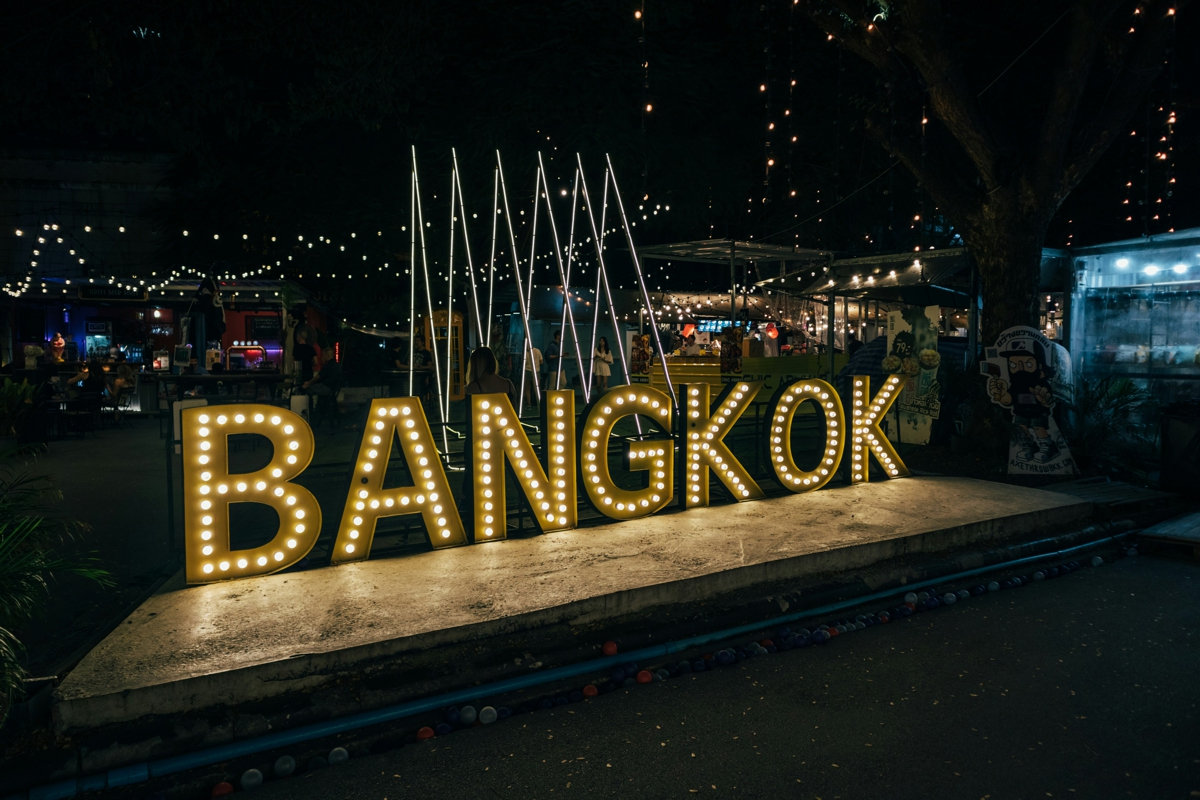
Doing Bangkok on a budget is not a compromise here — it is closer to the default. The city’s best food is sold from carts, its most impressive temples charge little or nothing, and its transport is cheap enough that the main cost of a day out is what you drink. Where budgets break is the gap between the tourist-facing version of the city and the one directly behind it, often on the same street.
A realistic figure: backpackers manage on roughly 1,000–1,500 baht a day including a dorm bed, and 2,500–3,000 buys a private room, three good meals and a couple of paid attractions. The numbers below are 2026 ballparks and move with the season, so treat them as a shape rather than a quote.
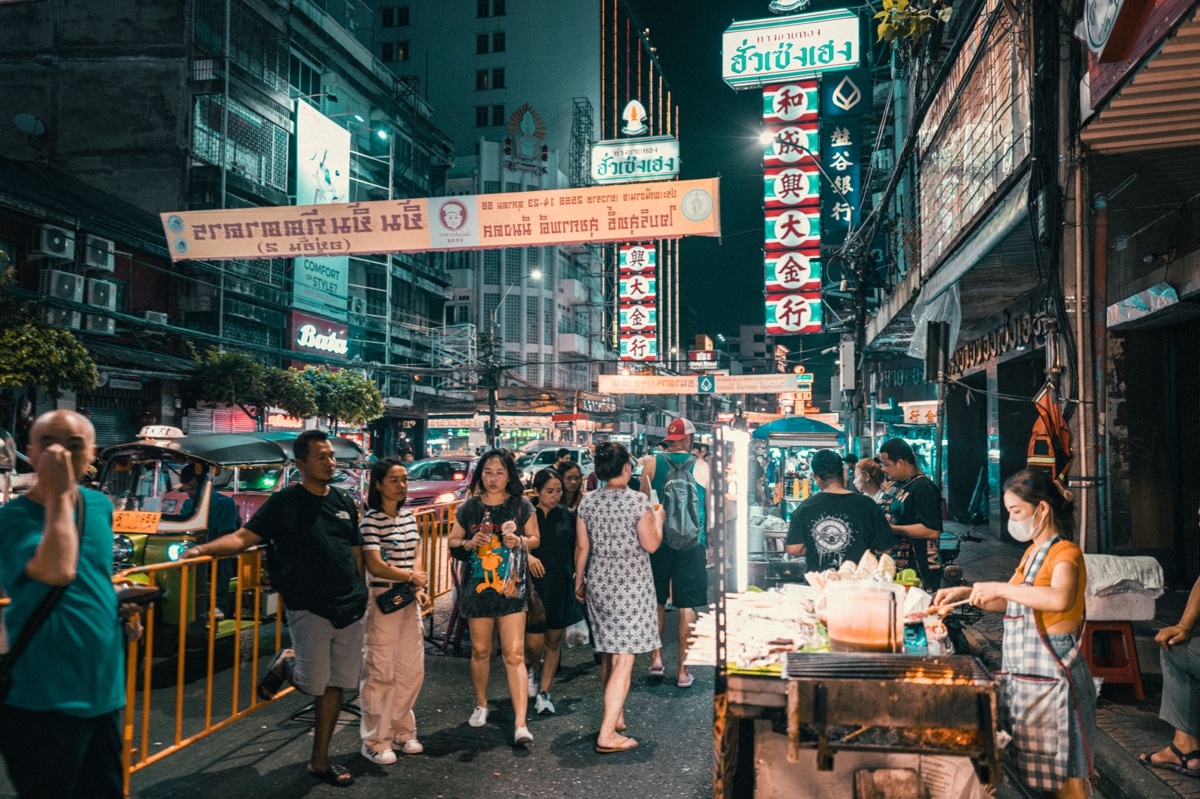
Bangkok on a budget: where the money actually goes
Accommodation
Dorm beds in Khao San, Silom and Sukhumvit generally sit somewhere in the 250–700 baht range depending on the standard and the month. Private rooms in decent guesthouses start not far above the top of that, and mid-range hotels with a pool are cheaper in Bangkok than almost any comparable capital.
The location trade-off matters more than the price. Staying within walking distance of a BTS or MRT station saves you both taxi fares and the hour that Bangkok traffic can eat at the wrong time of day. Our roundup of the best budget hotels in Bangkok is organised around exactly that.
Transport
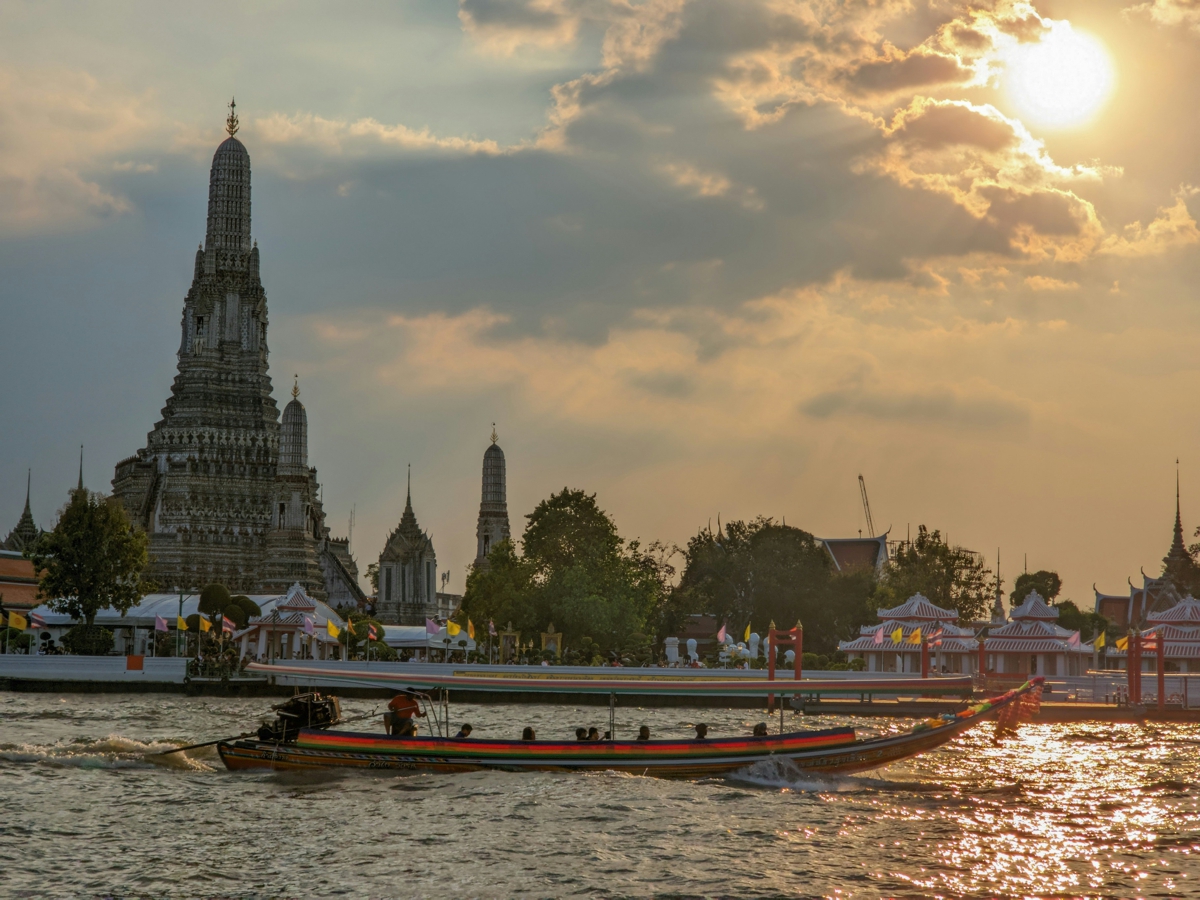
Single BTS or MRT journeys typically run about 16–52 baht by distance, and an unlimited BTS day pass sits around 150 baht — worth it only if you plan four or more rides. The Chao Phraya Express Boat is the cheapest scenic transport in the city: the orange-flag line costs a handful of baht per trip and stops near most of the riverside sights, while the blue-flag tourist boat charges several times that for the same water.
Taxis are metered and genuinely cheap if the driver uses the meter. If they refuse, walk away and flag the next one. App-based rides remove the argument entirely and cost little more.
Food
Street dishes generally cost 40–80 baht. A plate of pad kra pao with a fried egg from a cart, eaten standing, is better than most 400-baht restaurant versions. Food courts on the top floors of malls — Terminal 21, MBK, Siam Paragon — are air-conditioned, hygienic, and priced closer to street level than to the restaurants downstairs. Our Bangkok street food guide covers what to order and which markets are worth the trip.
Free and nearly free things to do
A surprising share of the city costs nothing.
- Wat Pho and Wat Arun charge modest entry fees — in the low hundreds of baht — and are the two temples worth paying for.
- Wat Saket, the Golden Mount asks a small fee for the summit stairs and gives you the best free-standing view of the old city.
- Lumpini Park is free, full of monitor lizards, and at its best around 6am when the outdoor aerobics classes run.
- Chatuchak Weekend Market costs nothing to wander and holds over 15,000 stalls. Go early; it is unbearable by afternoon.
- Talad Noi and Chinatown reward aimless walking more than any planned itinerary.
- Bangkok Art and Culture Centre, opposite MBK, has free entry and good rotating exhibitions.
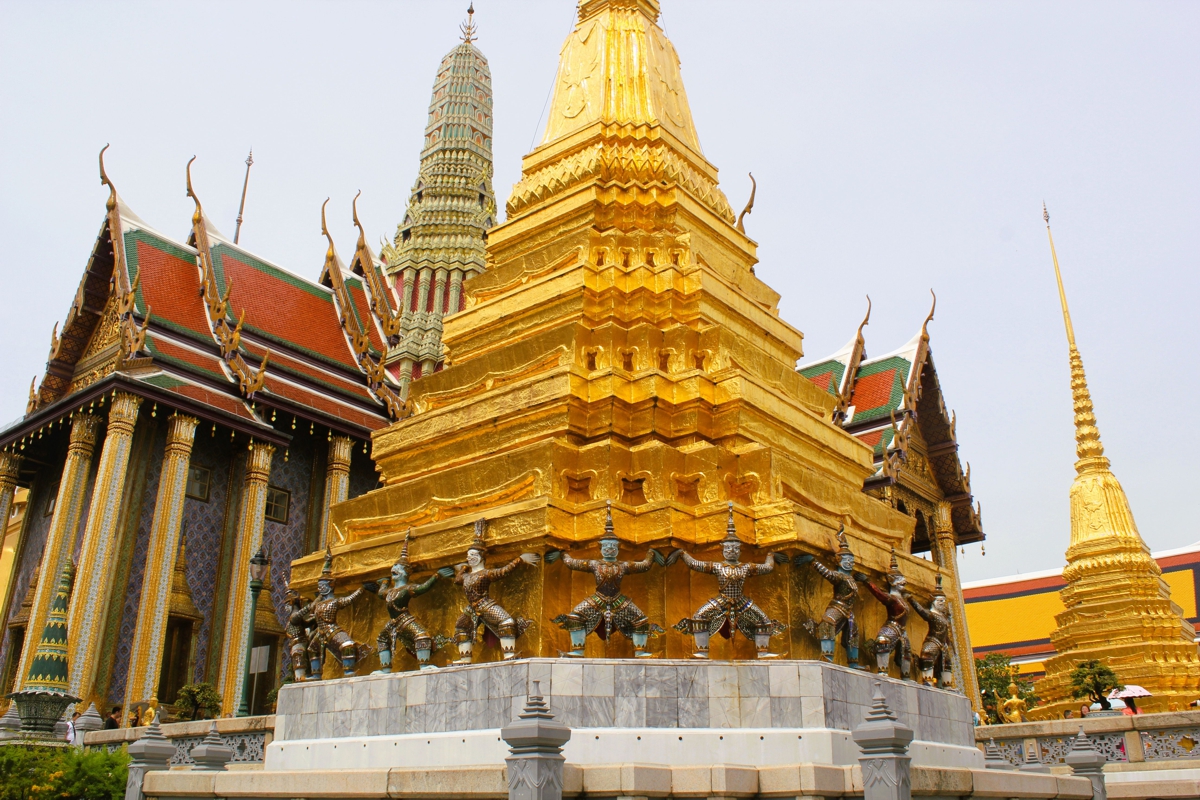
The Grand Palace is the notable exception. Admission runs around 500 baht and includes Wat Phra Kaew. It is expensive by local standards and often crowded — but it is also the single most concentrated display of Thai royal architecture anywhere, so most people pay it once.
Where budgets quietly leak
Tuk-tuks and the gem scam
Tuk-tuks are not cheap transport — they are a novelty ride, and for tourists they routinely cost more than a metered taxi for the same distance. The persistent version of the scam involves a friendly stranger near a major temple who tells you it is closed for a ceremony and offers a cheap tuk-tuk tour that terminates at a gem or tailor shop. Temples are not closed. Keep walking.
Rooftop bars
Bangkok’s sky bars charge Western prices with a dress code attached. If you want the view without the bill, the free observation deck at King Power Mahanakhon still charges for the top floor, but several mall rooftops and riverside restaurants give you elevation for the price of one drink. Or take the express boat at sunset, which costs almost nothing.
Drinks generally
Alcohol is the one category where Thailand is not cheap. Large bottles of local beer from a 7-Eleven cost a fraction of bar prices, and Thai law restricts alcohol sales to roughly 11am–2pm and 5pm–midnight, which catches people out.
Day trips that stay cheap
Bangkok’s surroundings are reachable on public transport for very little, provided you avoid the packaged versions.
Ayutthaya, the former capital, sits about 80 km north. Ordinary trains from Krung Thep Aphiwat or Hua Lamphong cost a small fraction of a tour and take under two hours, and bicycles rent cheaply at the station for the ruins themselves. Maeklong Railway Market, where the stalls fold away as a train passes through them, and the Amphawa floating market can be combined in a single day by minivan from Victory Monument or the Southern Bus Terminal. Both cost a few hundred baht in transport and nothing to visit.
The pattern is consistent: the tour version of these trips runs several times the cost of doing it yourself, and the self-guided version usually involves less waiting around.
Timing your trip
The cool dry season from November to February brings the best weather and the highest prices. The hot season, March to May, is genuinely punishing but cheap. The rainy season from June to October usually means an intense downpour in the late afternoon rather than all-day drizzle, and it is the best value window of the year — flights and rooms drop noticeably while the city carries on as normal.
Whatever the month, structure your days around the heat: temples and markets early, an indoor or air-conditioned block in the middle of the day, and the city again after five.
A sample cheap day
Coffee and a rice dish from a street vendor for around 60 baht. Express boat to Tha Tien, Wat Pho in the morning, then the ferry across to Wat Arun. Lunch in Talad Noi for 70 baht. An hour out of the sun in the Bangkok Art and Culture Centre, free. Chatuchak or Chinatown in the late afternoon. Dinner of two or three street dishes and a fruit shake for 150 baht. Total, excluding the bed: comfortably under 700 baht including entry fees.
Stretch that across a week and you can see nearly everything in our 7-day Bangkok itinerary without changing the way you spend. For visas, neighbourhoods, seasons and the practical groundwork, our Bangkok travel guide covers the rest.
FAQ
How much money do I need per day in Bangkok?
Roughly 1,000–1,500 baht a day covers a dorm bed, street food and transport. Around 2,500–3,000 gets you a private room, restaurant meals and paid attractions. Drinking in bars is what pushes either figure well past those numbers.
Is Bangkok still cheap in 2026?
Yes, relative to almost any other major capital — but less dramatically than a decade ago. Food and transport remain very cheap; accommodation and alcohol have risen closer to regional norms.
What is the cheapest way to get from the airport into the city?
From Suvarnabhumi, the Airport Rail Link into the city costs a fraction of a taxi and connects to the BTS and MRT. From Don Mueang, public buses and the commuter train are cheapest, though a metered taxi split between two or three people is often comparable.
Is street food safe to eat?
Generally yes. Choose stalls with visible turnover and a queue of locals, favour food cooked to order in front of you, and be more cautious with pre-cut fruit and anything that has been sitting out. High turnover matters more than appearance.