Choosing among the best hotels in Tokyo for a first visit is less about finding a famous property and more about avoiding three specific mistakes: booking a room that is too small to open a suitcase in, booking somewhere that looks central on a map but is fifteen minutes from a useful train line, and paying for a district you will barely use.
Tokyo’s hotel market is enormous, competitive and standardised in ways that work in a visitor’s favour. Get the location and the room category right and you will be comfortable at almost any price point.
Start with the station, not the neighbourhood
The JR Yamanote Line loops around central Tokyo and connects most of the districts a first-time visitor will use — Shinjuku, Shibuya, Tokyo Station, Ueno, Ikebukuro. Being within a short walk of a Yamanote station, or a major subway interchange, is worth more than any hotel amenity.
Two things to verify before booking. First, the actual walking distance, since major Tokyo stations sprawl for hundreds of metres underground and the wrong exit adds ten minutes. Second, which airport you are using: Narita is well over an hour out via the Narita Express or Keisei Skyliner, while Haneda is much closer via the Keikyu Line and monorail.
The best districts for a first visit
Shinjuku
The default recommendation, and usually correct. Shinjuku Station is the busiest railway station in the world, which means every line you might want, plus the Narita Express and the highway buses to Mount Fuji and the Japanese Alps. If you plan day trips out of the city, nothing else comes close.
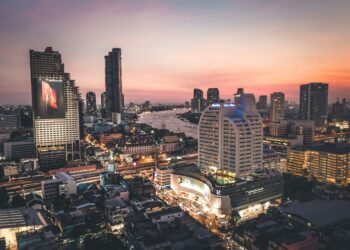
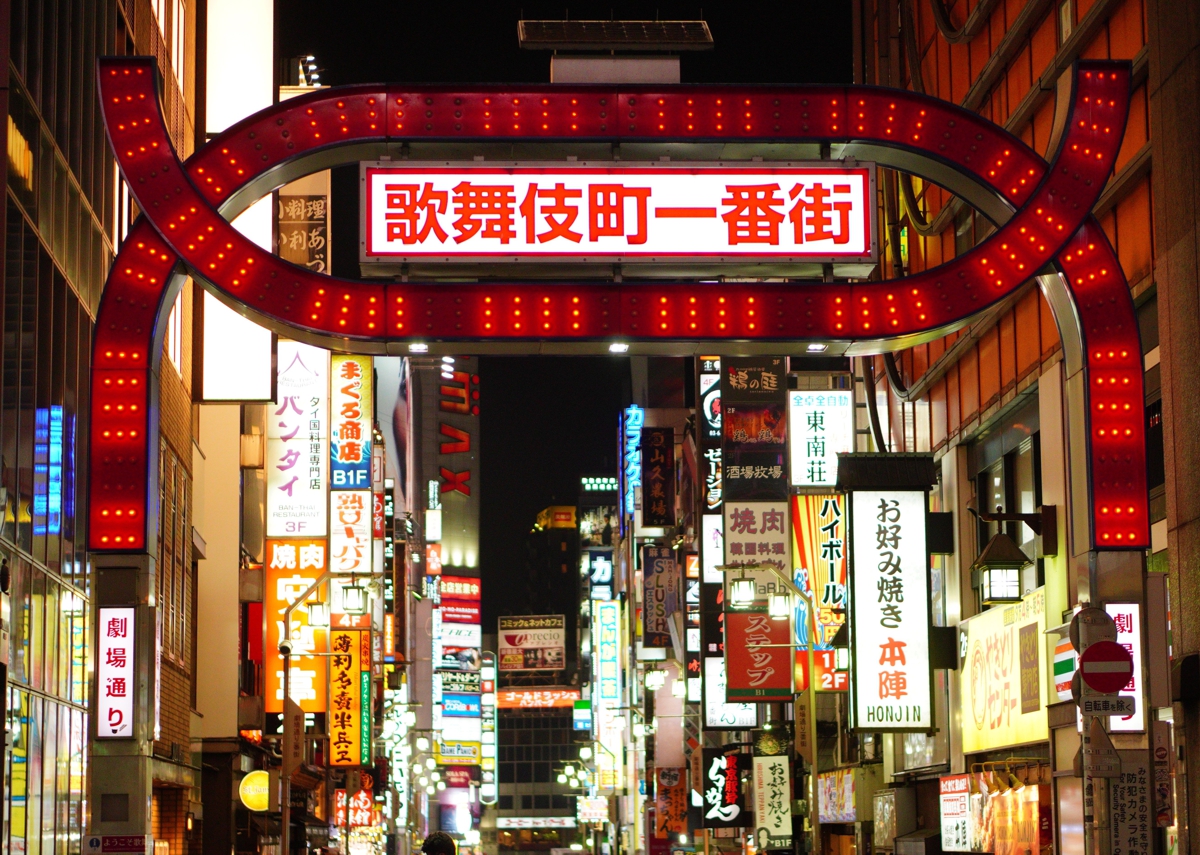
West Shinjuku holds most of the larger hotels, including several high-rise properties with genuinely spectacular views, plus the Metropolitan Government Building with its free observation decks. East Shinjuku is the dense entertainment side — Golden Gai’s tiny bars, the yakitori alleys of Omoide Yokocho, and Kabukicho.
The trade-off is noise and scale. The station is genuinely disorienting on arrival.
Tokyo Station and Marunouchi
The calmest central option. Shinkansen to Kyoto and Osaka, the Narita Express, multiple subway lines, and the Imperial Palace gardens on the doorstep. Ginza’s restaurants are a short walk south.
The district empties in the evening, which some travellers find peaceful and others find dull. Rates run high, and this is where the international luxury properties cluster.
Best for: travellers combining Tokyo with Kyoto by bullet train, older visitors, anyone who values calm.
Shibuya
Substantially rebuilt in recent years with several new hotel towers. Younger, busier, and the gateway to Daikanyama, Nakameguro and Shimokitazawa — all of which are more pleasant places to spend an evening than Shibuya itself.
Asakusa and Ueno
Eastern Tokyo, considerably cheaper, and where the city’s older character survives. Senso-ji temple, the Nakamise shopping street, Ueno Park’s museum cluster, and the Ameyoko market. Ueno also has the Keisei Skyliner terminus, the fastest connection from Narita.
The trade-off is that the modern dining and nightlife of the western districts is a 25 to 35 minute train ride away.
Understanding Japanese hotel categories
The categories do not map onto Western equivalents, and knowing them prevents the most common disappointment.
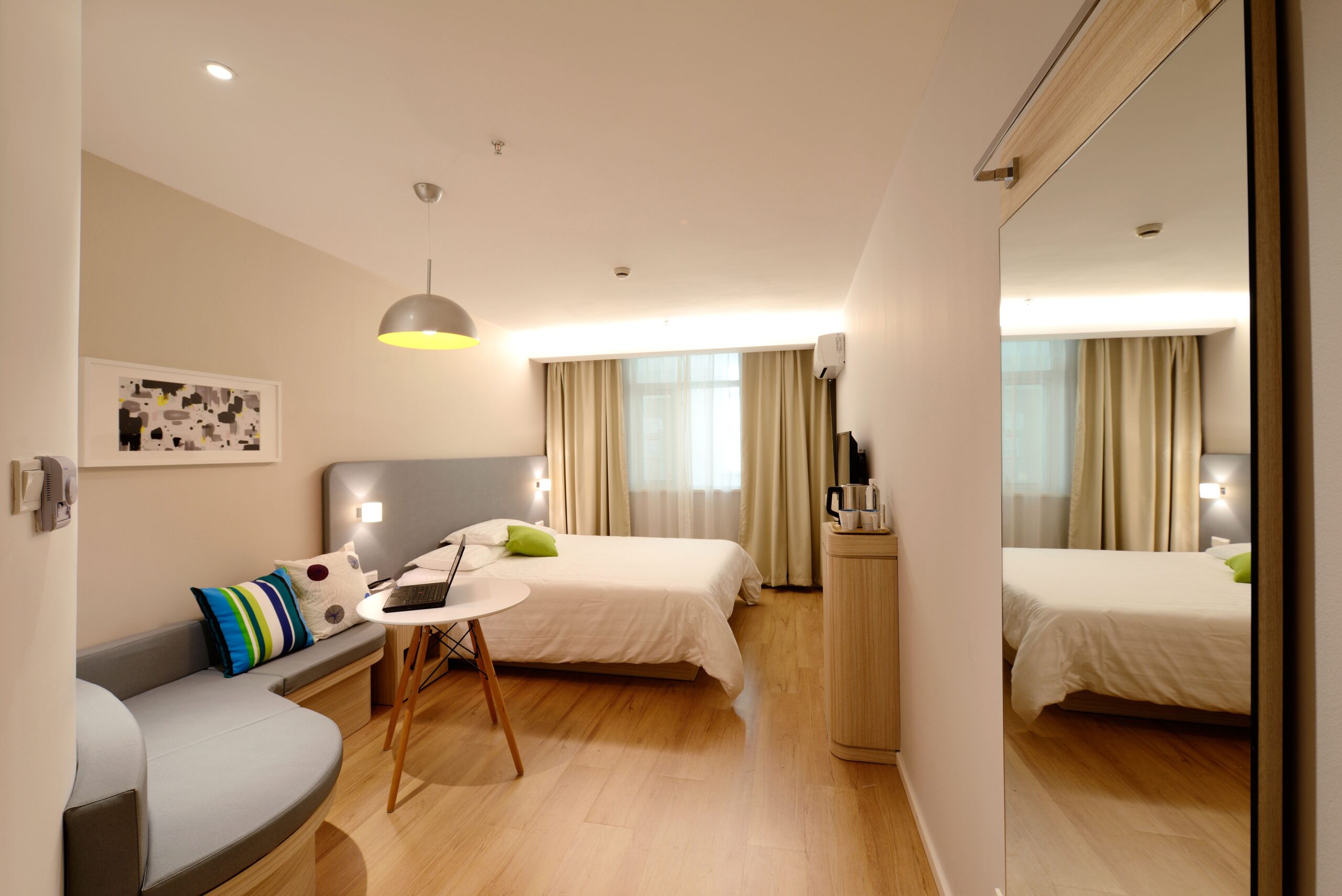
Business hotels are the workhorses — large domestic chains offering small, spotless, efficiently designed rooms at reasonable rates. A double may be 14 to 18 square metres. They are excellent value and entirely comfortable provided you are not expecting space. For most first-time visitors these are the right answer.
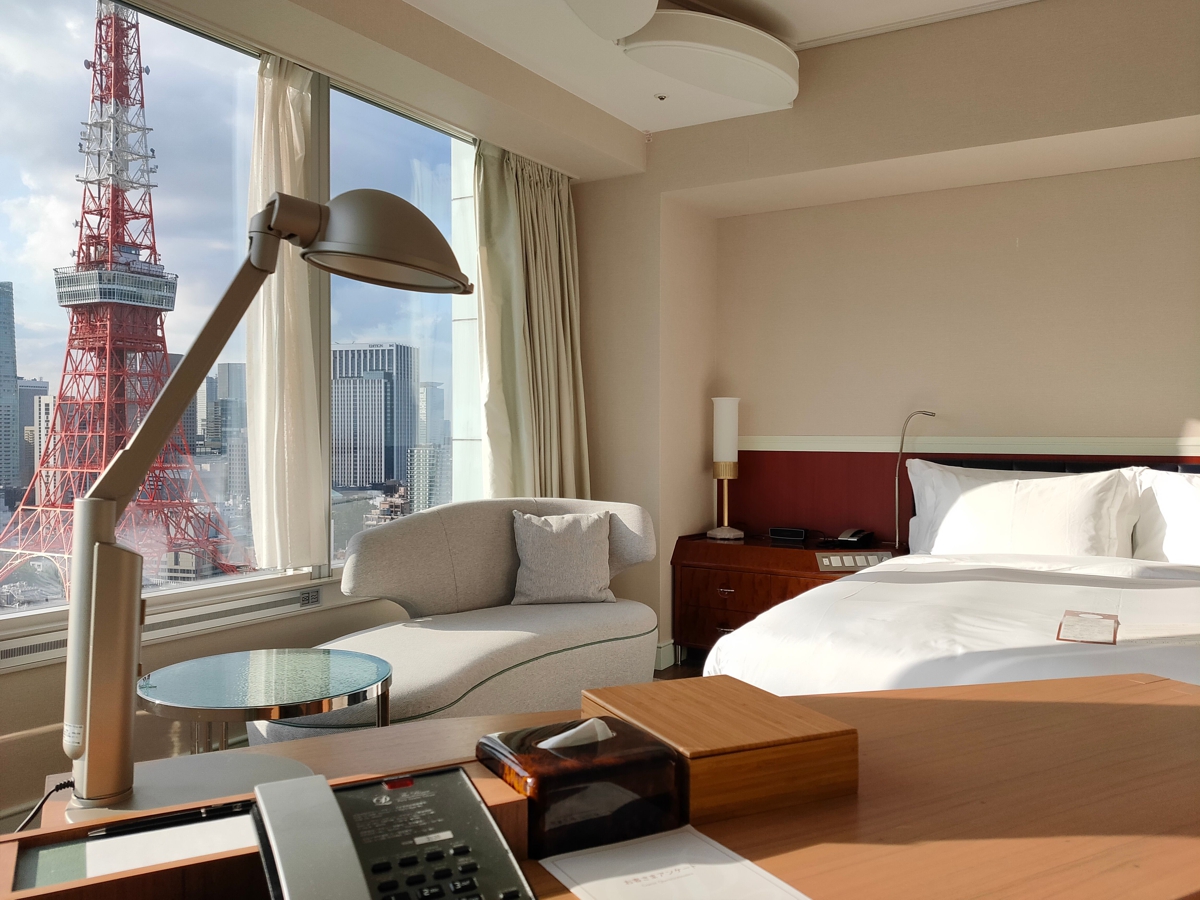
International luxury hotels cluster in Marunouchi, Roppongi, Nihonbashi and the newer Toranomon developments, and offer by far the largest rooms in the city.
Capsule hotels provide a sleeping pod rather than a room, with shared bathing facilities. Modern ones are far better than the reputation suggests — see our guide to capsule hotels in Tokyo.
Ryokan are traditional inns, and Tokyo has relatively few compared with Kyoto, concentrated around Asakusa.
Apartment rentals are legal but regulated, and licensed properties display a registration number.
What to check before booking
- Room size in square metres. This is the single most useful figure. Under 15 square metres for two people with large suitcases is tight, and photographs will not tell you.
- Bed size. A “double” in Japan is often 140cm wide. Twin rooms sometimes offer more usable space than doubles.
- The specific station exit and the walk from it.
- Luggage storage before check-in and after check-out, which most hotels offer as standard but is worth confirming for early arrivals.
- Whether breakfast is included. Often good value at business hotels, rarely worth it at the top end when a convenience store or a standing soba counter is thirty seconds away.
- Pricing structure. Some Japanese hotels price per person rather than per room, so a rate that looks low may double for two.
What Japanese hotels do differently
Several conventions surprise first-time visitors, and none of them are problems once you expect them.
The bathroom is a moulded unit. Business hotel bathrooms are frequently a single prefabricated pod — bath, shower, sink and toilet in one waterproof moulding. It looks odd and works perfectly well, and the deep short bathtub is designed for soaking rather than lying down.
Amenities are comprehensive. Toothbrushes, razors, hairbrushes, pyjamas and slippers are standard even at budget properties, often laid out in the room or available from a help-yourself station in the lobby. There is no need to pack toiletries for a Japan trip.
The toilet has a control panel. Heated seat, bidet functions, and sometimes a sound generator. The buttons are usually pictorial.
Check-in is often strictly from 3pm and enforced more firmly than in Europe, though luggage storage before that is universal and free.
Slippers at the door in ryokan and some hotels, particularly if the room has any tatami area.
Vending machines and coin laundries are common in the building. For a two-week trip, a hotel with a laundry means packing half as much.
Tipping is not practised and attempting it causes awkwardness rather than pleasure.
Common first-timer booking mistakes
Booking near Tokyo Station because it sounds central. It is central, and it is also a business district that empties at seven. Fine if you want calm; disappointing if you imagined stepping out into the city.
Choosing Roppongi for the nightlife reputation. It is not on the Yamanote Line, which makes it less convenient than its position suggests, and the district has broadened well beyond the nightlife it is known for.
Assuming a hotel near Narita saves money. The airport is over an hour from the city. An airport hotel makes sense only for a genuinely early departure.
Booking a double instead of a twin. Japanese twin rooms are often larger overall than doubles at the same rate, with more floor space for luggage.
Underestimating the walk from the station with suitcases. Tokyo pavements are excellent, but the stations themselves involve long underground corridors and, at some, stairs rather than lifts. Check which exit your hotel is near and whether there is step-free access.
Timing and booking
Book two to three months ahead for most dates, and four to six for cherry blossom season in late March and early April, Golden Week at the end of April, and the autumn colour period in mid to late November. During those windows central availability tightens sharply and rates across every tier can double.
The value months are January and February, when the weather is cold and clear and the city is at its emptiest.
A note on luggage: takkyubin forwarding services will send suitcases to Kyoto or on to the airport cheaply and reliably, which makes moving between cities far easier than dragging cases through Tokyo Station.
Where to go from here
For a full breakdown of how the districts compare, see our guide to where to stay in Tokyo. Our 5-day Tokyo itinerary groups the sights geographically so you are not crossing the city unnecessarily, and our guide to 25 things to know before your first trip to Japan covers the practicalities beyond accommodation. The full Tokyo travel guide covers transport and planning.
Ready to book? Compare Tokyo hotel prices
Filter by price and guest rating, then check availability for your dates.
Prices and availability from Stay22 partners such as Booking.com and Expedia.
FAQ
Which area is best for first-time visitors to Tokyo?
Shinjuku for maximum transport connections and constant activity, or Tokyo Station and Marunouchi for a calmer base with the best onward rail links. Both put you within easy reach of everything on a standard first itinerary.
Are Tokyo hotel rooms really that small?
Business hotel rooms typically run 14 to 18 square metres, which is small by international standards but efficiently designed. International luxury properties offer considerably more space at a much higher price. Always check the stated square metreage.
How much should you budget for a hotel in Tokyo?
Less than most people expect. Tokyo’s business hotel sector is large and competitive, and a clean, quiet, well-located room costs less than the equivalent in London, Paris or New York. Rates rise sharply during cherry blossom and autumn colour seasons.
Should you stay in one hotel or move around Tokyo?
Stay in one. The rail network is fast enough that changing base saves very little, and the time lost to checking in and out is better spent elsewhere. Splitting only makes sense on stays longer than a week.