
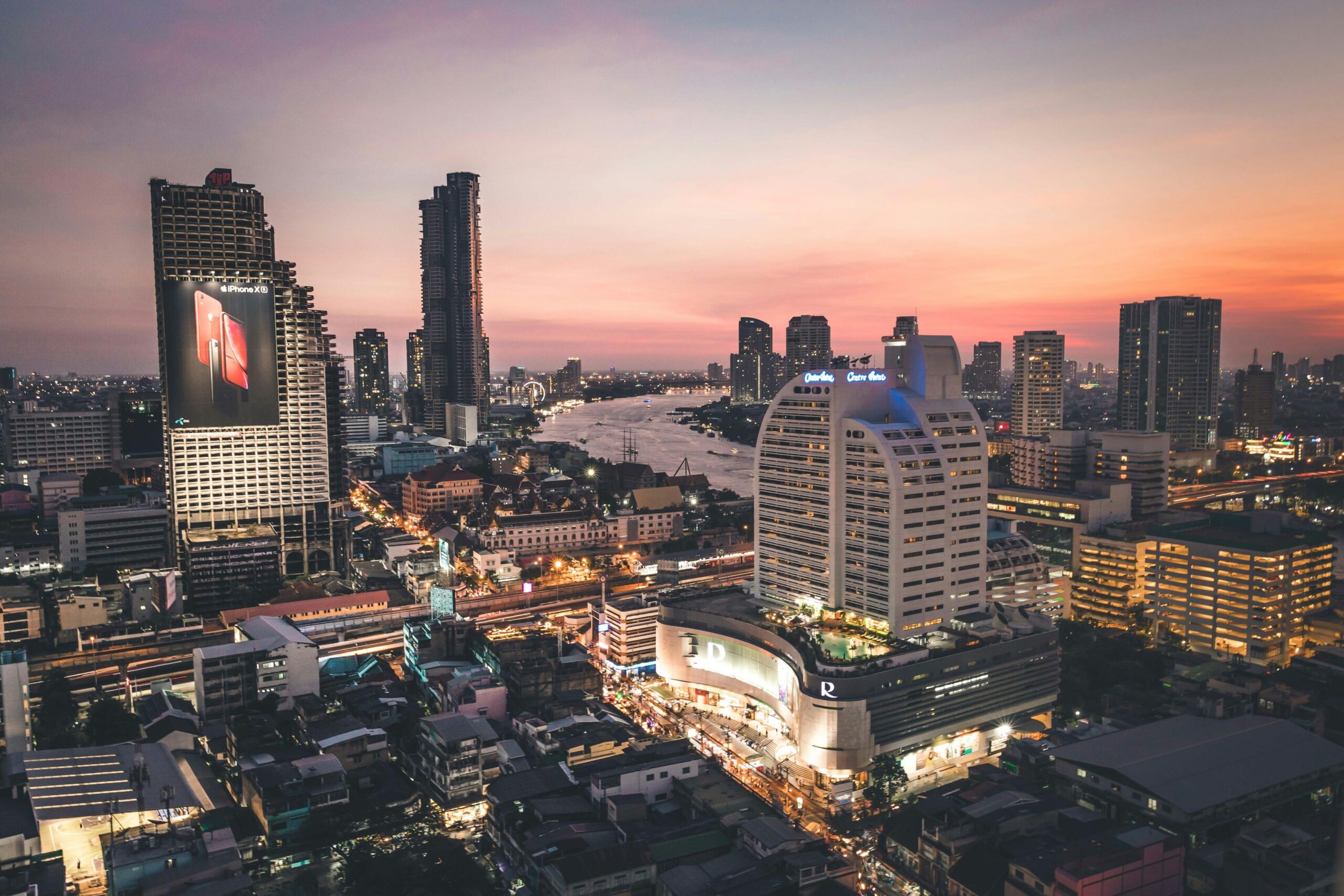
Bangkok is one of the few major cities where budget hotels are genuinely good rather than merely survivable. The competition is enormous, the standard is high, and a modest nightly rate here buys a clean, air-conditioned room in a building with a lift and often a pool — a combination that would cost several times more in most world capitals.
The trick to finding the best budget hotels in Bangkok is not hunting for the lowest number. It is understanding which districts deliver good value and, more importantly, which ones put you within a short walk of a Skytrain or subway station. In a city where traffic can turn a three-kilometre journey into fifty minutes, a cheap room in the wrong place stops being cheap.
The rule that governs everything: station distance
Before comparing prices, check the walk to the nearest BTS Skytrain or MRT subway station on a map. Bangkok listings frequently describe a property as five minutes from the station when the reality is a fifteen-minute walk down a long soi in 34-degree heat.
A room that costs slightly more but sits two minutes from a station will save you money on taxis and, more valuably, hours of your trip. This single check separates good budget bookings from bad ones more reliably than reviews do.
The best districts for budget accommodation
Ratchathewi and Phaya Thai
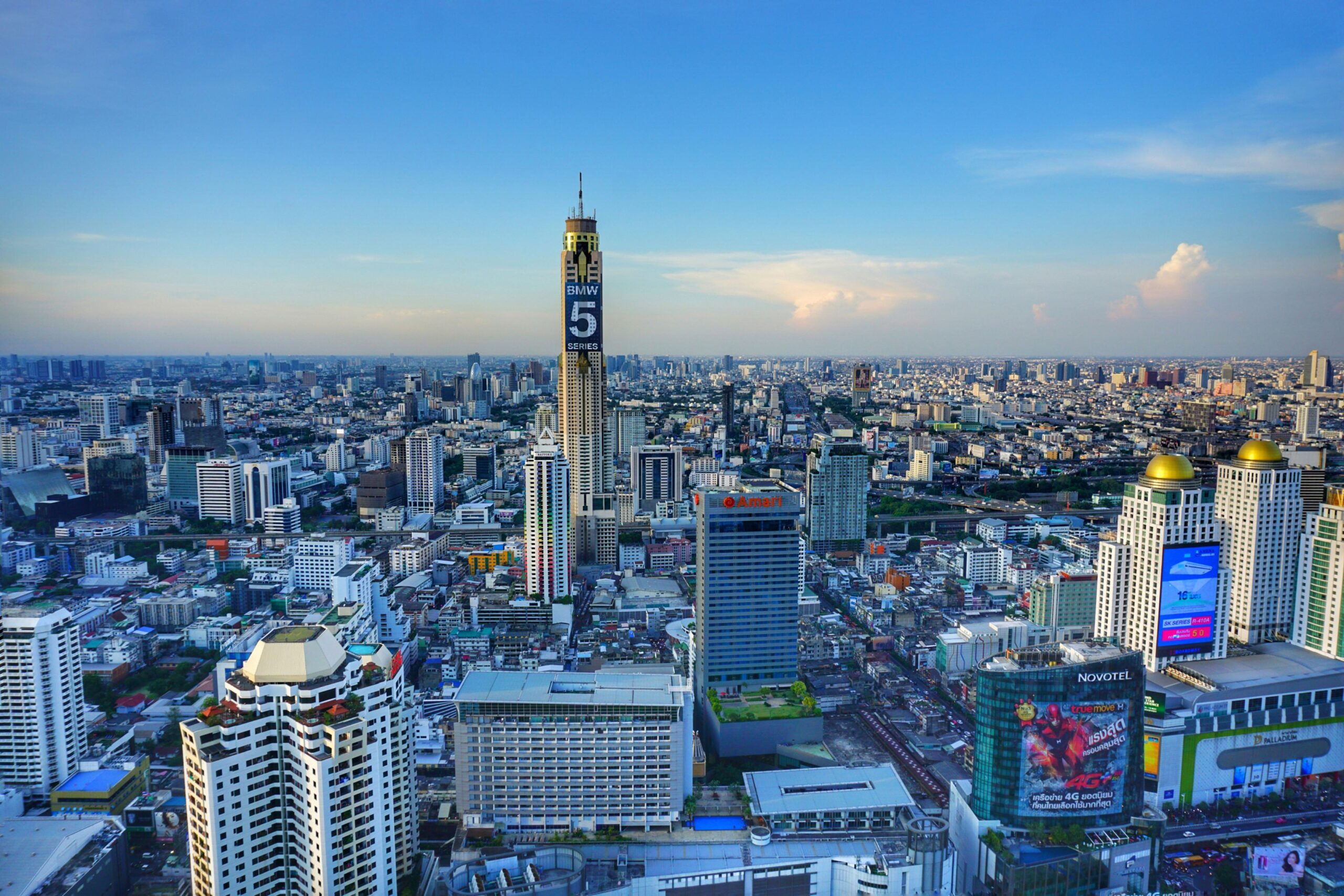
One and two stops north of Siam on the BTS, these are the strongest value areas in central Bangkok. You get essentially the same connectivity as Siam — the most convenient point in the city — at noticeably lower rates. Phaya Thai is also the terminus of the Airport Rail Link from Suvarnabhumi, which makes arrival straightforward.
The neighbourhoods themselves are ordinary working Bangkok rather than tourist districts, which means better and cheaper food than anywhere on the main visitor routes.
Banglamphu and around Khao San
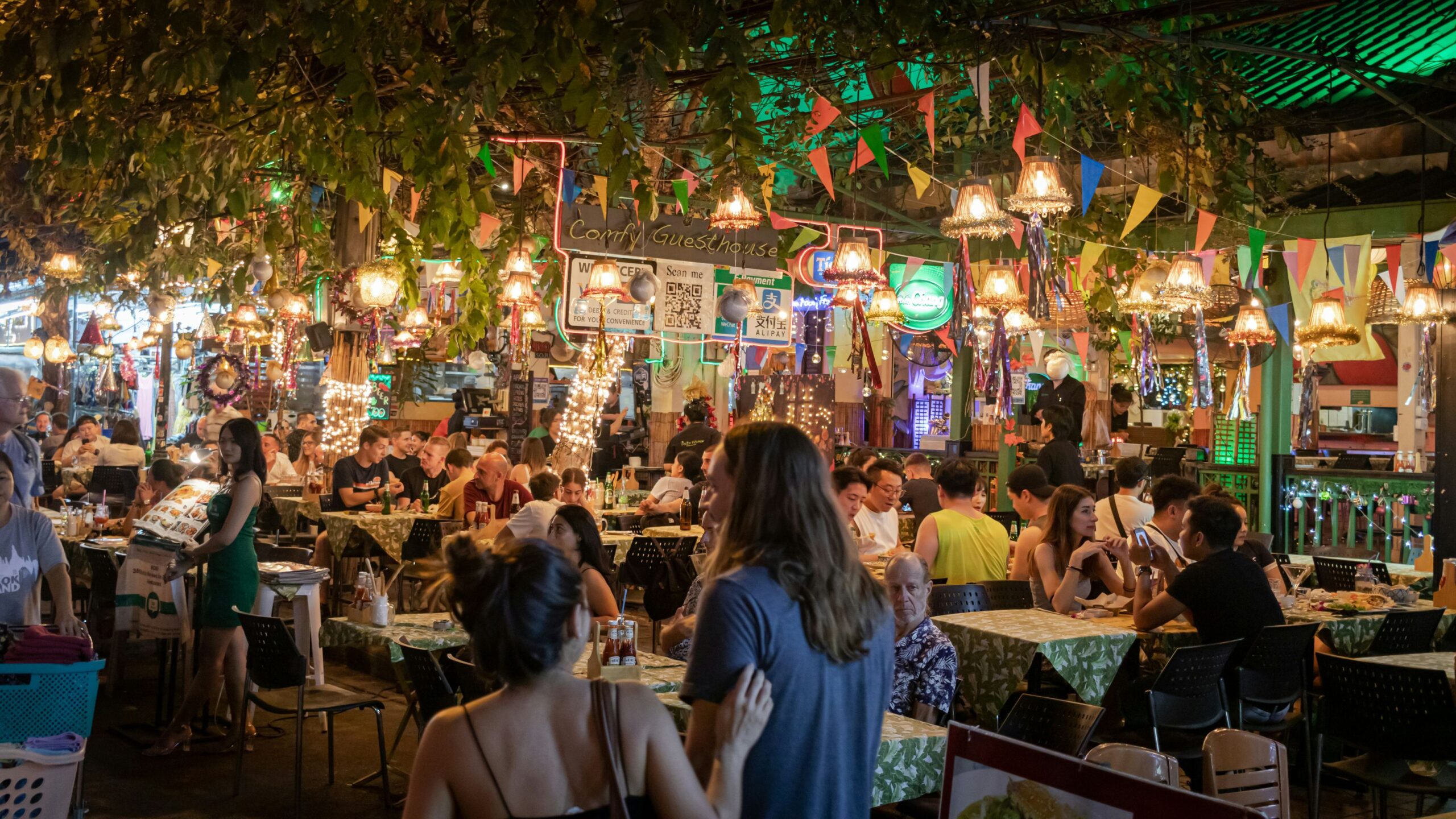
The old backpacker centre remains the cheapest place to sleep in Bangkok and puts you walking distance from the Grand Palace, Wat Pho and the river. Khao San Road itself is loud and heavily commercialised; the surrounding streets are considerably better.
Soi Rambuttri, a curving lane one street over, is calmer with a good concentration of guesthouses. Phra Athit, along the river, is quieter still and has a genuine local café scene.
The drawback is connectivity. The MRT now reaches Sanam Chai near Wat Pho, which helps, but this area is still largely dependent on river boats and taxis. Fine for a sightseeing-focused stay, awkward if your evenings are in Sukhumvit.
Chinatown (Yaowarat)
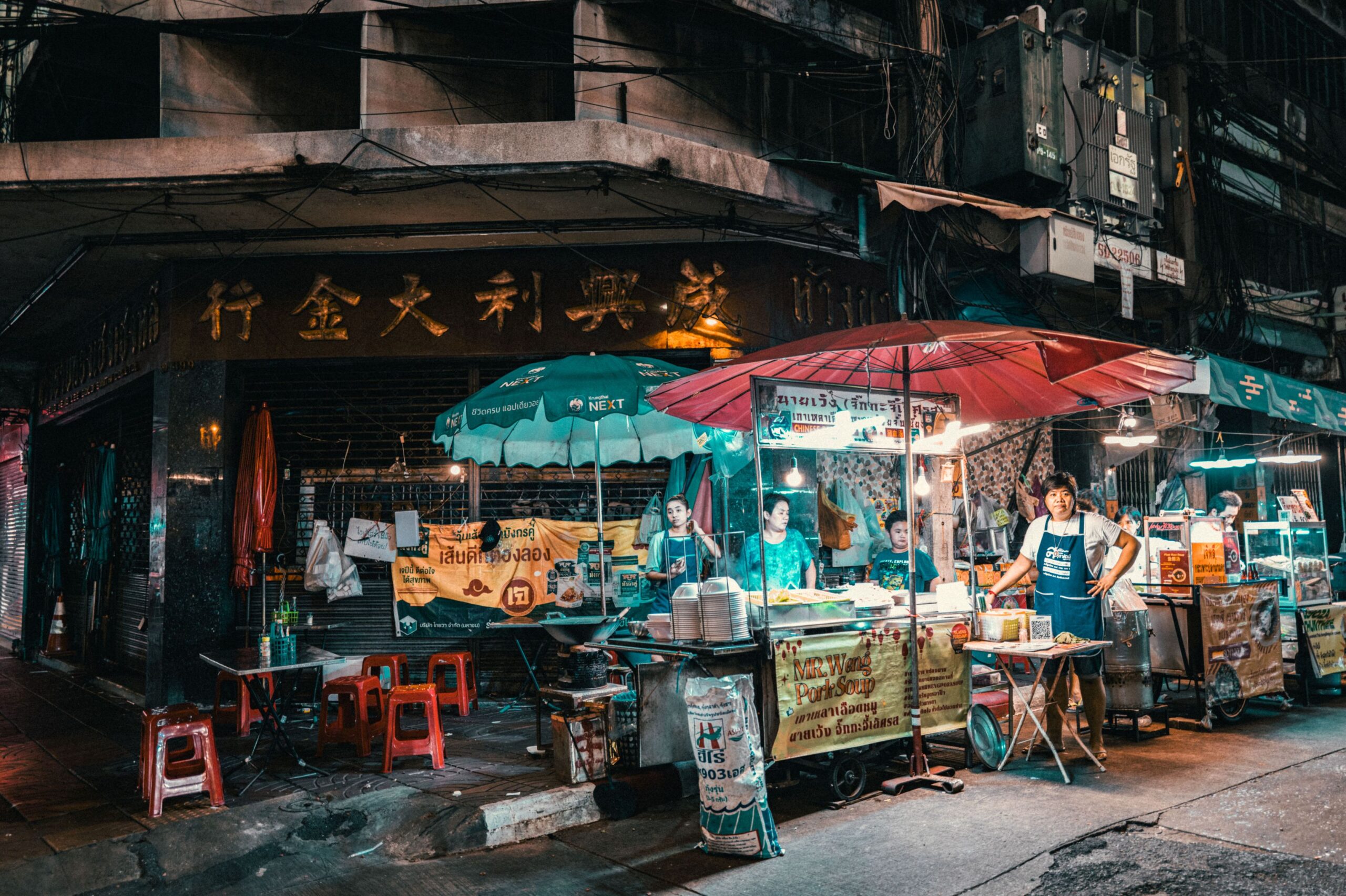
The MRT station at Wat Mangkon transformed this area for visitors. Yaowarat now offers small hotels in converted shophouses at low rates, in the middle of what is arguably the best street food in Asia.
It is dense and noisy — rooms facing Yaowarat Road itself will hear traffic and market activity late into the night. Streets one block back are much quieter.
Sukhumvit beyond Asok
Rates on Sukhumvit fall the further east you go. Phra Khanong and On Nut are on the BTS, genuinely residential, and materially cheaper than Asok or Phrom Phong, at the cost of ten to fifteen extra minutes on the train.
For longer stays this is often the smartest trade. For a three-night trip, the time adds up.
Silom and Bang Rak
The area between Silom and the river has a supply of older, plainer hotels at reasonable rates, with the significant advantage of being near Saphan Taksin BTS — the connection to the Chao Phraya express boats, which is the fastest route to the temples.
What your money actually buys
Bangkok’s budget tier is unusually well defined, and knowing the bands helps set expectations.
Hostel dorms are cheap, air-conditioned and generally modern, with pod-style beds and good facilities now standard rather than exceptional.
Guesthouses in Banglamphu and Chinatown offer basic private rooms, sometimes with shared bathrooms, in older buildings.
Budget hotels — the sweet spot — deliver a private air-conditioned room with an en-suite, daily housekeeping and a lift, in a purpose-built block. Many at this level include a small pool, which in Bangkok’s climate is a genuine functional feature rather than a luxury.
Serviced apartments become competitive at five nights or more, adding a kitchen and laundry for a similar nightly rate.
Budget hotel or hostel?
Bangkok is one of the places where this comparison is genuinely close, because the budget hotel tier is so cheap that the saving from a dorm bed is smaller than it would be elsewhere.
A hostel makes sense if you are travelling solo and want the social side — Bangkok hostels run bar crawls, cooking classes and day trips, and for a first stop in Southeast Asia that network has real value. The modern pod-style dorms are comfortable, air-conditioned and often better designed than the cheap private rooms around them.
A budget hotel makes sense for two people, where the per-person cost of a private room usually undercuts two dorm beds outright. It also makes sense if you are arriving off a long-haul flight and jet lag means sleeping at odd hours, which dorms do not accommodate well.
Many Bangkok hostels now offer private rooms alongside dorms, which is often the best of both — the social space and the organised activities, with a door that closes.
Common budget-booking mistakes in Bangkok
Booking by price alone. The gap between the cheapest listings and something considerably better is small in absolute terms. Paying a little more moves you from an unmaintained older building to a modern one with a lift and a pool.
Ignoring which side of the river or which end of Sukhumvit you are on. Two hotels at the same price can be twenty-five minutes apart in travel time.
Assuming a pool means a usable pool. Many budget properties have small rooftop plunge pools that are pleasant but not for swimming. Photographs usually make this clear if you look at scale rather than framing.
Booking a long stay upfront. Bangkok has enormous supply and rates rarely rise sharply at short notice outside the December peak. Booking two or three nights and extending once you have seen the room is low-risk here.
Overlooking noise. Bangkok is loud. Rooms facing a main road, a construction site, or a bar street will be audible. Reviews mention this consistently when it is a problem.
What to check before booking
- Walking distance to BTS or MRT, measured on a map rather than taken from the listing.
- Whether there is a lift. Older Bangkok buildings are frequently four or five floors without one.
- Window or no window. Cheaper rooms in converted buildings sometimes have none, which the listing may not state clearly.
- Air conditioning in the room rather than a corridor unit. Fan-only rooms exist at the bottom of the market and are not realistic in this climate.
- Recent reviews mentioning cleanliness and smell. Humidity is unforgiving and poorly maintained buildings show it fast.
- Which airport you are using. Suvarnabhumi connects by Airport Rail Link to Phaya Thai; Don Mueang, used by most budget carriers, relies on buses and taxis. Our guide to hotels near Bangkok airport covers both.
Seasonality
November to February is high season, with the best weather and the highest rates — though “highest” in Bangkok’s budget tier still means very reasonable. April to October brings meaningful discounts, with the wettest stretch around September and October.
Rain rarely lasts all day in Bangkok, and a wet-season trip with a well-located hotel and a pool is a perfectly good proposition at a considerably lower cost.
Where budget hotels fit in the wider city
For a full breakdown of how the districts compare, see our guide to where to stay in Bangkok. If you are keeping costs down across the whole trip rather than just the room, our guide to Bangkok on a budget covers food, transport and attractions, and the full Bangkok travel guide covers everything else.
FAQ
What is a realistic budget for a hotel in Bangkok?
Bangkok is one of the best-value major cities in the world for accommodation. A clean private air-conditioned room with an en-suite, a lift and often a pool sits well below what a basic room costs in most European or North American cities, and hostel dorms cost a fraction again.
Which area has the cheapest hotels in Bangkok?
Banglamphu around Khao San Road, followed by Chinatown and the outer Sukhumvit stations such as On Nut and Phra Khanong. Ratchathewi and Phaya Thai offer the best combination of low rates and central transport access.
Is it safe to stay in a budget hotel in Bangkok?
Generally yes. Standards in the budget tier are high and the city is safe for visitors with normal precautions. Read recent reviews for cleanliness and building maintenance, which is where the variation is, rather than for safety.
Should you stay near Khao San Road?
Only if your priority is the old city and a very low rate. It is loud, and it is poorly connected to the Skytrain network. The nearby Soi Rambuttri and Phra Athit riverside offer the same location with a calmer atmosphere.


Recent Comments