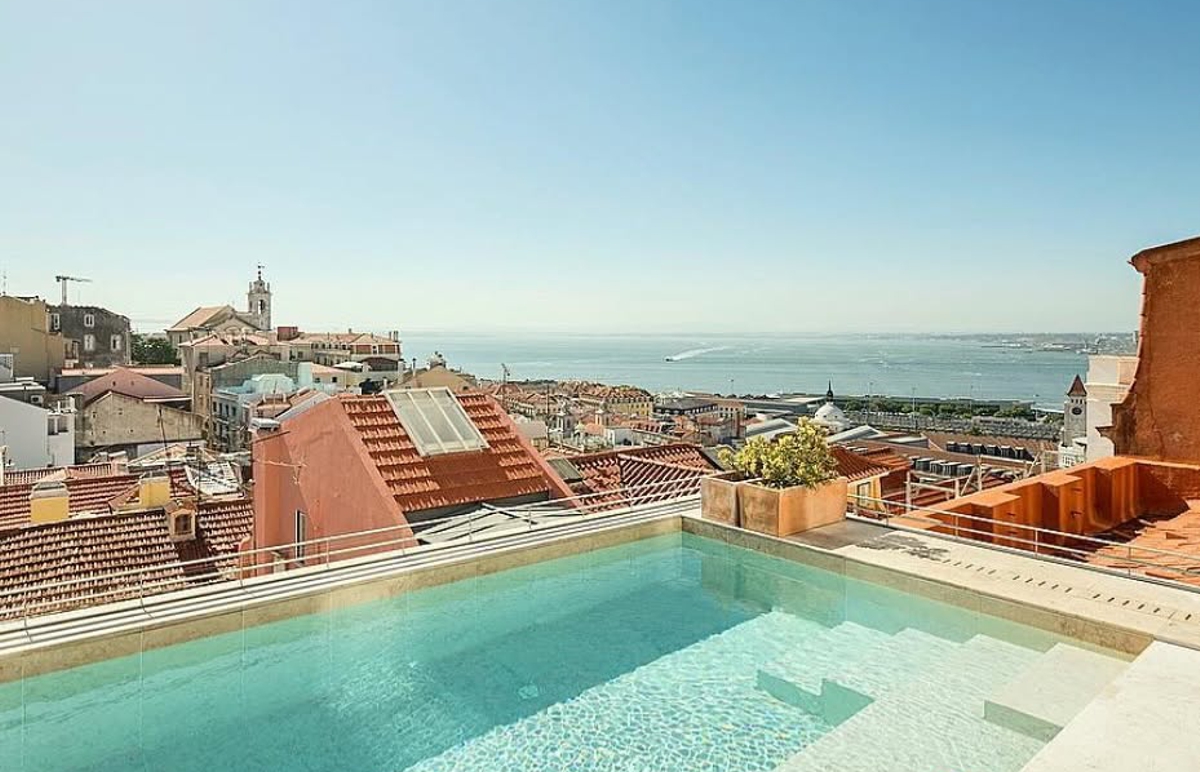
The single most useful thing to understand about where to stay in Lisbon is that the city is built on hills, and the hills are steep. Not gently sloping — steep enough that the city installed funiculars and a public lift in the 19th century because walking was genuinely impractical. A hotel that looks four hundred metres from a metro station on a map can involve a climb that will define your relationship with your luggage.
Get the topography right and Lisbon is one of the most rewarding cities in Europe to stay in: light-filled, walkable in the flat parts, full of viewpoints, and still noticeably cheaper than the western European capitals it now competes with.
The shape of the city
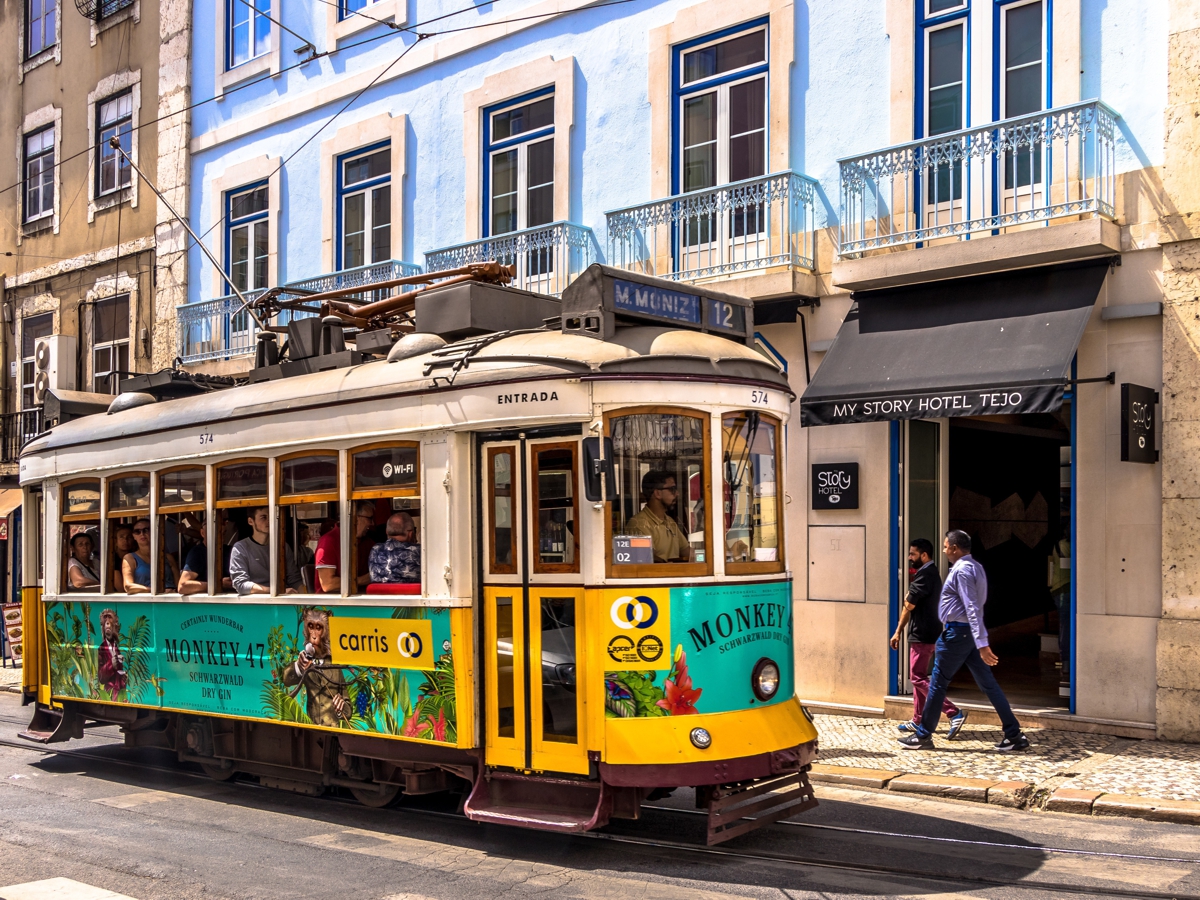
Lisbon sits on the north bank of the Tagus estuary, and the historic core runs uphill from the water. The Baixa is the flat grid at the bottom, rebuilt after the 1755 earthquake. To its east rises Alfama, the medieval quarter that survived the earthquake, topped by the castle. To its west rises Chiado and above that Bairro Alto and Príncipe Real.
North of the centre, the Avenida da Liberdade runs uphill to Marquês de Pombal and the newer business districts. West along the river sit Cais do Sodré, Alcântara and eventually Belém, home to the monastery and tower.
The metro has four lines and covers the flat and northern parts well. The old quarters rely on trams, funiculars and walking. Our Lisbon travel guide covers the transport in detail.
Baixa and Chiado: central and flat (mostly)
The Baixa is the most practical central base in Lisbon. It is flat, gridded, walkable, and sits at the point where everything converges — trams, metro, the riverfront square of Praça do Comércio, and the routes up into both Alfama and Chiado.
Its weakness is character. The Baixa is where the tour groups pass through, and Rua Augusta is a pedestrianised retail street that could be in any European capital. It also gets noisy, and the buildings are mostly converted for tourism.
Chiado, immediately uphill to the west, is the better half of this pairing. Elegant, full of bookshops, cafés and theatres, with the Carmo Convent ruins and the Santa Justa lift, and a much stronger sense of place. It costs more and involves some slope, but it is one of the most pleasant places in the city to be based.
Best for: first visits, short trips, travellers with mobility concerns (the Baixa specifically), anyone who wants to walk everywhere.
Alfama: atmosphere and stairs
Alfama is the Lisbon that appears on every postcard — a tangle of lanes too narrow for cars, laundry across the alleys, fado drifting out of small restaurants in the evening, and viewpoints that appear without warning. It survived the earthquake, which is why it is medieval where the rest of central Lisbon is neoclassical.
Staying here is atmospheric and physically demanding. There is no metro. Tram 28 grinds through and is usually full. Getting to your accommodation with suitcases can involve several flights of steps, and taxis often cannot get closer than a few hundred metres.
It is also worth knowing that Alfama is a genuine residential neighbourhood, and one that has seen substantial displacement from short-term rentals. The atmosphere people come for depends on the residents who are still there.
Best for: travellers who prioritise atmosphere, light packers, repeat visitors, fado enthusiasts.
Bairro Alto and Príncipe Real
Bairro Alto is Lisbon’s nightlife district, and that is not a small detail. On Thursday, Friday and Saturday nights, people drink in the street until three or four in the morning, and the noise in the narrow lanes is considerable. During the day it is quiet to the point of being sleepy.
If you want to be in the middle of that, it is the place. If you want to sleep, it is not.
Príncipe Real, immediately uphill, is the answer for many people. It has become one of Lisbon’s most desirable districts — a leafy garden square, concept stores, good restaurants, and a calm residential atmosphere ten minutes’ walk from the noise. Rates are higher, and the hill is real, but it is one of the best areas in the city for a stay of several nights.
Best for: Bairro Alto for nightlife; Príncipe Real for style, dining and quiet with a central location.
Avenida da Liberdade and Marquês de Pombal
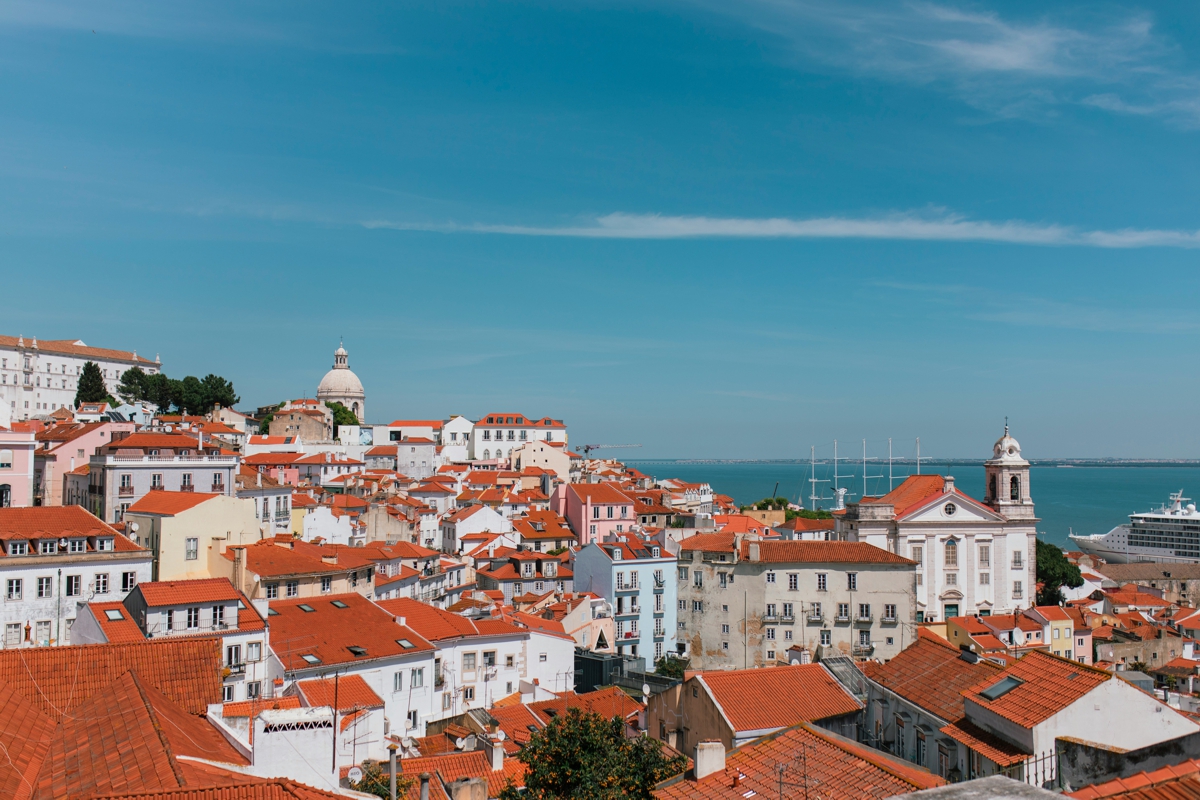
The Avenida is Lisbon’s grand boulevard — wide, tree-lined, with luxury retail and the highest concentration of five-star hotels in the city. It runs uphill from Restauradores to Marquês de Pombal, connecting the historic centre to the modern business districts.
Practically, it is an excellent base: two metro stations, the Aerobus route, easy walking downhill into the Baixa and Chiado, and a wide range of hotel types beyond the luxury ones. It is also greener and quieter than the old quarters.
What it lacks is intimacy. This is a boulevard, not a neighbourhood, and the streets either side are largely offices.
Best for: luxury stays, business travel, families, travellers who want reliable modern hotel infrastructure.
Cais do Sodré and Santos
Cais do Sodré transformed from a rough port district into one of the city’s main going-out areas, centred on Pink Street and the Time Out Market food hall. It is flat, on the riverfront, has a metro station and the ferry terminal to Cacilhas, and connects west along the river.
It is loud at night in the immediate bar zone, and calmer a few streets back. Santos and Madragoa, further west, are quieter residential neighbourhoods with a growing restaurant scene and better value than the centre.
Best for: nightlife and food, younger travellers, anyone taking the ferry across the river regularly.
Belém and the western riverfront
Belém is where the Jerónimos Monastery, the Belém Tower and the original pastéis de nata bakery are. It is about six kilometres west of the centre, reachable by tram 15, train or bus in around twenty to thirty minutes.
Very few people stay here, and for most trips that is correct — Belém is a half-day visit rather than a base. It is worth considering if you want calm, green space and river views, and you do not mind commuting into the centre each evening.
Alcântara, between Belém and the centre, has the LX Factory creative complex and better connections, and offers reasonable value.
Parque das Nações: the modern option
Built for Expo 98 in the northeast of the city, Parque das Nações is flat, modern, spacious and completely unlike historic Lisbon. It has the oceanarium, a riverside promenade, a cable car, a shopping centre and the Oriente transport hub connecting to the airport and to trains north.
It suits families and business travellers, and it is a twenty-minute metro ride from the centre. It has none of the atmosphere people come to Lisbon for, which is either a drawback or the point.
Northern Lisbon: where the value is
Most visitors never look north of Marquês de Pombal, which is why the districts up there consistently offer the best rates in the city for genuinely usable locations.
Saldanha and Avenidas Novas form Lisbon’s modern business district — wide streets, mid-century apartment blocks, two metro lines, and the Gulbenkian museum and gardens, which are among the best things in the city and almost entirely missed by short-trip visitors. Hotels here are functional rather than charming and cost noticeably less than anything central. You are three or four metro stops from the Baixa.
Anjos and Arroios, east of the Avenida, have become the most interesting cheap neighbourhoods in Lisbon. Genuinely multicultural, with excellent and inexpensive food, a growing bar scene, and metro access. Still rough in places, and improving quickly.
Campo de Ourique, west and uphill, is a residential district with a good market hall and a strong local restaurant scene. No metro — trams and buses only — but a real neighbourhood with almost no tourism and reasonable prices.
Getting around from your base
Lisbon’s transport is a patchwork, and knowing which piece serves your neighbourhood changes how you plan.
The metro is clean, cheap and covers the flat centre, the northern districts, the airport and Parque das Nações. It does not serve Alfama, Bairro Alto or Belém.
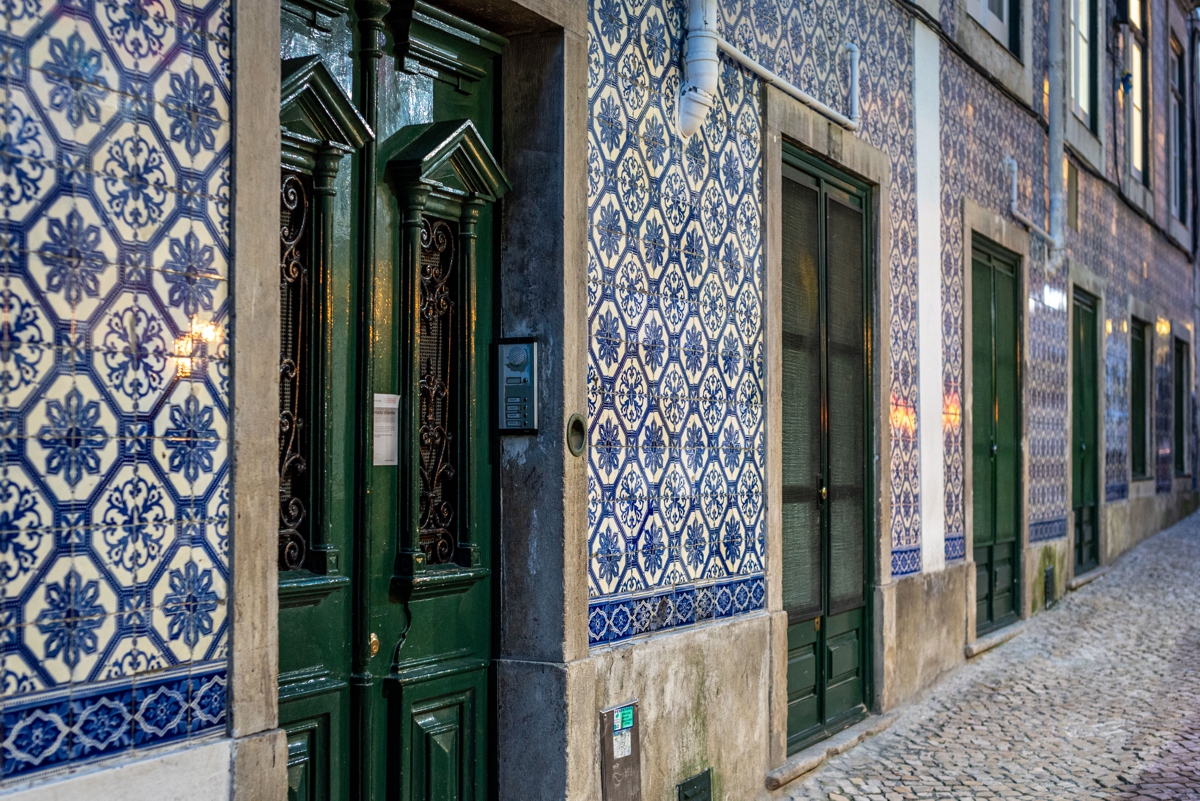
Trams fill some of that gap. Tram 28 is the famous one, running through Alfama and Graça, and it is also permanently crowded and a well-known pickpocketing route. Tram 15 runs west to Belém and is a normal modern tram. Tram 24 and 25 serve the western districts.
The funiculars and the Santa Justa lift handle the steepest climbs, and are covered by the same transport card as everything else — which most visitors do not realise, instead paying the tourist single fare.
Ferries cross the Tagus from Cais do Sodré and Belém to the south bank in ten to twenty minutes, and are worth taking for the view alone.
Taxis and ride-hailing are cheap by Western European standards and worth using freely at the end of a long day, particularly for the climbs. The caveat is that drivers cannot always reach addresses in Alfama or upper Bairro Alto.
Should you split your stay?
Lisbon is small enough that one base works for almost any trip length. If you are staying a week or more, the more interesting split is not within the city but out of it — a few nights in Sintra, Cascais or across the river toward the Setúbal peninsula, using Lisbon as the anchor at either end.
If you do want two bases in the city itself, the natural pairing is a flat, practical location for the first half — Baixa or Avenida — and something more atmospheric for the second, once you have found your feet with the hills and know what you are walking into.
Practical booking notes
- Ask about stairs and lifts explicitly. This is the single most common Lisbon accommodation problem. Many buildings in Alfama, Bairro Alto and Chiado have four or five flights and no lift, and listings do not always say so clearly.
- Check the walk from the nearest flat point. Look at the contour on a map, not just the distance.
- Noise: avoid Bairro Alto and the Pink Street area of Cais do Sodré if you are a light sleeper, and check whether rooms face the street.
- A municipal tourist tax applies per person per night, capped at a set number of nights, and is usually collected at the property.
- Airport transfer is easy. The red metro line runs from the airport into the city with one change for most central destinations, and taxis are inexpensive by Western European standards.
- Short-term rentals are regulated. Licensed properties carry an Alojamento Local registration number. Lisbon has restricted new licences in the historic centre.
- Book early for spring and autumn. March to June and September to October are peak, when the weather is best. Summer is hot and slightly cheaper; winter is mild, wet and the best value of the year.
What you should expect to pay
Lisbon has become significantly more expensive over the past decade, but it remains meaningfully cheaper than Paris, Amsterdam or Barcelona at equivalent quality. The gap is widest at the mid-range, where a well-located boutique hotel costs considerably less than its counterpart further north in Europe.
Chiado, Príncipe Real and the Avenida da Liberdade are the most expensive areas. The Baixa and Cais do Sodré sit in the middle. Alfama varies enormously depending on how difficult the access is. Santos, Alcântara, Anjos and the northern districts around Saldanha offer the best value while remaining connected.
Choosing by trip type
- First visit, 3 nights: Chiado or Baixa. Our 3-day Lisbon itinerary assumes a central base.
- Atmosphere above all: Alfama, if you pack light.
- Style and dining: Príncipe Real or Chiado. See the best boutique hotels in Lisbon.
- Nightlife: Bairro Alto or Cais do Sodré.
- Budget: Anjos, Santos or the area around Martim Moniz — and see the best hostels in Lisbon.
- Families: Avenida da Liberdade or Parque das Nações, both flat with reliable lifts.
- Mobility concerns: Baixa, Avenida or Parque das Nações. Avoid Alfama and Bairro Alto entirely.
Ready to book? Compare prices in Lisbon
Filter by price and guest rating, then check availability for your dates.
Prices and availability from Stay22 partners such as Booking.com and Expedia.
FAQ
What is the best area to stay in Lisbon for first-time visitors?
Chiado or the Baixa. Both are central and walkable to the main sights, with Chiado offering more character and the Baixa offering flat streets and the best transport connections.
Is Alfama a good place to stay?
It has the best atmosphere in Lisbon and the most difficult access. There is no metro, streets are stepped and often unreachable by car, and buildings rarely have lifts. Excellent if you travel light and are comfortable with hills; a poor choice otherwise.
Do you need to worry about hills when booking a Lisbon hotel?
Yes, more than in almost any other European city. Check the elevation between your accommodation and the nearest metro or flat street before booking, particularly if you have heavy luggage or limited mobility.
Is Lisbon cheaper than other Western European capitals?
Still yes, though the gap has narrowed considerably. Accommodation, eating out and transport all cost less than in Paris, Amsterdam or London, with the difference most noticeable in mid-range hotels and restaurants.