
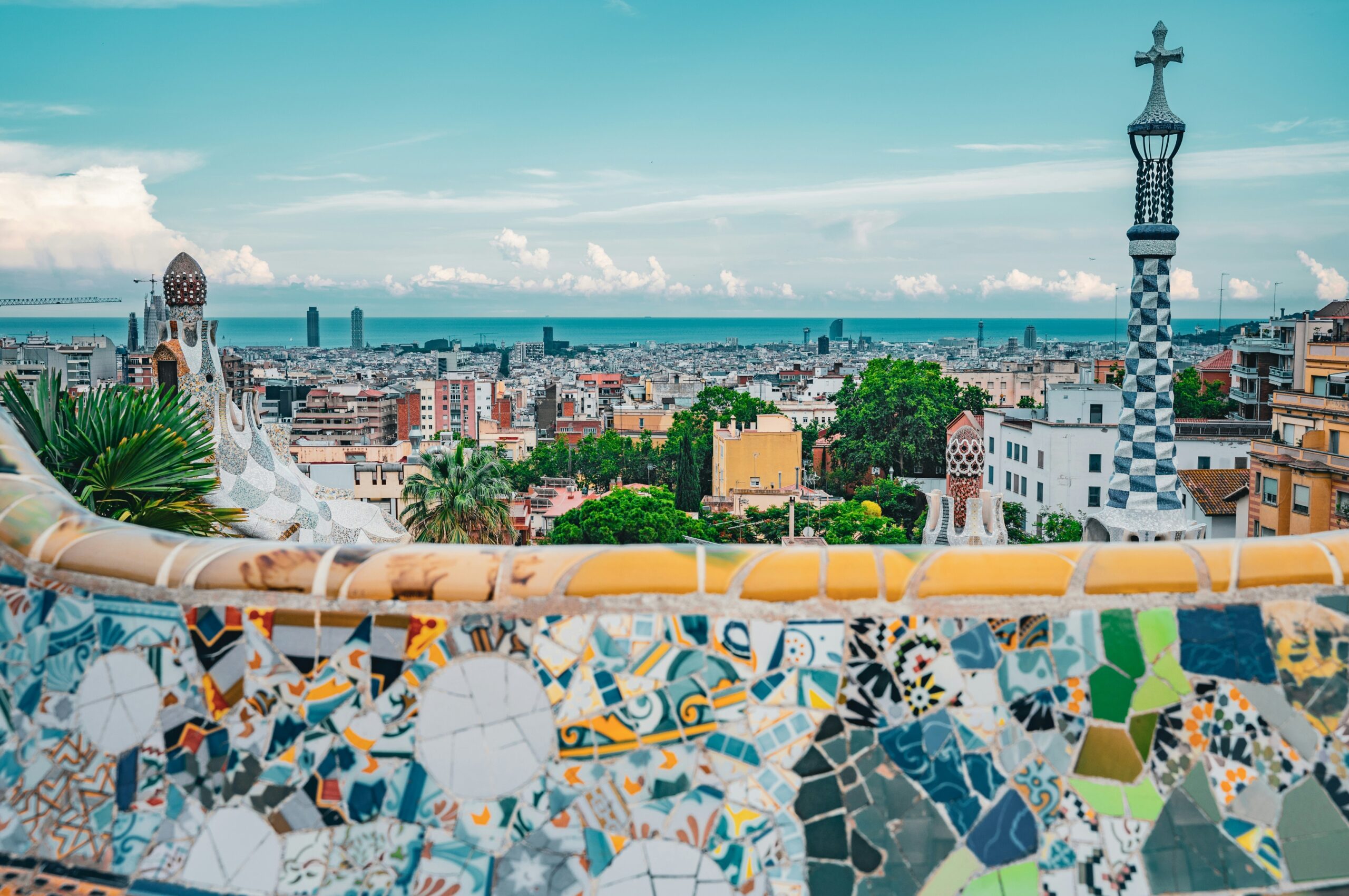
Deciding where to stay in Barcelona is mostly a question of how much noise you want. The city packs a medieval old town, a modernist grid, a working port and four kilometres of urban beach into a space bounded by hills on one side and the Mediterranean on the other — and the districts sit close enough together that the difference between a great night’s sleep and a terrible one can be two streets.
The metro is excellent, cheap and covers everything, so unlike Rome you are not forced into the most expensive central districts. That opens up genuinely good options at every price level, provided you know which streets to avoid.
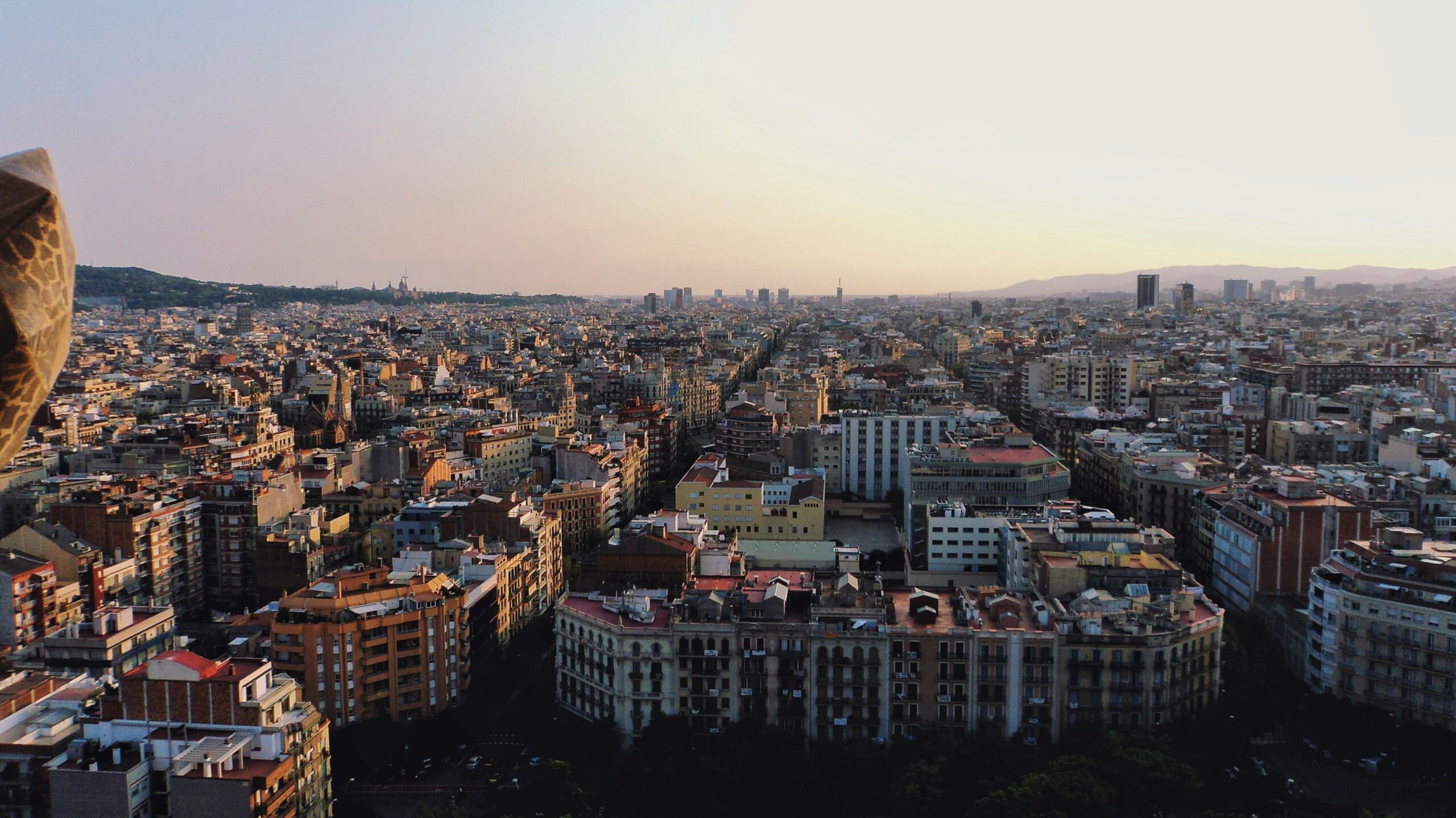
How Barcelona is organised
Two things define the layout. First, the Ciutat Vella — the old city — is a dense medieval knot near the port, split into the Gothic Quarter, El Born, El Raval and Barceloneta by the port. Second, the Eixample, the 19th-century expansion that surrounds it: a perfect grid of octagonal blocks running inland and uphill, containing most of Gaudí’s major buildings.
Beyond that, Gràcia sits further up the hill with a village character of its own, Poblenou runs northeast along the coast, and Montjuïc rises to the southwest. La Rambla, the famous pedestrian boulevard, cuts through the old city from Plaça Catalunya down to the sea and separates the Gothic Quarter from El Raval.
Our Barcelona travel guide covers the transport network and how the districts connect.
Eixample: the best all-round choice
For most visitors the Eixample is the right answer, and specifically the section known as the Dreta de l’Eixample, east of Passeig de Gràcia. It is central without being in the old town, elegant, well connected by several metro lines, and considerably quieter at night than anywhere inside Ciutat Vella.
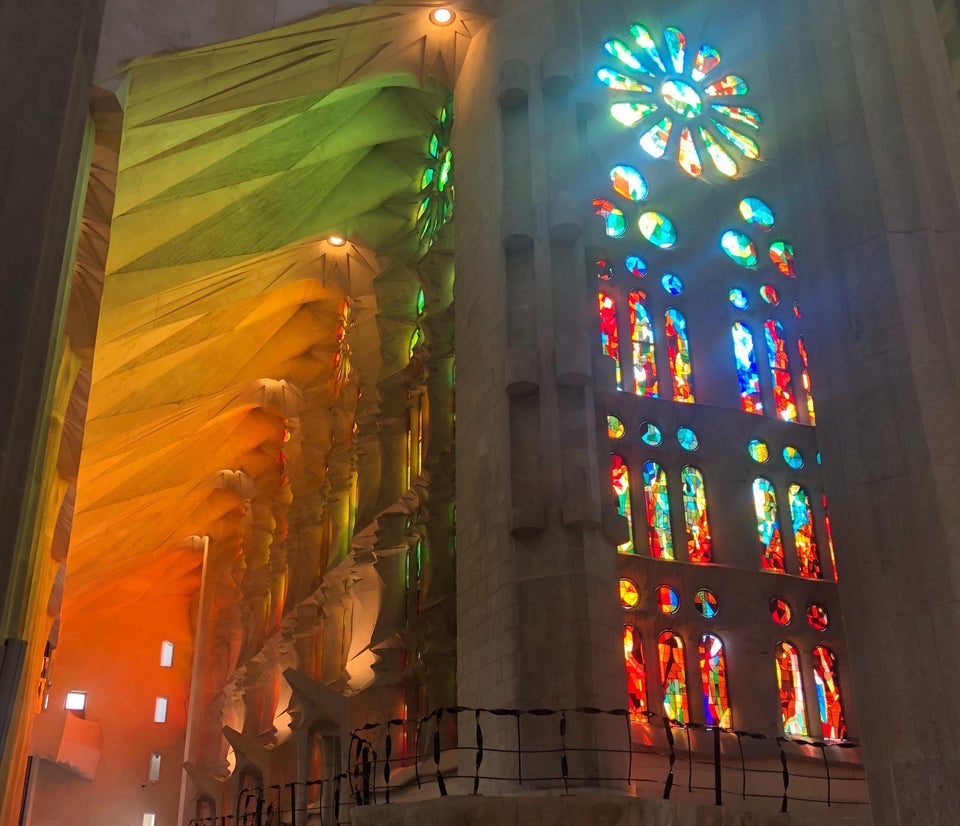
It is also where the architecture is. Casa Batlló, La Pedrera and the Sagrada Família are all here, along with dozens of lesser modernist buildings that most people walk past without noticing. The blocks are wide, the pavements generous, and the chamfered corners create small open spaces at every intersection.
Accommodation is plentiful across every category, from large international hotels along Gran Via and Diagonal to small design hotels in converted apartment buildings.
Two sub-areas worth distinguishing. The Dreta (right side, toward the Sagrada Família) is more residential and better value. The Esquerra (left side) is similar but slightly less polished. And Gaixample, around Carrer del Consell de Cent, is the centre of Barcelona’s LGBTQ+ scene.
Best for: first visits, couples, families, anyone who wants central without chaotic.
El Born: the old city at its best
El Born occupies the eastern side of the old town and is the most appealing part of Ciutat Vella. Narrow medieval streets, but with a concentration of good restaurants, small independent shops and bars that is more interesting and less aggressively touristed than the Gothic Quarter next door.
The Picasso Museum is here, along with Santa Maria del Mar — arguably the most beautiful church in the city — and the Parc de la Ciutadella on its eastern edge, which gives you green space that the rest of the old town completely lacks.
It is walkable to everything in the old city and about ten minutes from the beach at Barceloneta. The trade-offs are the usual old-town ones: small rooms, buildings without lifts, and noise, particularly around Passeig del Born itself.
Best for: food and nightlife, couples, second visits, travellers who want atmosphere and can tolerate some noise.
The Gothic Quarter: central, atmospheric, loud
The Barri Gòtic is the historic heart — the cathedral, Roman walls, hidden squares, and streets so narrow the sun reaches them for an hour a day. It is remarkable to walk through and difficult to sleep in.
The problem is concentration. This is the single most visited part of Barcelona, and the streets between La Rambla and Via Laietana absorb enormous foot traffic from morning until very late. Bar noise, luggage wheels on stone and street performers carry into apartments that were built with no sound insulation whatsoever.
It works if you choose carefully: the quieter northern section around the cathedral and Plaça Sant Felip Neri, or streets set back from the main routes. It does not work if you book the cheapest option on a street off La Rambla.
Best for: short stays, travellers who prioritise walking distance above all, night owls.
El Raval: mixed, cheap, improving
West of La Rambla, El Raval is the old city’s most complicated district. It contains the MACBA contemporary art museum, some of the city’s best-value eating, a genuinely multicultural street life, and streets that are noticeably rougher than anywhere else in central Barcelona.
The northern half, around the MACBA and Carrer del Doctor Dou, has gentrified substantially and is perfectly pleasant. The southern half, toward the port and Paral·lel, remains an area where visitors should be alert at night.
Rates are the lowest in central Barcelona, which is the appeal. If you book here, look at the northern section and read recent reviews carefully.
Best for: budget travellers who know what they are choosing. See our roundup of the best hostels in Barcelona for options across the city.
Gràcia: the neighbourhood choice
Gràcia was an independent town until the late 19th century and it still behaves like one. Small squares full of people drinking outside, low buildings, independent shops, and almost no chain retail. Park Güell is at its upper edge.
It is about fifteen minutes by metro to the old city and a genuine twenty-five to thirty minute walk down Passeig de Gràcia. That distance is the whole point — Gràcia is where you stay if you want to feel like a resident rather than a visitor.
Hotel supply is thinner here and skews toward apartments and small properties. Rates are moderate.
Best for: repeat visitors, longer stays, travellers who want local atmosphere over convenience.
Barceloneta and the beach districts
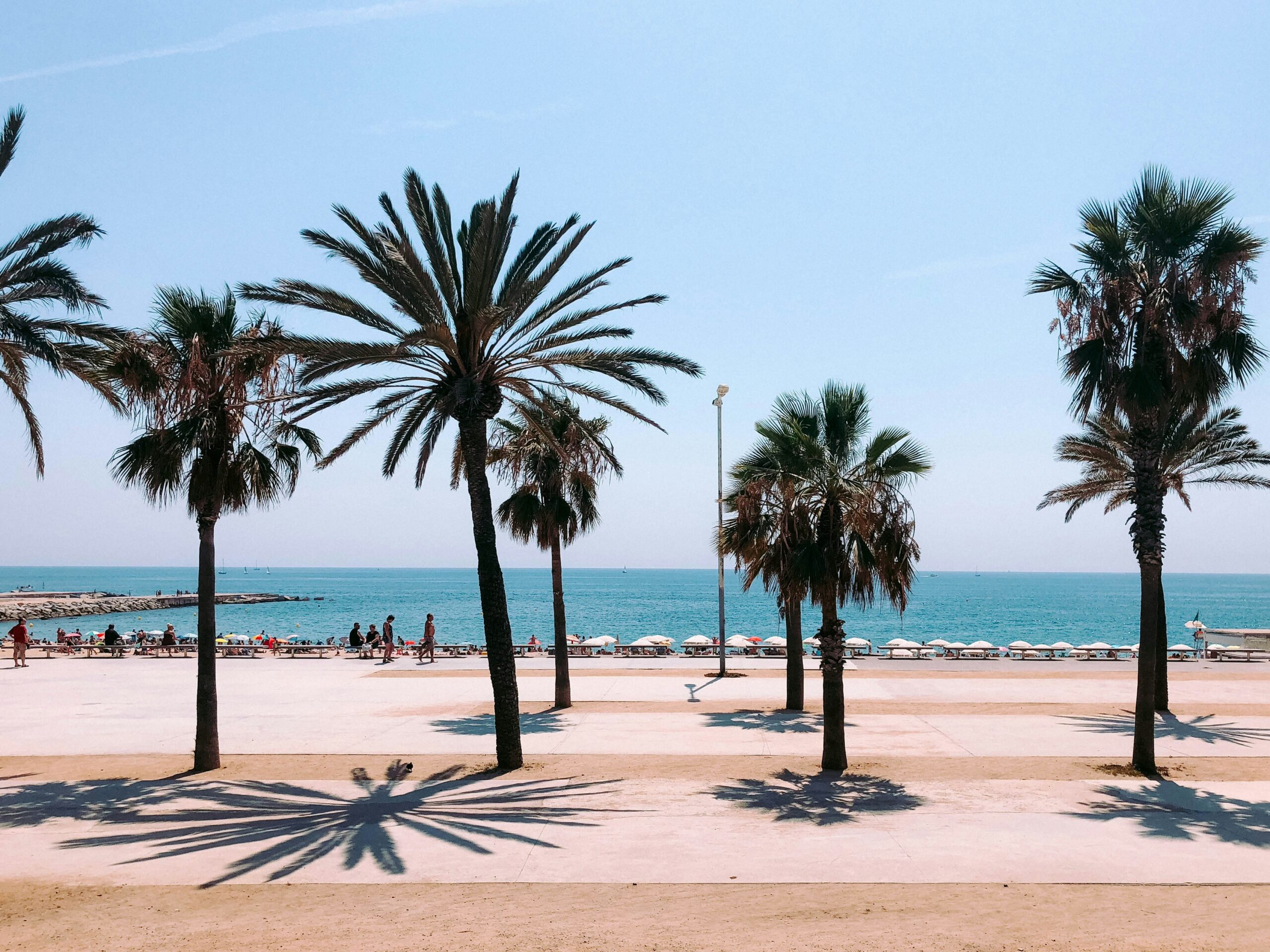
Barceloneta is the old fishermen’s quarter beside the city beach — a tight grid of narrow streets and tall thin buildings, with seafood restaurants along the waterfront and the beach itself a minute away.
It is a genuinely unusual thing to have in a major city, and staying here means swimming before breakfast. It is also small, dense, extremely busy in summer, and the subject of long-running tension between residents and tourism. Apartments here are heavily regulated.
Further northeast, Poblenou offers a different proposition: a former industrial district converted into a tech and design quarter, with wide streets, a long stretch of quieter beach, and rates well below the centre. It is 15–20 minutes by metro from the old town.
Best for: Barceloneta for short summer trips focused on the beach; Poblenou for families, longer stays and better value.
Sant Antoni and Poble-sec: the current value picks
Immediately southwest of the Eixample, Sant Antoni has quietly become one of Barcelona’s best food neighbourhoods, anchored by its restored market hall. It is a ten-minute walk to La Rambla, well connected by metro, and priced below both the Eixample and the old city.
Poble-sec, on the slope of Montjuïc, is similar — the tapas street of Carrer de Blai is a local institution, the funicular and cable car up Montjuïc are on the doorstep, and rates are reasonable.
Best for: value-conscious travellers who still want to walk into the centre, food-focused trips.
Areas most visitors overlook
Sants. Built around Barcelona’s main railway station, which makes it the obvious base if you are arriving or leaving by train, or day-tripping to Girona, Tarragona or Montserrat. The neighbourhood is straightforwardly residential — no sights, no atmosphere to speak of — but it is well connected, noticeably cheap, and about fifteen minutes by metro from the centre.
Les Corts and Sarrià. Uphill and west, these are wealthy residential districts with wide streets, good restaurants serving locals, and almost no visitors. Sarrià in particular retains the feel of the separate village it once was. Both are further out than most people want for a short trip, but for a stay of a week or more they offer space and quiet at reasonable rates.
El Clot and Sant Martí. Northeast of the centre, inland from Poblenou. Ordinary working neighbourhoods with good metro links and some of the lowest rates in the city for anywhere still comfortably connected.
Horta and the upper city. Worth mentioning mainly as a caution. Listings up here advertise Barcelona prices at a discount, but the hill is steep, the metro connections involve changes, and you will spend a meaningful part of each day travelling.
What accommodation costs
Barcelona is mid-priced by Western European standards — cheaper than Paris or Amsterdam, more expensive than Lisbon, Valencia or Seville. The seasonal swing is pronounced.
Summer, from June through early September, is peak, and August adds beach demand on top of general tourism. Spring and autumn are almost as busy because the weather is better for walking. The genuine value window is November through March excluding the Christmas period, when rates across every district drop substantially and the city is at its most liveable.
Trade congresses distort this pattern more than in most cities. Barcelona hosts several very large international events each year, and during those weeks hotel rates across the entire metropolitan area can multiply several times over regardless of season. If a set of dates looks inexplicably expensive, check what is on at the convention centres before assuming the whole city is that price.
How long to stay, and whether to move
Three nights covers the essentials: Sagrada Família, Park Güell, the Gothic Quarter, one or two other Gaudí buildings, and an evening in El Born. Four or five lets you add the beach, Montjuïc, and time in Gràcia or Sant Antoni without rushing.
Splitting your stay is rarely worth it here. Barcelona is compact and the metro is fast enough that no part of the city is meaningfully far from another. The one exception is a summer trip where you want both sightseeing and beach time — a few nights in the Eixample followed by a few in Poblenou changes the pace nicely, and the move takes twenty minutes.
Practical booking notes
- Barcelona regulates tourist apartments strictly. Licensed properties display a registration number (HUT followed by digits). Unlicensed rentals can be cancelled without warning and leave you without accommodation on arrival — check for the licence before booking.
- Noise is the number one complaint in the old town. Prioritise interior-facing rooms, upper floors and streets off the main pedestrian routes.
- Air conditioning matters from June through September. Barcelona is humid and old buildings hold heat.
- A tourist tax applies per person per night, varying by accommodation category, and is usually collected at the property. The city has been increasing it.
- Airport transfer: El Prat connects by Aerobús to Plaça Catalunya in around 35 minutes, and by metro Line 9 Sud with a change. Both are straightforward from most central districts.
- Pickpocketing is the city’s defining nuisance. La Rambla, the metro, and the beach are where it happens. This is a bag-and-phone problem rather than a personal safety one, but it is persistent enough to plan around.
- Book well ahead for summer and for major events. Barcelona hosts large trade congresses that fill the city and spike rates with little relation to the tourist season.
Choosing by trip type
- First visit, 3 nights: Eixample Dreta or El Born. Pair with our 3-day Barcelona itinerary.
- Beach-focused summer trip: Barceloneta or Poblenou.
- Families: Eixample or Poblenou, both with space and easy transport.
- Food and going out: El Born, Sant Antoni or Gràcia.
- Budget: Poble-sec, northern Raval or Poblenou.
- Quiet and residential: Gràcia or the upper Eixample.
- Second or third visit: Gràcia, Sant Antoni or Poblenou.
FAQ
What is the best area to stay in Barcelona for first-time visitors?
The Eixample, particularly the Dreta section near Passeig de Gràcia. It is central, quieter than the old town, well served by the metro, and within walking distance of both the modernist buildings and the Gothic Quarter.
Is it worth staying near the beach in Barcelona?
For a summer trip, yes — Barceloneta and Poblenou put you minutes from the sand. For a sightseeing trip in cooler months the beach adds little, and inland districts offer better value and easier access to the main attractions.
Is the Gothic Quarter too noisy to stay in?
It can be. The streets between La Rambla and Via Laietana carry heavy foot traffic until very late, and old buildings have minimal sound insulation. The quieter northern section near the cathedral is a better bet, as are interior-facing rooms.
Are Airbnb apartments legal in Barcelona?
Only licensed ones. Legal short-term rentals must display an official registration number beginning with HUT. The city enforces this actively and has announced plans to phase out tourist apartment licences, so verify the listing before booking.


Recent Comments