Working out where to stay in Tokyo is less about finding the good neighbourhood and more about accepting that there isn’t one. Tokyo is not a city with a centre and a periphery. It is a collection of dense sub-cities, each built around a major train station, each with its own character, and each perfectly capable of anchoring a trip. The question is which one matches how you want to spend your days.
The good news is that the rail network makes almost any choice workable. The JR Yamanote Line loops around central Tokyo connecting most of the major districts, and the subway fills in everything inside and around it. If you are near a Yamanote station or a well-connected subway interchange, you are fine.
The rule that actually matters
Prioritise station access over district prestige. In Tokyo the walk from the station to your hotel is the part of the journey most likely to go wrong — with luggage, in summer humidity, through an underground concourse with fourteen exits. A hotel three minutes from a Yamanote or major subway stop will serve you better than a nicer property twelve minutes from a minor one.
Second consideration: proximity to the airport link you will use. Narita is well over an hour out by Narita Express or Skyliner; Haneda is much closer and connects via the Keikyu Line and Tokyo Monorail. Where those lines terminate should influence your choice, particularly for short trips. Our Tokyo travel guide covers the transport network in full.
Shinjuku: the default for first-timers
Shinjuku Station is the busiest railway station in the world, and that is both the argument for and against staying here. Every line you might want runs through it, including the Narita Express and highway buses to Mount Fuji and the Japanese Alps. If you are day-tripping out of Tokyo, Shinjuku is difficult to beat.
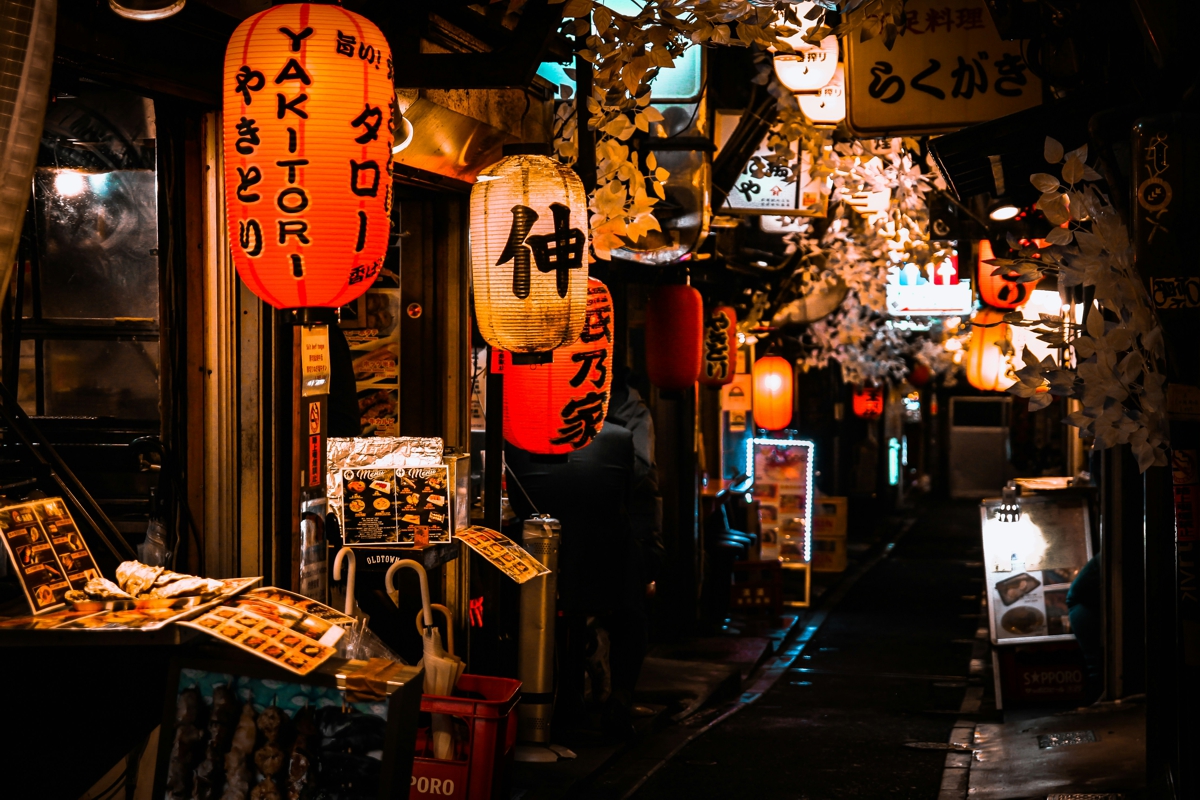
The district itself is genuinely varied. West Shinjuku is the skyscraper district, home to most of the larger hotels and the Metropolitan Government Building with its free observation decks. East Shinjuku is the dense entertainment side — Kabukicho, the tiny bars of Golden Gai, the alley yakitori of Omoide Yokocho. Shinjuku Gyoen, one of Tokyo’s best gardens, sits just south.
The downsides are real. The station is genuinely disorienting, Kabukicho at night is Tokyo’s most aggressively commercial nightlife area, and the whole district is loud and relentless in a way that some travellers find exhausting after a few days.
Best for: first visits, day trips out of the city, travellers who want everything within walking distance and do not mind noise.
Shibuya: young, busy, well-connected
Shibuya has been rebuilt substantially in recent years, adding several large hotel towers to a district that was previously short on accommodation. It sits on the Yamanote loop with direct connections to Shinjuku, and the Fukutoshin Line runs north through Ikebukuro.
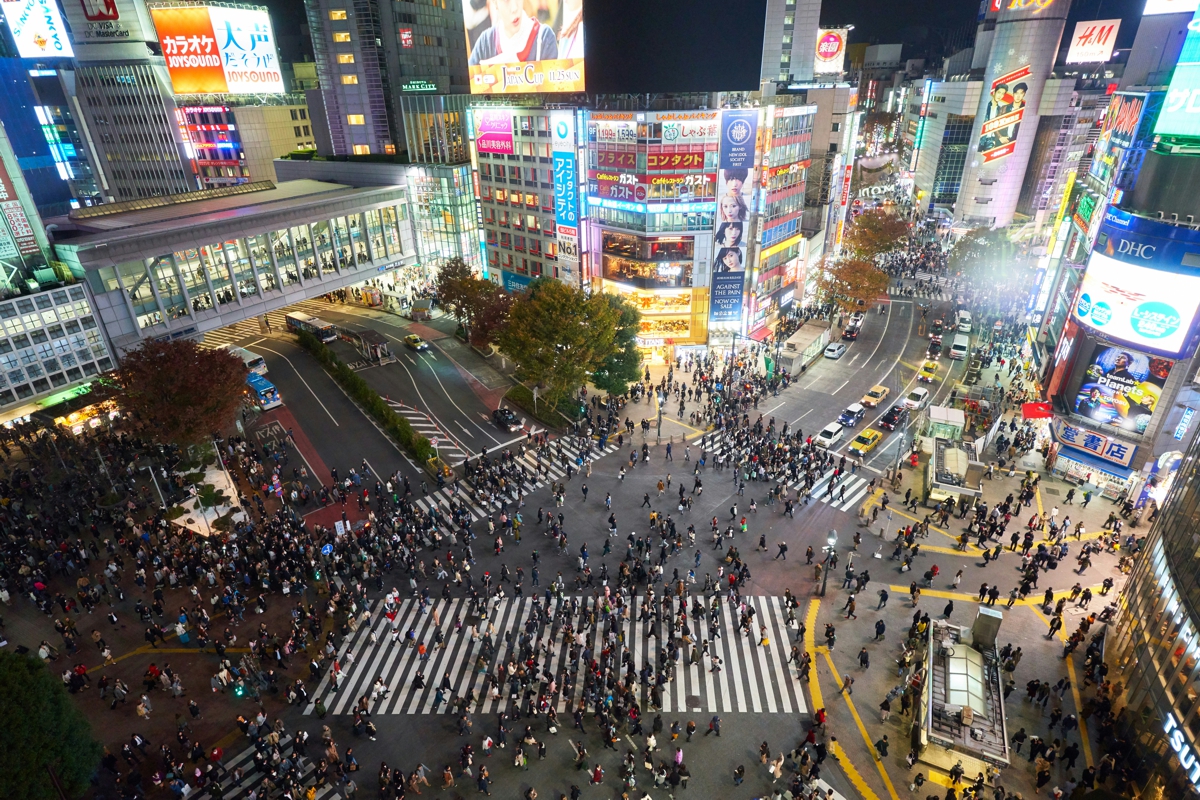
The appeal is atmosphere. This is the Tokyo of the famous crossing, of Center Gai, of dense retail and constant movement. It is also the gateway to some of the most interesting adjacent neighbourhoods — Daikanyama, Nakameguro along the Meguro River, Shimokitazawa two stops out on the Keio Inokashira Line — all of which are more pleasant to spend an evening in than Shibuya proper.
Best for: younger travellers, shopping, nightlife, anyone who wants to be in the middle of the version of Tokyo they have seen in films.
Ginza and Tokyo Station: polished and central
Ginza is Tokyo’s luxury retail district, and the accommodation reflects that. It is calm, orderly, immaculately maintained, and full of exceptional restaurants across every price bracket — including basement-level places charging very little for extremely good food.
The Tokyo Station area, immediately north, is the transport heart of the country: Shinkansen to Kyoto, Osaka and beyond, the Narita Express, and multiple subway lines. Marunouchi, the business district around it, is quiet in the evenings but beautifully walkable, with the Imperial Palace gardens on its doorstep.
Staying here means easy onward travel and a short walk to Ginza’s dining, at the cost of a district that empties after office hours and rates at the higher end.
Best for: travellers combining Tokyo with Kyoto or Osaka by bullet train, older visitors, business travel, anyone who values calm over energy.
Asakusa and Ueno: old Tokyo and better value
Asakusa is where Tokyo’s older character survives most visibly — Senso-ji temple, the Nakamise shopping street, low-rise streets, craft shops, and a genuine neighbourhood feel that the western districts lost decades ago. It is also considerably cheaper than Shinjuku or Shibuya, with a deep supply of small hotels, ryokan-style inns and hostels.
Ueno, one stop away, adds Ueno Park with its cluster of major museums, the Ameyoko market street, and the Keisei Skyliner terminus for Narita — the fastest airport connection in the city.
The trade-off is that this is eastern Tokyo, and the western districts where much of the modern dining and nightlife sits are a 25–35 minute train ride away. For sightseeing-led trips that is irrelevant; for evening-led trips it adds up.
Best for: budget-conscious travellers, first visits focused on temples and museums, anyone flying into Narita, families wanting space at a reasonable rate.
Roppongi and Akasaka: nightlife and museums
Roppongi has a long-standing reputation as the international nightlife district, and while parts of it still trade on that, the area has broadened considerably. Roppongi Hills and Tokyo Midtown brought the Mori Art Museum, the Suntory Museum of Art and the National Art Center within walking distance of each other, making this the densest concentration of contemporary art in the city.
Akasaka, adjacent and quieter, is a solid alternative — well connected by subway, full of good restaurants serving the surrounding offices, and noticeably calmer at night.
Note that Roppongi is not on the Yamanote Line, which makes it slightly less convenient than its central position suggests.
Best for: art and museums, nightlife, luxury hotels with views.
Ikebukuro and Ueno for value
Ikebukuro sits on the northern arc of the Yamanote Line and offers materially lower rates than the southern and western districts for the same connectivity. It is a large commercial and entertainment hub in its own right, popular with domestic visitors, and short on international polish — which is exactly why it costs less.
If your budget is the binding constraint and you still want to be on the loop line, Ikebukuro is the strongest option. Our roundup of the best hotels in Tokyo for first-time visitors covers specific properties across these districts.
Quieter alternatives worth considering
Nihonbashi — central, historic, business-oriented, often better value than neighbouring Ginza for a very similar location.
Kanda and Akihabara — well connected, cheaper than Ginza, and useful if electronics and anime culture are on your list.
Shinagawa — a Shinkansen stop and the fastest route to Haneda. Corporate and characterless, but efficient for short trips or early flights.
Yanaka and Nezu — low-rise old Tokyo in the northeast, almost no hotels, but a handful of small guesthouses for travellers who want a residential neighbourhood.
Understanding Japanese hotel categories
Tokyo accommodation splits into types that do not map neatly onto Western categories, and knowing the difference prevents unpleasant surprises.
Business hotels are the workhorses of Japanese travel — chains offering small, spotlessly clean, efficiently designed rooms at reasonable rates. A double room may be 14–18 square metres. They are excellent value and entirely comfortable, provided you are not expecting space.
Capsule hotels offer a sleeping pod rather than a room, with shared bathing facilities. Modern ones are far more comfortable than the reputation suggests, and many are now mixed-gender with separate floors. See our guide to capsule hotels in Tokyo for what to expect.
Ryokan are traditional inns with tatami flooring, futon bedding and often communal baths. Tokyo has relatively few compared with Kyoto or the hot spring regions, and the ones it has are concentrated around Asakusa.
International luxury hotels cluster in Marunouchi, Roppongi, Nihonbashi and the newer Toranomon developments, and generally offer the largest rooms in the city by a considerable margin.
Apartment rentals are legal but regulated, and licensed properties display a registration number. Unlicensed listings still appear; a missing licence number is a reason to look elsewhere.
What you should expect to pay
Tokyo has a reputation for being punishingly expensive that no longer entirely holds. Accommodation is the area where that reputation is least deserved: the business hotel sector is large, competitive and standardised, and a clean, quiet, well-located room can be had for less than the equivalent in London, Paris or New York.
Where costs climb is at the top and during peak weeks. International luxury properties in Marunouchi and Roppongi price in line with global capitals, and during cherry blossom season rates across every tier can double. The spread between a Tuesday in early February and a Saturday in early April is dramatic.
A few structural things worth knowing. Japanese hotels frequently price per person rather than per room, particularly ryokan and older business hotels, so a room quoted at one rate may cost noticeably more for two people. A small accommodation tax applies in Tokyo on rooms above a certain nightly rate. And breakfast is usually an optional extra rather than included — often good value at business hotels, rarely worth it at the top end when a convenience store or a standing soba counter is thirty seconds away.
Getting the neighbourhood right for your evenings
Days in Tokyo are spent wherever the sights are, and the train network makes that easy from anywhere. Evenings are different. After a long day most people want to eat somewhere within ten minutes of their bed, and this is where the choice of district actually bites.
If you want to walk out of the hotel and be spoiled for choice, the strongest districts are Shinjuku, Shibuya, Ebisu and Ginza. Each has hundreds of restaurants at every price point within a short radius, open late.
If you prefer a quieter evening — a neighbourhood izakaya rather than a district of them — Asakusa, Yanaka, Kagurazaka and Nakameguro all deliver, with fewer options but more atmosphere.
The districts to be careful with are the business ones. Marunouchi, Shinagawa and parts of Akasaka are built around office workers, and a surprising number of restaurants close early or shut entirely at weekends. It is a solvable problem — you are always a few minutes from somewhere livelier — but it catches people out on their first night.
Should you split your stay?
For trips of five nights or fewer, no. Tokyo’s rail network is fast enough that changing base saves you very little, and the time lost to checking in and out is better spent elsewhere.
For longer stays, a split can work well: a few nights in the east around Asakusa or Ueno for the temples, markets and museums, then a move west to Shinjuku or Shibuya for the modern city. It also lets you use a cheaper base for part of the trip and spend the saving on something better for the rest. Luggage forwarding services make the move painless — send the suitcases ahead in the morning and travel across town with a day bag.
Booking notes specific to Tokyo
- Rooms are small. Check the stated square metreage rather than the photographs. Under 15 square metres for two people with large suitcases is tight.
- Book early for cherry blossom and autumn colour. Late March to early April and mid to late November are the two peaks, and central hotels sell out months ahead at elevated rates.
- Golden Week, at the end of April into early May, is a domestic travel surge that affects availability and pricing across the country.
- Check the specific station exit. Major Tokyo stations sprawl for hundreds of metres underground; the wrong exit can add ten minutes.
- Luggage forwarding is cheap and widespread. Sending suitcases ahead to Kyoto or on to the airport via a takkyubin service costs little and makes train travel far easier.
- Many hotels offer luggage storage before check-in and after check-out as standard, which is worth confirming if you arrive on an early flight.
Picking by trip type
- First visit, 4–5 nights: Shinjuku or Tokyo Station.
- Tokyo plus Kyoto by Shinkansen: Tokyo Station or Shinagawa.
- Budget: Ikebukuro, Asakusa or Ueno.
- Food and nightlife: Shibuya, Shinjuku or Ebisu.
- Families: Asakusa or Ueno for space and value; Shinjuku for convenience.
- Quiet and central: Nihonbashi or Marunouchi.
- Flying into Narita: Ueno or Nippori for the Skyliner; Tokyo Station for the Narita Express.
- Flying into Haneda: Shinagawa or Hamamatsucho.
Once you have chosen, our 5-day Tokyo itinerary groups the sights geographically so you are not crossing the city more than necessary.
FAQ
What is the best area to stay in Tokyo for first-time visitors?
Shinjuku for maximum transport connections and around-the-clock activity, or the Tokyo Station and Marunouchi area for a calmer base with the best onward rail links. Both put you within easy reach of everything on a standard first itinerary.
Is Shibuya or Shinjuku better?
Shinjuku has better transport, more hotels and easier day trips. Shibuya has a younger atmosphere and better access to Daikanyama, Nakameguro and Shimokitazawa. Both are on the Yamanote Line and only a few minutes apart.
Where should you stay in Tokyo on a budget?
Ikebukuro, Asakusa and Ueno consistently offer the lowest rates for good connectivity. Business hotel chains across all three deliver small but very comfortable rooms, and capsule hotels drop the cost further.
How far in advance should you book a Tokyo hotel?
Two to three months for most dates, and four to six for cherry blossom season, Golden Week and the autumn colour period, when central availability tightens sharply and rates rise.